Twelve-Step Snake Oil
by A. Orange
Notice the funny mix of so-called "spiritual diseases" there:
you can "cure" some of them just by changing your behavior, like
alcoholism, narcotics, smoking, over-eating, sex addiction,
gambling, cocaine, or being a compulsive shopper or a clutterer.
But the others are not what we might call
"voluntary" diseases.
You cannot just voluntarily quit having high blood pressure,
diabetes, hepatitis C, chronic illness,
dual disorder (i.e.: having both mental and drug or alcohol problems)
or schizophrenia, so I really want to hear how listing and confessing
all of your sins, "moral shortcomings", and
"defects of character" will cure those diseases.
Someone would have to be pretty crazy to think that doing the
Twelve Steps — performing a searching and fearless moral
inventory and confessing all of his sins — is going to cure
mental illnesses like schizophrenia and compulsive-obessive disorders.
But, come to think of it, that's just how the game works, isn't it?
Go find sick, vulnerable people who are suffering, whose
minds aren't too clear, and
exploit their weaknesses and
talk them into joining a cult religion while telling them that this
magical 12-Step program will heal what ails them.
And the oddest ones have to be
"divorce recovery,"
"parents,"
"emotions," and
"families."
They are neither bad habits like alcohol and drug consumption,
nor diseases like Hepatitis C and diabetes.
- Is making lists of all of your "defects of character"
and "moral shortcomings", and confessing them,
really going to fix the heartbreak of divorce?
- Or is the goal to wreck your ego, destroy your self-respect, and
convince yourself that you really are
a worthless piece of dirt,
and your partner was right to have dumped you?
I cannot help but think that group therapy sessions,
where divorced people get together and talk about their common
problems and suffering, could be a very good thing, but the
Twelve Steps are totally inappropriate for such a healing process.
The children's groups are strange, too. They are the groups like
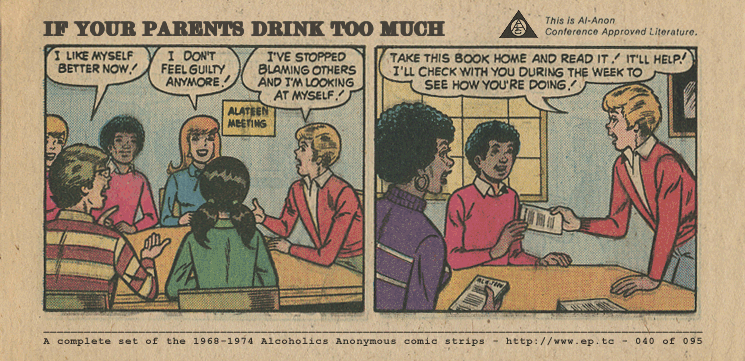
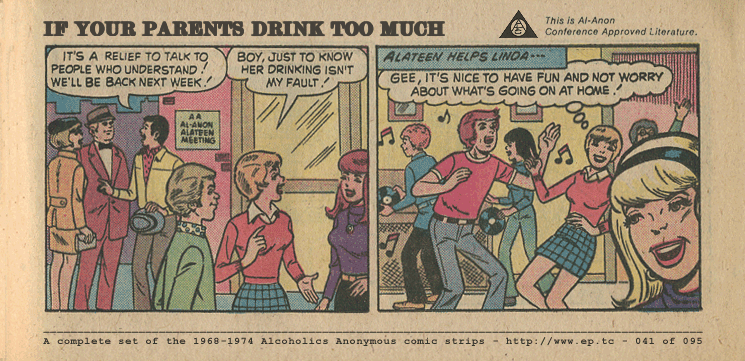
Al-Anon, Alateen, and ACOA — Adult Children of Alcoholics.
Those groups teach that because
someone was born to alcoholic parents, he should spend the rest of
his life doing the Twelve Steps.
Didn't Alcoholics Anonymous say that the
Twelve Steps were a program for quitting drinking? Those children
don't drink, and never have.
It begins to look like the real purpose of these twelve-step
groups is to practice the twelve steps and to expand the
12-Step religion, not to cure anything.
Of course. That has always been the objective.
(Starry-eyed A.A. faithful have even been
quoted as saying things like,
"The Twelve Steps are so wonderful
that there needs to be another Twelve-Step group, one for all of the
people who aren't alcoholics, so they can do the Twelve Steps,
too.")
The real purpose of the Twelve-Step "self-help
groups"3
is to get everybody to practice
Frank Buchman's cult religion —
"The Oxford Groups" — by
"Working The Steps" and
"Seeking and Doing the Will of God".
Bill Wilson even said so, very clearly:
Six months earlier,
the broker [Bill Wilson]
had been relieved of his drink obsession by a sudden spiritual
experience, following a meeting with an alcoholic friend who had been in
contact with the Oxford Groups of that day. ...
Though he could not accept all the tenets of the Oxford Groups, he was
convinced of the need for moral inventory, confession of personality
defects, restitution to those harmed, helpfulness to others, and the
necessity of belief in and dependence upon God.
The Big Book, William G. Wilson, pages xv and xvi of the
Foreword.
(In other words, he did accept all of the tenets of the Oxford Groups, but he
didn't want to admit that his so-called "sobriety program" was just a copy
of Frank Buchman's cult religion.)
To some people we need not, and probably should not emphasize the
spiritual feature on our first approach. We might prejudice them.
At the moment we are trying to put our lives in order.
But this is not an end in itself.
Our real purpose
is to fit ourselves to be of maximum service to God...
The Big Book, William G. Wilson, page 77.
Follow the dictates of a Higher Power and you will presently
live in a new and wonderful world...
The Big Book, William G. Wilson, page 100.
Then Bill Wilson schemed to recruit the alcoholics' entire families into his cult religion:
Though an alcoholic does not respond, there is no reason why you should
neglect his family. You should continue to be friendly to them.
The family should be offered your way of life. Should they accept
and practice spiritual principles, there is a much better chance
that the head of the family will recover. And even though he continues
to drink, the family will find life more bearable.
The Big Book, 3rd Edition, William G. Wilson,
Chapter 7, Working With Others, page 97.
Notice how Bill suddenly changed the advertised effect of his "spiritual"
Twelve-Step program from making alcoholics quit drinking to just making
the family's life "more bearable".
Are the 12 steps really a program for recovery from alcoholic drinking, or are
they really something else?
Well, the truth is that the Steps are really a religion for the whole family, just like the
Oxford Group was.
And lastly, Bill wrote in the Foreword to the Big Book that:
We think this account of our experiences will help everyone to better
understand the alcoholic. Many do not comprehend that the alcoholic
is a very sick person. And besides, we are sure that our way of living
has its advantages for all.
The Big Book, William G. Wilson,
in the Foreword to the First Edition,
page xiii of the 3rd edition.
"And besides,
it will be wonderful if we can
convert
everybody in the world to our religion,
to 'our way of living', and have all of them under
'God-control',
following the dictates of a Higher Power,
doing the Twelve Steps, and seeking and doing the Will of God as we
understand it..."
And Bill's followers have tried hard to make that ambition a reality, cloning the
Twelve-Step program into a couple of hundred other groups that will
supposedly treat an absurdly large and all-inclusive list of ailments, which makes everyone
in the world a candidate for twelve-step salvation, in one guise or
another, for some disease or other, real or imagined.
- The first clone was Al-Anon, for the wives and children of alcoholics.
- And then there was Alateen, just for the teenagers.
- Then there was ACOA, Adult Children of Alcoholics, where you can
confess your miserable choice of parents.
- Then they started 12-Step groups for drug addicts and compulsive gamblers —
Narcotics Anonymous and Gamblers Anonymous.
- Then it got really ridiculous, with groups that are downright bizarre,
groups to "treat but not cure"
high blood pressure, Hepatitis C, diabetes, chronic illness, compulsive
shopping, over-eating, schizophrenia, and being the partner of a sex addict, all
by doing the Twelve Steps and confessing all of your sins,
defects of character, and moral shortcomings, and then surrendering your mind
and your will...

Europeans regard that routine as pretty silly. Something that
the 12-Step true believers will never tell you is that Europe
manages to handle its drug and alcohol problems without the
Twelve Steps. Oh, the 12-Step organizations have branches over
there, of course, but they are not nearly as popular as in the
USA, and they do not dominate their nations' treatment programs
like the Steppers do in the USA.
Twelve-Step recovery is a distinctly American phenomenon, just
like Puritanism is a distinctly American phenomenon.
British researchers see it this way:
The application of AA dogmas to behaviours which could scarcely be termed
"diseases" — shopping, for instance — with all the paraphernalia
about recognizing these as illnesses over which one has no control, has a
faintly ludicrous quality. Their acceptance by many Americans testifies to
the fact that what we are witnessing here is a socio-religious phenomenon requiring
of followers the confession and repentance through which they receive status
and acceptance.
Hence the attempt to explain alcohol problems, as well as other drug problems,
in non-disease terms not only steps on commercial toes by threatening the
theoretical basis for disease-based treatment programmes, it also threatens
an entire social movement by asserting that there are other means of breaking
habits than by confession and repentance.
Problem Drinking, 2nd edition, Nick Heather and Ian Robertson,
Oxford University Press, 1989, page 169.
Al-Anon, the A.A. auxiliary for the other family members, is itself a good
candidate for the title of "spiritual disease".
It practices battering, just like a cruel, vicious, wife-battering husband:
- First, the husband is friendly and loving, but then he turns on his
wife and threatens and beats her.
- Just when the wife is ready to leave, the battering
husband reverts to being loving and reassuring, telling the wife that
things will be better in the future and that he didn't really mean it
and he loves her.
- Then, when the wife stays, the husband soon reverts to attacking
and beating her again.
- Then, just when the wife is ready to leave, the battering
husband reverts to being loving and reassuring again.
- Eventually, the battered wife is so paralyzed by confusion and
fear that she doesn't know if she is coming or going.
- And worse yet, while all of that is going on, the husband convinces
the wife that it is her fault — that her bad behavior is the problem.
She starts to think: "Maybe if I was a better wife, he wouldn't
get so angry. I must try harder to be a good wife and please him."
Thus, he gradually destroys what little self-respect and self-confidence
the wife has left, which makes it even harder for her to leave him.
A.A. and Al-Anon foist the same back-and-forth routine on their victims:
- First you are good, then you are bad, then you are good, then you are bad...
- You are powerful, then you are powerless. First you are powerful and responsible for your own fate,
and responsible for your quitting drinking,
and then you are powerless and your will power is useless...
- You are not responsible for what was done to you.... Then you are guilty of all
kinds of defects and sins... Then you are not responsible... And then you are guilty...
- First it's a disease over which you are powerless, and then you are a sinner who is selfish
and self-seeking and manipulative and dishonest and self-centered....
- In the Al-Anon 3rd Step, "God" supposedly loves you so
much that He will take care of your will and your life for you,
and solve all of your problems forevermore, just because you demand that
He do so. That builds up your ego and gives you delusions of grandeur
where you imagine that God is your butler, waiting on you hand and foot.
But then the 4th through 7th Steps, where you make long lists
of everything that is wrong with you, and dwell on it and confess it
all to man and God, just continue the routine of having an
angry alcoholic father constantly criticizing everything that you do,
tearing you down, destroying your ego and your self-respect,
and making you feel guilty about everything.
The official Al-Anon publications teach us that:
-
"When you have to go into your head," says an Al-Anon friend, "don't go alone.
It's not a safe neighborhood."
Hope for Today, published by Al-Anon Family Group Headquarters, Inc., page 47.
-
Before Al-Anon I allowed the behaviors of the alcoholics in my life to cause me
great unhappiness. While it was true that I was suffering, was my pain really their
fault? Al-Anon has taught me to take responsibility for my own happiness.
Hope for Today, published by Al-Anon Family Group Headquarters, Inc., page 9.
And how is it the fault of an abused terrorized child if he or she gets beaten and tormented by
a crazy alcoholic? How does a child "take responsibility" for that?
Likewise, how is it the fault of an abused, beaten wife if her husband
drinks too much?
Is she supposed to "take responsibility" and be "happy"
in spite of her husband's bad behavior?
This Al-Anon true believer moronically asks,
"...was my pain really their [the alcoholics'] fault?"
Well, yeh, duh...
Again, we see two glaring cult characteristics:
Don't Feel Your Feelings,
and
You Are Always Wrong.
-
The longer I am in Al-Anon, the more clearly I perceive that
alcoholism is indeed a sickness, a compulsion, an obsession. But
haven't I, too, been afflicted with a sick compulsion? Wasn't I
determined to "save" the alcoholic, and that to the
same degree as he was addicted to alcohol?
One Day At A Time In Al-Anon,
Al-Anon Family Group Headquarters, 1990, page 72.
So, ladies, if you actually want your husbands to quit drinking themselves to
death, you are some real sickos... You need to do Bill Wilson's
Twelve Steps to Buchmanism,
and get down on your knees and confess all of your sins.
-
How could I admit that I was powerless over alcohol when I was 27 years old, single,
living independently, and my alcoholic father had been sober for 10 years?
One night, God sent me a beautiful spiritual awakening. When I was the young daughter of an
alcoholic father, I was powerless. I was powerless over every criticism that came from his mouth,
and I was powerless over every blow he struck against me. To survive such an upbringing,
I developed many defenses. When no longer needed, those defenses became character defects.
As an adult, I was still powerless over the effects of my father's abuse.
Hope for Today, published by Al-Anon Family Group Headquarters, Inc., page 59.
Now she's back to being powerless. How is she supposed to
"take responsibility" for the situation when she is powerless over it?
-
Like many children of alcoholics, I vowed I'd never drink like my father.
Nevertheless, I do get drunk; only I get drunk on feelings. ...
I use the First Step to accept that, just for today, I'm powerless by myself to stop
these emotional binges once they gain momentum.
Hope for Today, published by Al-Anon Family Group Headquarters, Inc., page 10.
Powerless again.
Drunk on feelings? There is no such thing. Having intense feelings is not the same
thing as being intoxicated by ethyl alcohol. What this woman is actually describing is
a cyclical mental disorder like a manic-depressive or bipolar disorder, where the victim
cycles between extreme emotional states, up and down, up and down.
Being flipped out in a manic state is not being "drunk on feelings", and
it is not an "emotional binge".
(Bill Wilson used
the term "emotional benders" to explain away his own insane
behavior, and Al-Anon is copying it.)
Again, Al-Anon is teaching its victims
Don't Feel Your Feelings
and
You Can't Trust Your Own Mind
and
You Are Weak And Powerless And Always Wrong.
Al-Anon is also failing to tell this woman to get some real help from a real doctor.
-
My alcoholic father sexually abused me when I was young, and I never dealt with
the thoughts and feelings from that trauma. When I came to Al-Anon at age 52,
my resentment and anger were deep-seated. As I painfully worked the Steps and
took my Fourth Step inventory, my buried pain and anger started to surface.
I shared these thoughts and feelings in my Fifth Step with my sponsor.
Through this process I came to feel forgiven for the many wrongs I had committed,
including judgement of my father.
Hope for Today, published by Al-Anon Family Group Headquarters, Inc., page 114.
This is some of the sickest stuff in the whole book.
The little girl "committed wrongs" by "judging"
her father after he raped her?
She needs to seek forgiveness for that?
What a sick, twisted, wierd, masochistic cult religion.
-
Today I know I was the perfect enabler.
My autocratic behavior deprived my husband of responsibility.
I tried in vain to control him, and to keep him "dry".
Eventually I felt only hate and digust towards my husband and alcohol.
My life seemed totally worthless...
Then I was led to Al-Anon, where I learned to do something just for me — recover. ...
My husband's illness has enriched my life by leading me to Al-Anon.
Hope for Today, published by Al-Anon Family Group Headquarters, Inc., page 122.
Oh yeh, right.
"Al-Anon is so wonderful that it was really worth it to marry a hopeless alcoholic
and go through years of hell, because that would eventually force her to join the
wonderful 12-Step cult religion."
And telling an alcoholic husband to please quit killing himself is not
"autocratic behavior" that "deprives the husband of
responsibility".
Where does Al-Anon get all of this crazy nonsense?
Well, from Bill Wilson for starters. Bill was always declaring that the alcoholics' wives
(meaning his wife Lois) should just shut up and
stop nagging the alcoholics (meaning, him)
to quit drinking. The wives should just be quiet and leave the problem to
God and the A.A. men.
-
After a few years in Al-Anon, I came to accept my powerlessness over the alcoholic
in my life. ...
The Third Step asked me to do something new — to hand over control of my will and my life,
not knowing exactly who this God was or whether He would help me. ...
Hope for Today, published by Al-Anon Family Group Headquarters, Inc., page 157.
Now she is "powerless" again, and the 12-Step cult's answer is
for her to give control of her will and her life to somebody else.
Even worse, they teach that she should surrender control of her mind and soul to
some 'God' or other without her even knowing what that 'God' is, or whether
it will actually help her. That's insanely stupid behavior.
That is suicidally stupid.
-
...Step Five seemed to require more strength than I possessed.
Ugly character defects had sprouted on my written inventory like poisonous mushrooms...
Hope for Today, published by Al-Anon Family Group Headquarters, Inc., page 168.
Now she's just a horrible defective sinner again, because Hubby drank too much alcohol.
-
By the time I got to Step Seven, I finally understood that the best way for me to
recover was to change my attitudes. I prayed to my Higher Power to remove my obsession
with others and to help me focus on myself.
Hope for Today, published by Al-Anon Family Group Headquarters, Inc., page 170.
Recover from what?
"Obsession with others"?
Wanting your husband to quit drinking himself
to death is an "obsession" and a "spiritual disease"
from which you must "recover"? Since when?
-
Before coming to Al-Anon, I spent most of my life having expectations of,
and making unrealistic demands on, everyone around me.
Hope for Today, published by Al-Anon Family Group Headquarters, Inc., page 180.
Yes, A.A. founder
Bill Wilson
always complained
that his wife Lois was making unrealistic and unreasonable demands when
she demanded that he quit drinking himself to death, quit acting crazy,
quit smoking himself to death,
quit philandering,
and quit throwing drunken temper tantrums and tearing up the house.
-
Fortunately from my first days in the program, it was suggested that I never say no
to Al-Anon.
Hope for Today, published by Al-Anon Family Group Headquarters, Inc., page 195.
Never say no to the cult.
Always obey the orders of the cult leaders.
-
As a child of alcoholic parents, I grew up in a violent environment.
My parents physically and verbally abused me, and I became angry with them.
When I expressed my anger, they abused me even more. I learned to shut down and be silent.
Hope for Today, published by Al-Anon Family Group Headquarters, Inc., page 217.
That is a good description of childhood abuse leading to Post-Traumatic Stress Disorder, not
a child sinfully developing a "spiritual disease".
-
When I first started coming to Al-Anon, I found that I wasn't alone in
trying to meet the challenges from growing up in an alcoholic home. ...
A daily dose of the Steps, slogans, service, sharing, and spirituality — when taken
day after day, month after month, year after year — has kept my disease in remission.
Hope for Today, published by Al-Anon Family Group Headquarters, Inc., page 224.
A Slogan A Day Keeps The Thinking Away.
-
I grew up in an alcoholic home where I felt no one was caring for me, so I decided I had
to do so myself. Soon my vision became shortsighted. It took all my energy ... just to
protect myself or figure out the bare necessities I needed to survive.
Hope for Today, published by Al-Anon Family Group Headquarters, Inc., page 238.
So how is learning to survive in a bad sitation a "spiritual disease" that will be cured
by the Twelve Steps?
-
After coming to Al-Anon, I have finally found peace. My father's alcoholism and my mother's
reactions to it caused much pain in my childhood. ...
I am not on this earth to change or control others. I am here to change and grow
the best I can in order to serve my Higher Power.
Hope for Today, published by Al-Anon Family Group Headquarters, Inc., page 252.
"Right. I exist only to serve my wonderful Higher Power, Beelzebub."
-
While the alcoholic picked up a drink and became drunk on alcohol,
I picked up the alcoholic and became drunk on control and approval-seeking.
Hope for Today, published by Al-Anon Family Group Headquarters, Inc., page 254.
Also:
One Day At A Time In Al-Anon, Al-Anon staff,
Al-Anon Family Group Headquarters, Inc., New York, 1990,
page 254, September 10.
Again, you get drunk by drinking ethyl alcohol, not by trying to keep an alcoholic from
killing himself.
-
When I first came to Al-Anon, I didn't care one way or the other about a Higher Power.
When I read the Steps with all those references to God, I was a little skeptical. I
wasn't even sure I wanted a relationship with a Higher Power or what to do with one if I
had it. ...
Gradually, by keeping an open mind and heart, attending meetings, and using the program tools,
I became willing to have, and then actually yearned for, a relationship with a Higher Power.
Hope for Today, published by Al-Anon Family Group Headquarters, Inc., page 262.
Proving once again that religious conversion is really a big part of "the program".
One of the hidden goals of the 12-step cult is to make everybody "come to believe"...
-
I never felt like I "fit" in my alcoholic family or anywhere else. ...
Fortunately I made it to Al-Anon before I wrecked the entire beautiful puzzle of my life. ...
Hope for Today, published by Al-Anon Family Group Headquarters, Inc., page 277.
-
I did not choose an alcoholic mother and a workaholic father, who were unable to
express love. I did not decide to have an older brother who beat me and a younger brother
whose love and attention I craved. ...
I joined Al-Anon when my wife and I separated. Although I had become depressed and unhappy
by trying to live my life through her, it still hurt to let her go. By immersing myself
in Al-Anon, I gradually learned I was responsible for my choices.
Hope for Today, published by Al-Anon Family Group Headquarters, Inc., page 279.
What a perfect example of battering —
First it isn't your choice, and then it is.
First you are not responsible for the situation, and then you are.
First it isn't your fault, and then it is.
Such bizarre bad psychology is like a contagious mental illness.
-
My Higher Power gives me situations where I can choose to grow or not to grow.
These situations seem to occur more frequently when I practice the Al-Anon principles.
...
When I faced people who reminded me of the alcoholic behavior in my childhood home,
I used to be so afraid that I panicked, ran away, or shut down.
This behavior perpetuated my old cycle of suffering.
...
Today, when I'm faced with unhealthy and unacceptable behavior, I don't run away.
I use the program to help me. I remember to stop and "Think".
...
When I'm willing to let my Higher Power help me face my problems today in a healthier
manner than I did in the past, I'm not as likely to recreate them.
Hope for Today, published by Al-Anon Family Group Headquarters, Inc., page 283.
Now she is back to being powerful, responsible, and in control.
-
Thought for the Day
My Higher Power's guidance suggests it's best to leave decisions about my times
of rest, preparation, and action up to God's infintely perfect sense of timing.
"I will realize that, even in doing nothing about my problems, I am actively
practicing the Al-Anon idea."
One Day at a Time in Al-Anon, p. 143
Hope for Today, published by Al-Anon Family Group Headquarters, Inc., page 289.
Now she's back to being powerless and having no control — she is just a passive dependent who
does nothing to solve her problems, and that is "practicing the Al-Anon idea.".
-
To be responsible for myself meant keeping the focus on myself and not letting fear
become a motivator for my actions, even when my fear felt huge. The strength I needed
to climb out of my well had to come from my own self-respect. Without it, I didn't
have the courage to scale those walls.
Hope for Today, published by Al-Anon Family Group Headquarters, Inc., page 294.
Now she's back to being responsible, strong, and courageous. — Oh, and self-centered, too.
-
The concept of "God as we understood Him" was hard to grasp.
My family believed there is only one way to view God. My parents used religion to keep me
in line. ...
I realized the God of my parents had come in a very small box, not expansive enough for
me. I fired that God and hired a new one. My new Higher Power is much bigger than the old
one. He doesn't live in a box. He lives in me and around me. He loves me, cares for me, and
accepts me just as I am — a work of art in progress.
Hope for Today, published by Al-Anon Family Group Headquarters, Inc., page 297.
"I fired the old God, and hired a new one —
Santa Claus.
Now He brings me everything that I want,
and He obeys all of my orders and
fulfills all of my demands.
I am so glad that I switched Gods."
But how do you pay your new hireling His wages?
What do "gods" or 'Higher Powers' take for payment?
VISA? Mastercard? American Express? Souls? First-born sons?
-
Now that I'm an adult, I want to get better and live a full, happy life.
After all, I deserve it. Al-Anon provides me with a multitude of ways to become the
person I want to be.
Hope for Today, published by Al-Anon Family Group Headquarters, Inc., page 309.
Now she's powerful and in control again.
-
I grew up affected by someone else's drinking.
I seldom knew what was good for me, yet I knew what was best for others and didn't
hesitate to tell them.
...
Then I came to Al-Anon and began to work the Steps. Step Four helped me set aside
what others had done to me so I could see my own wrongs. My Fourth step "spoiled"
my resentments. It's not that I no longer have them. Rather, I can no longer
harbor resentment and remain ignorant of my part in creating it.
I truly began to change by working through the rest of the Steps, asking God
to remove my shortcomings, making amends, continuing to take personal inventory,
and asking my Higher Power to direct my thoughts and actions.
Hope for Today, published by Al-Anon Family Group Headquarters, Inc., page 314.
Now she's back to being a defective sinner, full of resentments and wrongs, only fit to be
a slave of "Higher Power"..
-
I came to Al-Anon to find solutions for my boyfriend's drinking.
Members shared new ideas with me, such as
"One Day at a Time",
"Live and Let Live",
"Easy Does It",
"First Things First",
"How Important Is It?",
"Listen and Learn",
"Think",
and
"Keep an Open Mind."
...
Today the slogans offer me healthier ways to reflect. Along with the other Al-Anon tools, the
slogans allow me the option of being serene and happy whether the alcoholic is drinking or not.
Hope for Today, published by Al-Anon Family Group Headquarters, Inc., page 9.
"By constantly parotting
thought-stopping slogans,
I have become so giddy that I don't care if my boyfriend kills himself...
I am healthier now. I am happy and serene."
-
When I heard "Let Go and Let God" for the first time, it didn't make sense to me.
Let go of what?
And let God do what?
The little I did understand was the futility of my efforts to try to control other
people, places, and things.
"When we put this slogan to work, we get out of the way."
How Al-Anon Works for Families & Friends of Alcoholics, p. 76
Hope for Today, published by Al-Anon Family Group Headquarters, Inc., page 320.
Now she's back to powerlessness and no control over anything.
-
Making decisions has always been hard for me.
...
It took me a long time to see this character defect of mine, but I finally did.
My decisions were based on what others wanted so I could make them love and accept me.
It was a matter of control. This was true while I was growing up with alcoholism, too.
In my limited, childish mind, I thought if I said and did everything my parents wished,
I would finally earn their love and attention.
When I first came to Al-Anon, I didn't have any idea who I was or what I wanted.
My sponsor and other members walked me through my Fourth Step by explaining it as a
way for me to get to know myself so I could make healthy choices.
They showed me how to seek God's will in the planning and execution of every decision.
It was suggested that if I were having trouble making a decision, I might want to
ask myself if I was really seeking to please myself, my Higher Power, or another person.
Hope for Today, published by Al-Anon Family Group Headquarters, Inc., page 337.
Now she is back to being a defective child, so insane that she is only
fit for slavery in a cult religion.
And they are practicing
Dr. Frank Buchman's occult "Seeking Guidance"
to the max. They imagine that they can hear The Voice Of God giving His opinion on every decision.
-
Sometimes when I'm in the midst of making a decision I really struggle with knowing my
Higher Power's will for me.
Occasionally I look outside myself for a sign. I'd rather see a neon light or something
else just as obvious, but it doesn't often happen that way. Usually the messages are
more subtle, like going to a meeting that I don't usually attend and hearing a speaker
I've never heard before saying exactly what I need to hear.
I need to remember to look inside myself for signs as well.
...
I try to remember that as long as I make decisions in the context of seeking my
Higher Power's will, whatever I do will be the right thing.
...
Because decision-making is a self-correcting process, I can use any mistakes I make along
the way to eventually guide me in the right direction.
Hope for Today, published by Al-Anon Family Group Headquarters, Inc., page 9.
In the Bible,
Jesus Christ specifically condemned
the Pharisees for "seeking a sign". — For good reason, too, because seeking
signs can lead people into the worst of crazy superstitious practices.
Fools who seek signs try to turn every coincidence into an omen — a secret message from God.
But what the heck, Al-Anon does it, so it's all okay anyway, right?
And this Al-Anon member imagines that whatever she does will be right, just
because she is always "Seeking And Doing the Will" of some
unnamed "Higher Power"?
That is delusions of grandeur.
And since when is decision-making a self-correcting process? Says who? Since when?
Every day, our politicians prove that to be untrue. They screw up big time and then never fix
it. Has the Vietnam War been fixed? Iran-Contra? Oliver North's Contra-Cocaine-for-Guns
that started the crack cocaine epidemic in the inner cities?
How about Ronald Reagan's cancellation of all of Jimmy Carter's alternative energy projects
that were supposed to keep us and our children alive after the oil runs out?
Has any of that been fixed?
Also notice the contradiction there: The authoress can't even keep her
story straight for one paragraph. First she says that she can't ever be
wrong when she is seeking and doing the will of her "Higher Power" —
"whatever I do will be the right thing" —
and then she says that when she is wrong she can fix it —
"I can use any mistakes I make along the way..."
So which is it? Never wrong, or making mistakes?
-
I turned my back on religion many years before my first Al-Anon meeting, so when the
meeting ended with a closing prayer, I wondered how I could pray without feeling false.
I closed my eyes and bowed my head, but I didn't say the prayer.
I feared someone would tap me on the shoulder and tell me to say the prayer.
The prayer ended, and no one chastised me. Instead, I was given literature and encouraged
to return. ...
Years after my first meeting, I stand gratefully in the circle and choose to say
the closing prayer.
Hope for Today, published by Al-Anon Family Group Headquarters, Inc., page 357.
Once again, we see that
the final answer to all
religious problems is to conform to the group.
The pressure to conform is subtle but powerful, and of course religious conversion is the goal
of the 12-Step program.
-
I like how Step Three begins. It states, "Made a decision...,"
This means I have an active choice to turn my will and my life over to a Higher Power.
No one is going to force me. No one is going to make me do anything.
My recovery is my choice.
What I choose to do with my will and my life is my decision, and today I choose to
turn it over to the God of my understanding. ...
This process of turning my will and life over to God sounds so simple, yet it
certainly didn't happen at my first meeting!
Actually, it didn't happen for a long time.
I had to build a foundation for my Step Three decision, first by diligently working
Steps One and Two. Step Three was a natural outgrowth of that groundwork.
Hope for Today, published by Al-Anon Family Group Headquarters, Inc., page 365.
Once again, we are back to being independent, powerful, in control, and
having lots of choices. and being able to make intelligent choices.
And the 'correct' choice to make is to work the Steps and get brain-washed and
gradually conform to the group and experience a religious conversion
and surrender your will and your life to the cult, just like everybody else.
These Twelve-Step programs become truly bizarre when they
are used to "heal" the victims
of crimes, like the Survivors of Incest, or the abused Adult
Children of Alcoholics. To what
moral shortcoming or defect of character should a little girl who
is getting raped by her father,
brother, and uncle confess? The sin of being too pretty? And
how does she make amends to all whom she has harmed?
Apparently, some Twelve-Steppers do not find that to be a
problem: As unbelievable as it
may seem, Ken Ragge, in the book More Revealed, recounts
an instance from personal experience in
which an A.A. member who as a
boy had been sexually molested by a priest, made
"amends" to the priest by apologizing for being
angry about the molestation. Ragge also recounts another episode
in which a woman who had
been gang raped was urged to make "amends" to the
rapists.1
All I can say is, "Man, these are really some sick
puppies."
In addition, the victims of rape or molestation are routinely
told to "find their own part in it." Like,
"Well, if I hadn't
dressed nice and made myself look good, then he wouldn't have
wanted to rape me. So the rape must be my own fault."
Victims are not
allowed to be angry or to
harbor "resentments". The victims are supposed to just
dwell on their own role in the incident, and forgive the
attacker, no matter whether the attacker repents, or brags about
his crime.
Rebecca Fransway reports several such stories in her book
AA Horror
Stories.2
That is some very sick do-it-yourself psychotherapy.
It is one of the most insane things that Bill Wilson's alcohol-damaged
disciples ever thought up.
And a new 12-Step "recovery" group called Rape Survivors Anonymous
teaches women:
In meetings, members share how they're working at the "12 steps,"
such as seeking forgiveness of others they have harmed by their
behavior after the rape and relying on the care of God or a higher
power after "admitting" they had become powerless.
Grateful participants say the 12-Step method can help victims heal,
but critics say it might be pointless or even harm some women. ...
Although the RSA "steps" say rape is not a victim's fault,
participants are invited to list all people "our actions had
harmed as a result of our being raped" and then make amends to
those people. The steps also include taking personal inventory,
"and when we were wrong promptly admit(ting) it," as well
as "humbly ask(ing) God to remove our shortcomings."
For rape survivors, a climb less lonely,
USA Today, Oct 14, 2002.
"Seeking forgiveness of others they have harmed by their
behavior after the rape"?
That's crazy. That is complete lunacy.
Who says the girls have harmed anyone since they got raped?
What vicious guilt-inducing nonsense.
But [Mary] Koss [a University of Arizona psychologist who has studied
the effects of rape for 30 years] is concerned that women who attend
RSA groups shortly after being raped — and before getting therapy
— could become more anxious as they hear other women's
"stories" while they're still reeling from their own assault.
The 12-Step model can't be fit like a cookie cutter over rape victims'
experiences, she says. "Addiction is something you do to yourself,
and rape is something that's done to you," Koss says. "So
these steps aren't interchangeable."
For rape survivors, a climb less lonely,
USA Today, Oct 14, 2002.
The Big Book says:
And acceptance is the answer to all my problems today.
When I am disturbed, it is because I find some person, place, thing,
or situation — some fact of my life — unacceptable to me,
and I can find no serenity until I accept that person, place, thing,
or situation as being exactly the way it is supposed to be at this
moment. Nothing, absolutely nothing happens in God's world by mistake.
The A.A. Big Book, Alcoholics Anonymous,
3rd Edition, chapter "Doctor, Alcoholic, Addict",
page 449.
So the woman who got raped was supposed to get raped, huh?
Nothing,
absolutely nothing,
happens in God's world by accident? It was all God's will?
And she was wrong to get disturbed by it?
Heck, why do women even bother to lock their doors at night?
Aren't they just trying to thwart God's will? I mean, they can't
get robbed, beaten, and raped, unless it is God's will, can they?
Bill Wilson was pretty clear on the subject, too:
It is a spiritual axiom that every time we are disturbed, no
matter what the cause, there is something wrong with us.
If somebody hurts us and we are sore, we are in the wrong also.
But are there no exceptions to this rule? What about
"justifiable" anger? If somebody cheats us, aren't we
entitled to be mad? Can't we be properly angry with self-righteous
folk? For us in A.A. these are dangerous exceptions.
We have found that justified anger ought to be left to those better
qualified to handle it.
Twelve Steps and Twelve Traditions,
William Wilson, page 90.
What drivel. We can't be angry? We must always be passive
doormats, no matter what anybody else does to us?
There is something spiritually wrong with us if we are
"disturbed" by thieves, bullies, rapists and murderers hurting us?
Only "normal" people can handle righteous anger and
fight back, and we cannot, because we are just stupid alcoholics,
or stupid wives and children of alcholics, who are
not qualified to feel our own feelings?
Should the abused children of alcoholics confess to having exercised
really poor judgement in their choice of parents? Apparently so. How do
they make amends for that? And how do they make amends for having gotten
beaten up so much? Are they too supposed to apologize to their parents
for having gotten angry about it? Apparently so.
For that matter, am I "axiomatically spiritually wrong" when I get angry
at quack counselors shoving false information (lies) and cult religion on
sick people while pretending to give them "treatment"? (And charging their
health insurance for "treatment"...)
The Steppers
often accuse me of being angry,
and that is what it means.
This induction of guilt in the victims of crimes like
rape, pedophilia or alcoholic child abuse is
not only a very bad mental health practice, it is positively
harmful — just the opposite of recovery. Far too many girls who were
the victims of rape, especially incestuous rape, feel that it was
somehow all their own fault, and
then here comes a stupid twelve-step cult religion telling
them that it was. Those girls often feel
extremely ashamed of themselves after the rape, and the last
thing they need is a crazy Buchmanite cult telling them that they must
"find their part in it" and perform a fearless moral inventory and
confess all of their wrongs and sins and defects of character and
moral shortcomings....
Adult Children of Alcoholics likewise have massive
inferiority complexes from years of
physical and mental abuse, and then their twelve-step program
encourages them to wallow in guilt
and nit-pick all of their own "defects of character."
That is not helpful. In fact, it is so bad that the only thing
it is good for is urging people to commit suicide.
The book "The 12 Steps for Adult Children" gives us this bad logic:
Understanding Step Three
Imagine the insanity of trying to perform surgery on ourselves. At the first hint of pain
from the scalpel, we would stop. Healing would never happen. It is just as insane to think
that we can manage our own recovery. We must put our lives into the hands of our Higher Power,
who knows the extent of our disease. Our Higher Power alone knows what is needed for healing
and has our best interest at heart.
In Step Three we decide to turn the scalpel over to God as we understood God. We decide to turn control
of our will and our lives. We have admitted our powerlessness and inability to manage our lives.
We also have come to believe that God can heal us, and now, we decide to turn our will and our lives
over to God's care.
The 12 Steps for Adult Children by "Friends in Recovery", RPI Publishing, Inc., Curtis, WA, © 1987, 1989, 1996.
There are a lot of falsehoods in those paragraphs:
- Bait and switch:
It's your "Higher Power" in paragraph one, and then it's their "God" in paragraph two.
That is quite a switcheroo. What if your Higher Power isn't the same thing as their God?
- Assumption of disease. Who says that we have a "disease" that needs "surgery"?
We are children of alcoholics, not cancer patients.
- Assumption of powerlessness. Who says that we are powerless over our problems?
What a self-defeating attitude.
In fact, their example of powerlessness is dead wrong. A few years ago, a woman who was
stationed at Antarctica came down with appendicitis. She was stranded, the weather was bad,
and it was impossible to fly an airplane in and get her. While the doctors talked to her
on the radio and advised her, she successfully performed an appendectomy on herself
because she just had to. She was not powerless over her problem.
A correspondent uses a very apropos signature:
"You don't realize how strong you can be until it is your only choice."
== Avogadno
- — Which leads to the question: What problem?
What is the "disease" that comes from being the grown-up child of an alcoholic?
Like all books in this genre, it begins with a laundry list of questions
like "do you feel insecure?", "do you try to please people?",
"do you have feeings of low self-esteem?", and "are you intimidated
by angry people?", and that supposedly defines a "disease" that
needs "recovery".
Then they assume that a dozen cult recruiting and indoctrination tricks
of Dr. Frank Buchman's religion will cure or "treat" that "disease".
- What "recovery"? How do you recover from having been born the child of an alcoholic?
Are they talking about PTSD from having been terrorized as a child? That should be treated by
qualified and licensed psychiatrists and counselors, not by some incompetent amateurs who use the
practices of an old cult religion from the nineteen-thirties.
- Who says that we "must put our lives into the hands of our Higher Power"?
Must? What happened to
the slogan "There are no musts in The Program, only suggestions"?
That's
another bait-and-switch trick.
And how is that undefined "Higher Power" going to cure our problem that they claim needs
something like surgery? Do ghosts perform good surgeries?
-
They say,
"Our Higher Power alone knows what is needed for healing and has our best interest at heart."
Oh really? Only Doorknob Almighty knows? And Doorknob Almighty really cares about us?
Again, they are pulling a bait-and-switch trick:
First they say that it is any "Higher Power" as
we understand it, and then it's their fake Judea-Christian "God" who
delivers miracles on demand, and who micro-manages the world.
And "He" allegedly cares about us so much that He will manipulate the world
to suit us — but only if we confess enough — while He ignores
the sick African children with AIDS, and the starving Ethiopian children.
The claim that only "Higher Power" knows what is needed
is the standard cult characteristics of
insistence that the cult is the only way,
and
only the cult has the panacea.
-
Notice the assumption that the 12 Steps and God go together. A.A. Step Three says that you must
surrender control of your will and your life to "God as we understood Him", but the real
instructions are to do the 12-Step program, which is just a bunch of
Dr. Frank Buchman's cult practices,
and they are not anything from God as we understand Her.
(See the file The Heresy of the Twelve Steps for much
more about that.)
Alateen is equally ridiculous. That group is for children and
teenagers with one or more alcoholic parents.
Their web page
starts off by asking,
"Is someone's drinking bothering you?"
And then it announces:
Yep, as soon as you are born, you need to start learning how to
do the 12 Steps and confess your sins, because Daddy drinks too much.
You have the "spiritual disease" of co-dependency because
you were born to the wrong parents. Again, we see
the heretical idea of
inherited sin showing its ugly head (well, heretical to
Christians and who-knows who else).
Note that the third item in that list says that the children will
learn effective ways to cope with their problems, but the last
two items on the list tell us that Al-Anon's
guilt-inducing
Twelve Step cult religion will be the answer to everything.
They aren't really going to teach any "effective ways to cope".
The Alateen web site goes on to say,
SPONSORSHIP
Every Alateen group needs an active, adult member of Al-Anon to
serve as sponsor. The sponsor is an active part of the group,
guiding and sharing knowledge of our Twelve Steps and Alateen
Traditions.
How convenient. All of the children will get experienced,
well-indoctrinated adult case managers who will supervise their
brainwashing right from the start.
Computing clean time likewise becomes ridiculous. Groups
like A.A. and N.A. (Alcoholics Anonymous and Narcotics Anonymous)
have a status
system where the more clean and sober time you have, the higher
your status, and the more
respect you get, and the more your words are considered to be
valuable guidance for others
seeking to recover.
It doesn't matter if you are a real asshole,
or
a sexual predator who tries to sponsor all of the attractive new women members,
or a mindless fanatic whose only life is going to meetings and parroting slogans,
or
just plain crazy;
clean time is everything. Clean time is status. Clean time is rank.
But is a little girl in Survivors of Incest supposed to brag
that it's been 90 days since she
last got raped by her uncle or step-father? And then everybody cheers, and they
give her a coin or a keytag for
her 90 days of abstinence, and tell her to keep up the good work?
Ummm, no, not quite.
Similarly, Adult Children of Alcoholics and Alateens
cannot abstain from being children of alcoholics;
once you are born one, you're stuck with it for life. So ACOA
literature has a funny new statement:
Anyone who comes to ten meetings has begun
an irreversible process of recovery. Everything in that
person's life becomes part of the recovery process,
regardless of how chaotic it looks or feels.
An ACOA recruiting pamphlet
Say what? That is nonsensical psycho-babble. Just go
to ten meetings, and everything will
be magically, irreversibly, fixed at some later date?
And I'll just "recover"? Recover from what, exactly?
-
I don't want to recover from having been born (die).
-
And I can't recover from having
been born the son of a certain man; not without a massive gene
replacement operation which isn't possible yet.
-
Are we talking about child abuse issues, and the psychological
damage caused by growing up in an angry, hateful,
dysfunctional family?
That is not going to be cured by doing the Twelve Steps and
confessing how sinful and defective my character is...
-
So exactly how are we supposed to "recover" from having
been born the children of alcoholics?
And:
"Everything in that
person's life becomes part of the recovery process,
regardless of how chaotic it looks or feels"?
Huh?
Everything?
Is the asphalt in the street under my feet part of the
"recovery process", regardless of how it looks or feels?
How could it be? And how could my life feeling chaotic perhaps
stop the asphalt from being a part of the "recovery process"?
Who are these bozos?
What do they do, just sit around and make up that kind of stuff all
day long?
It is real work, and requires real talent,
to write such crazy mind-bending propaganda, and somebody
out there is cranking it out by the ton...
What if I feel a little nervous about trusting
my future mental health to some unexplained irreversible process
of "recovery" that will be managed by double-talking
religious fanatics who grandly proclaim that everything
is part of the recovery process?
"Well, that is negative thinking, and it is symptomatic
of your disease," they will tell you,
"and it impedes your recovery, so don't do it."
Darned right it is negative thinking, and I like my negative
thinking. It has kept me from
getting sucked into some very nasty cults, over the years. So
far, it has kept me alive, so I am not
in any big hurry to dump it, and trust my mind to some grinning
strangers who constantly yammer "It's Spiritual, Not Religious" as
they brag about how "Higher Power" is granting their wishes...
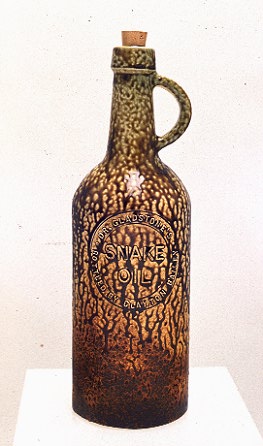
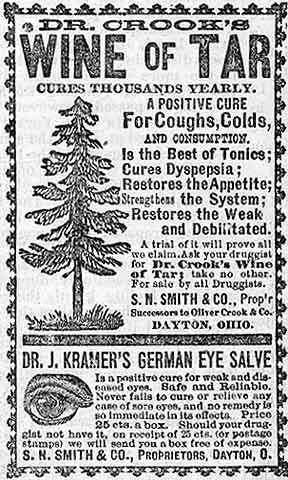
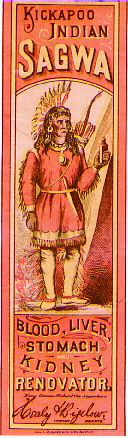
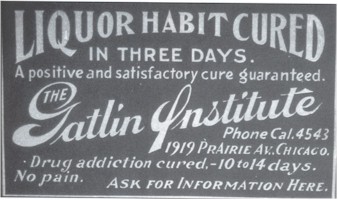
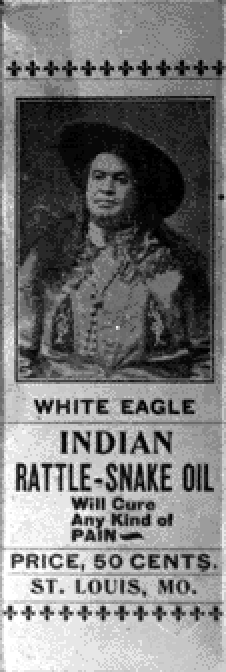
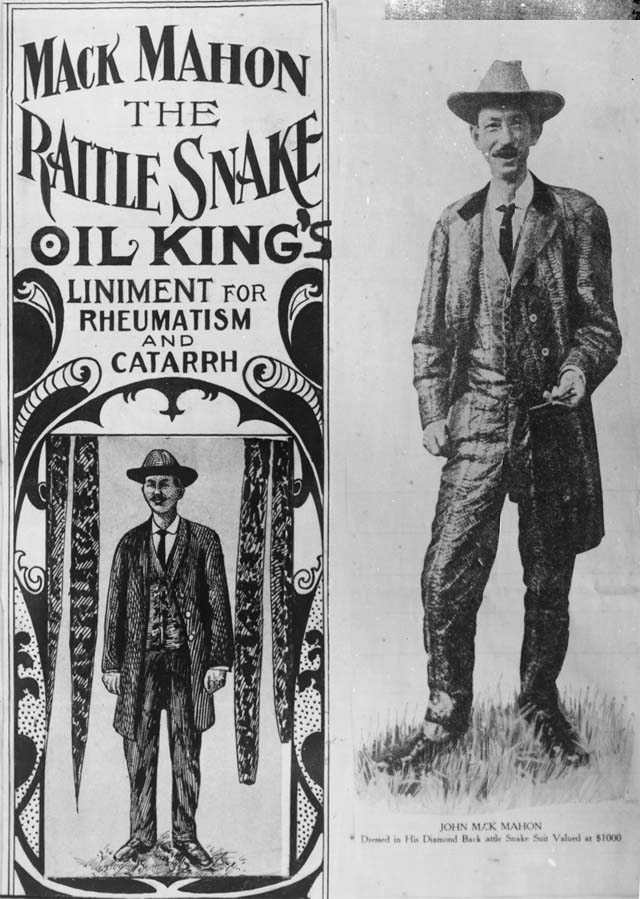
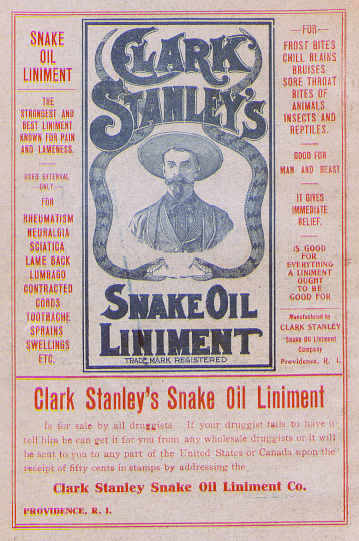
But this has to be some of the most outrageous snake oil:
I just ran across a reference to a book on treatment for
Adult Grandchildren of Alcoholics. No joke. I saw an endorsement on
the back of a Hazelden book about how to quit smoking with the twelve steps,
and just had to check it out. It's Grandchildren of Alcoholics; Another
Generation of Co-dependency by Ann W. Smith. Unbelievable.
It's just like what Andrew Meacham described in his chapter on co-dependency
(in Selling Serenity):
invent a non-existent
disease, and then charge a fortune to treat it.
Now you can seek "treatment" because Grandma was a
wild fun-loving flapper who loved to party and drink bathtub gin and
dance the Charleston.
So just what is co-dependency? Well, we never get a good definition.
It's kind of like the word "smurf". If you ever watched the Saturday morning
Smurf cartoons on TV, you know how they used the word "smurf" for everything:
"We're going to smurf us up a smurfing good time." And another
little blue guy responds, "Smurfy!"
Well, co-dependency is like that. No matter what ails you, it's probably
caused by co-dependency,
even if you don't even know that a distant ancestor once drank alcohol.
That is not a joke or an exaggeration. The authoress tells us that most
"co-dependent" grandchildren of alcoholics weren't even
told about their alcoholic grandparent, but that the imbibing grandparent
was still supposedly messing up their lives anyway. (Page 44.)
Supposedly, any and all of these things are causes or signs of co-dependency:
- childhood sexual abuse
- childhood non-sexual abuse
- an alcoholic parent
- an alcoholic grandparent
- childhood emotional abuse
- a mentally ill relative
- PTSD
- living a victim lifestye
- harsh discipline (pp. 72-73)
- no discipline
- rigid parenting
- loose, passive parenting
- silent violence
- moodiness and inconsistency
- dependence on children for moral support
- feelings not allowed to be expressed openly
- neglect of emotional pain and hurts
- threats of beatings
- lack of affection and touch
- play, laughter, and spontaneity are not permitted
- inappropriate parenting, or uneven parenting
- smothering and over-protection
- external focus (pp. 7-11)
- unable to identify or express feelings
- cannot ask for help
- extreme thinking
- "inability to model appropriate emotions through parenting" (p. 17)
- double messages
- family secrets
- distorted family image (pp. 49-57)
- self-blaming
- good at forming superficial relationships
- difficulty asking for help
- struggle with compulsive behaviors
- tend to be secretive
- prone to episodes of depression or anxiety
- strong family loyalty
- shame for being chemically dependent
- difficulty with relationships (pp 59-62)
- out of touch with feelings
- poor self worth
- feel angry a lot
- an inability to set limits or boundaries in most areas of their lives (pp. 77-88)
- fear is the dominant emotion
- compulsive need for intimacy
- under-reactors and over-reactors
- extreme thinking (again)
- passivity
- self-blame and guilt
- physical illness and addiction
- loss of spirit
- victims become abusers
- teenagers run away from home (p. 159)
Some of those pairs of items form
double-binds — either way, somebody has
"codependency":
-
"harsh discipline — no discipline"
-
"rigid parenting — loose, passive parenting"
-
"under-reactors and over-reactors".
-
"strong family loyalty — good at forming superficial relationships — difficulty with relationships "
-
"strong family loyalty — teenagers run away from home"
Either way, you are "diseased" with co-dependency, and you need to pay Ms. Smith
money for "treatment". You can't win.
And I love this "sign of co-dependency":
"shame for being chemically dependent".
What about its opposite?
Is it a sign of good mental health if you are proud to be addicted and brag about it?
The authoress then tells us:
Redefining Abuse — My definition of abuse is any behavior which deliberately
or even inadvertently, damages or detracts from the self-esteem of any
human being. The reader's immediate reaction might be that according to this
definition, almost any action can be interpreted as abuse.
Grandchildren of Alcoholics; Another Generation of Co-dependency,
Ann W. Smith, page 67.
Yeh, that was my reaction. Then the authoress tells us that it's all a matter of
degree, and how abusive the abuse was (pp 67-76), which still leaves us in a fog with
no clear definitions.
Sometimes Smith's characterization and stereotyping of "co-dependents" is absurd:
Betsy ... was the wife of an alcoholic.
She was caught in the cycle of threatening to leave her abusive alcoholic husband,
occasionally doing so but always returning. ...
She was painfully aware that her life was exactly like her mother's had been.
She was an Adult Child, absolutely incapable of change using insight alone.
Grandchildren of Alcoholics; Another Generation of Co-dependency,
Ann W. Smith, page 116.
Such extreme language, such
absolute black-and-white thinking,
"exactly like ... absolutely incapable".... That is obviously untrue.
It can't be correct.
(Besides which, Ms. Smith listed
"extreme thinking" as one of the
signs of co-dependency. Is Ann Smith a crazy co-dependent?)
To live two lives that are exactly alike, those
two women would have had
to have been born in the same year, in the same place,
to the same parents, and had the same experiences,
etc....
They would have to be identical twins.
That's obviously impossible, since one was the mother of the other.
All that the authoress is doing is shoving descendants of alcoholics into
stereotypes and then declaring that they are all alike because they share one characteristic.
That is the propaganda trick of
The Fallacy of One Similarity.
In addition, we can argue that no woman is "absolutely incapable of change"
unless she is dead.
And what is that "using insight alone"
qualifier
supposed to mean?
Insight isn't our only skill.
People often change their behavior based on their desires — the
desire to be something, or the desire to get something, or the desire to avoid
something — like the desire to avoid pain and death.
People don't just use "insight alone" to decide what to do.
(Word games — the Steppers just inundate us in a tsunami of word games.)
Then Ann Smith tells us that 12-Step groups like A.A., Al-Anon, and ACOA
aren't enough "help", and you also need her version of "therapy" too:
It is my belief that self-help alone is not enough for the ACoA/GCoA in
most cases.
Grandchildren of Alcoholics; Another Generation of Co-dependency,
Ann W. Smith, page 125.
Nevertheless, Ms. Smith still requires "active involvement in a 12-Step
recovery program" as part of her treatment program.
(Page 101, italics in the original.)
And she uses 12-Step meetings for "on-going support" during and after her
"therapy".
(Page 107.)
Then this authoress even discusses (expensive) inpatient treatment
for the condition of being an "ACoA/GCoA" (Adult Child of
Alcoholics / Grand Child of Alcoholics).
(See pages 108-114.)
The back cover of the book tells us that the authoress
"designed one of the
first programs in the United States to treat ACoAs on an in-patient
basis. This five-day program currently serves as a model for other such
programs evolving across the country."
But she really recommends "long term" 28-day inpatient treatment
for being the child or grandchild of an alcoholic.
One of the advantages: She says that health insurance companies
are more likely to pay for long-term treatment, even when they won't cover
short-term treatment.
(Page 109.)
How convenient for the Stepper "counselors" who make a living
by selling this quack medicine.
Then we learn that the expensive inpatient treatment doesn't exactly work;
it doesn't really fix the problem. In fact, you might end up far worse, really messed up:
"Aftercare is more than essential; it is the key to the success of any
inpatient program, and must be emphasized from beginning to end. Without
adequate follow-up, the individual will be left feeling abandoned and
unable to function in the real world."
Grandchildren of Alcoholics; Another Generation of Co-dependency,
Ann W. Smith, page 113.
So the patients are left addicted to the "treatment" and unable
to function "in the real world" if they don't get their fix?
Just where else is there to function, besides in the real world? La-La-Land?
A mental hospital? An insane asylum?
And of course the authoress recommends that you continue going to your 12-Step
group (or groups) both before and after treatment. In fact,
"There is no better means to discovery of a Higher Power than within
a 12-Step program."
Grandchildren of Alcoholics; Another Generation of Co-dependency,
Ann W. Smith, page 125.
(I wonder what the Pope would say about that...
Or the Southern Baptist Conference...)
And again, notice
the bait-and-switch trick, the sudden change in objectives: The goal
was supposed to be healing, to become mentally and emotionally whole, but Ms. Smith suddenly
changed the goal to "discovery of a Higher Power" — i.e., the religious conversion
of her patients.
For me, the real kicker was this story:
Don S., age 47, is an Adult Child who was showing signs of a co-dependent crisis
on the job, with his health and at home. He was progressively becoming
more short-tempered and suffered from chronic headaches which caused him to
miss a great deal of work. When he did work, Don put in 10-to-12-hour days
and looked exhausted. At home, Don was losing interest in his children, and
his relationship with his wife was distant and angry.
Don's denial was such that he was unable to see the reality of his situation
and seek help. Fortunately, his wife, also an ACoA, but in recovery, was able
to see the signs and contacted the Employee Assistance person at his place
of employment. She had tried unsuccessfully before this to convince Don to
go to a counselor with her.
Her only alternative was to watch her husband die emotionally, possibly even
physically, or seek professional help to do a formal intervention. After several
weeks of preparation, and with the assistance of Don's co-workers and another friend,
Don agreed to accept treatment in an inpatient co-dependency program.
Grandchildren of Alcoholics; Another Generation of Co-dependency,
Ann W. Smith, page 95.
Notice how nobody seems to have even considered asking an actual medical doctor
or psychiatrist to see what the guy's problem might be.
The authoress just talks about getting the guy to a "counselor",
even though the guy's life was supposedly in danger.
Apparently, the authoress considers the eight years of medical school
and two or three years of internship that
real doctors go through to be useless and irrelevant.
(...Perhaps because few real doctors parrot the co-dependency party line —
neither the American Medical Association nor the American Psychiatric
Association recognize the existence of any such "spiritual disease"
as co-dependency.)
The guy's 12-Stepper ACoA wife just decided that,
since she wasn't "in denial", she was qualified to
single-handedly diagnose his problem as "a co-dependency crisis"
and arrange an "intervention" to force him into "inpatient
co-dependency treatment" at company expense.
Yes, Dorothy, I'm really sure that we aren't in Kansas any more.
The authoress of that book isn't a medical doctor or a psychiatrist either, by the way.
The Hazelden book on quitting smoking with the 12 steps lists
her alphabet soup as "M.S., C.A.C.". (Her own book didn't list any degrees,
but Andrew Meacham tells me that she also has a Ph.D.) So she is a
certified addictions counselor with a Ph.D., not a medical doctor,
but she apparently considers herself qualified
to diagnose a possible severe and dangerous medical or psychiatric problem in a clean and sober
non-addict as "a co-dependency crisis".
What a great way to expand your practice, even if it is practicing medicine
without a license.
Then Ms. Smith warned us about her incompetent competitors:
Many therapists are just beginning to work with Adult Children, and may not
even know that a Grandchild needs help. In addition, the services offered are
not always labeled in a manner that tells the client what the primary goal
is, for example, education vs. treatment.
Grandchildren of Alcoholics; Another Generation of Co-dependency,
Ann W. Smith, page 95.
Speaking of which, Ms. Smith never told us just what constituted her
style of "treatment", what was done,
or how it worked, or even if it did really work, or how she measured
"success" — or if she even measured it at all.
We got no such information. Zilch. Nada.
Ann Smith gave us lots of laundry lists of symptoms or signs of the "spiritual disease
of co-dependency", but she never told us what her treatment was.
We were left to assume that her brand of inpatient treatment
would somehow work and produce some unspecified positive results, without
any actual evidence at all.
The authoress gave us no numbers at all — nor any other information —
when it came to the success rate or the effectiveness of her methods of
treatment.
She didn't even bother to give us a Big-Book-style collection of
alleged success stories.
Ann Smith only said that her treatment might disrupt your life and leave
you crippled:
Then the authoress' schemes to force more patients into her
"co-dependency clinic" become downright frightening.
Ms. Smith advises parents to force their children into her facility:
Should I force my children into treatment for co-dependency if they don't
want it? ...
In my experience with children, every child has some resistance.
This does not mean they won't respond to treatment.
Some teenagers, especially scapegoats, may desperately want treatment but be
unwilling to admit it openly.
Grandchildren of Alcoholics; Another Generation of Co-dependency,
Ann W. Smith, pages 158-159.
Oh, and Ann Smith says that you can also use her "co-dependency treatment" to
brainwash and punish your children, too, and to elicit obedience and compliance
from the little monsters:
Treatment has been used as an "or else" in some cases.
For instance, a runaway teen cannot come home unless she agrees to get treatment.
With young people who are extremely resistant, we need to take advantage of these
special "opportunities" to offer help.
Grandchildren of Alcoholics; Another Generation of Co-dependency,
Ann W. Smith, page 159.
- Who says that runaway teens are always at fault, and need "treatment"?
-
What if the girl was running away from a drunken abusive father or a child-molesting uncle or step-father?
-
Shouldn't he be the one who gets locked up in a "treatment facility" and pushed into a
psychotic breakdown?
-
Why would teens ever want to return to such a household,
with or without "treatment" as a condition of return?
- And I can't help but notice that no matter what the problem is,
Ms. Smith's clinic would make more money.
- The youths are "extremely resistant" to what, exactly?
- alcoholic abuse?
- 12-Step abuse?
- rape? incest?
- brainwashing?
- fascism?
-
And what part of the "treatment" program breaks down their resistance?
-
Will that "treatment" push those teens over the edge into a psychotic episode,
like happened to Judy?
- Why is the word "opportunities" in quotation marks like that?
'...we need to take advantage of these
special "opportunities" to offer help'?
What is that sentence really supposed to mean, and why do the quotation marks give it
draconian overtones?
Then Ms. Smith reverts to typical Stepper behavior and starts blaming the victim:
While reviewing the list of 'adult abuses', it is clear that there is no such
thing as a completely helpless victim. Very seldom, as adults, are we totally
without options.
Grandchildren of Alcoholics; Another Generation of Co-dependency,
Ann W. Smith, page 76.
And:
IT IS IMPOSSIBLE TO BECOME A VICTIM WITHOUT ADEQUATE TRAINING AS A CHILD.
Grandchildren of Alcoholics; Another Generation of Co-dependency,
Ann W. Smith, page 159.
[The emphatic capitalization was in the original text.]
So how is it our fault if we were abused as children and taught to live a
victim's lifestyle?
And, finally, if you go to your regular doctor or counselor and he or she tells you that
you don't need any treatment for "co-dependency", Ms. Smith
gives you this advice:
... don't waste your time and/or money trying to convince someone you are
sick enough to be there. A really good therapist, trained in family systems,
will understand what you are saying and will help you to make connections
with the past. Your present unmanageability will be evidence enough that
something is wrong.
Grandchildren of Alcoholics; Another Generation of Co-dependency,
Ann W. Smith, pages 100-101.
- If the doctor or counselor says that we aren't sick with 'codependency' and don't need
any quack medicine treatment,
what makes the authoress Ann Smith so sure that we are sick and we really do
need her expensive treatment?
How can she make that diagnosis when she hasn't even seen us — not ever?
- "Codependency Treatment" will help us make what "connections with
the past"? We aren't treating amnesia here. That is just so much double-talk and nonsensical babbling.
- And what about "Your present unmanageability"?
Who says that our lives are unmanageable, and that we are powerless over our problems?
Only the 12-Stepper crazies.
- And once again, we have a Stepper telling us that a thoroughly-indoctrinated
true-believer 12-Step counselor, sponsor, or "therapist"
who parrots the co-dependency party line
is superior to a real doctor for diagnosing and treating various ailments.
If a real doctor says that we aren't sick from "codependency", and a Stepper says that
we are, the Stepper wins.
It's just like how the Big Book tells us that Alcoholics Anonymous members
are superior to real doctors when it comes to curing alcoholics:
Here was a book that said that I could do something that all
these doctors and priests and ministers and psychiatrists that I'd
been going to for years couldn't do!
The Big Book, 3rd Edition, page 473.
Also see
Andrew Meacham's take on
Grandchildren of Alcoholics.
Janet Geringer Woititz, Ed.D., also wrote a book on children of alcoholics,
titled simply "Adult Children of Alcoholics".
That book reminds me of astrology. One of the big problems with astrology
is that it attempts to define people's personalities and predict their destinies
based on just a few
facts, like time of birth, sun sign, moon sign, rising sign, and the conjunctions
of a few constellations and planets.
Similarly, Woititz believes that she can describe people's personalities
on the basis of only one single fact — that they are children of alcoholics.
Woititz devotes the majority of her book to teaching us that all
children of alcoholics are described by this stereotype:
- Adult children of alcoholics guess at what normal behavior is.
- Adult children of alcoholics have difficulty following a project through from
beginning to end.
- Adult children of alcoholics lie when it would be just as easy to tell the truth.
- Adult children of alcoholics judge themselves without mercy.
- Adult children of alcoholics have difficulty having fun.
- Adult children of alcoholics take themselves very seriously.
- Adult children of alcoholics have difficulty with intimate relationships.
- Adult children of alcoholics over-react to changes over which they have no control.
- Adult children of alcoholics constantly seek approval and affirmation.
- Adult children of alcoholics usually feel that they are different from other people.
- Adult children of alcoholics are super responsible or super irresponsible.
- Adult children of alcoholics are extremely loyal, even in the face of evidence that
the loyalty is undeserved.
- Adult children of alcoholics are impulsive. They tend to lock themselves into a
course of action without giving serious consideration to alternative behaviors or
possible consequences. This impulsivity leads to confusion, self-loathing and
loss of control over their environment. In addition, they spend an excessive
amount of energy cleaning up the mess.
Adult Children of Alcoholics, Janet Geringer Woititz, Ed.D., pages xxvi & xxvii.
Item 11 is another double-bind — damned if you do, and damned if you don't.
You are a stereotypical ACOA no matter whether you are responsible or irresponsible —
and whether you are guilty of "super" or extreme behavior is really
just somebody's arbitrary value judgement.
If you are moderately responsible,
-
You will appear to be
"super responsible" when compared to derelict homeless alcoholics who are
completely irresponsible.
-
You will appear to be "super irresponsible" when compared to
rigid, straight-laced control freaks and compulsively neat people.
You can't win.
Adults who were terrorized and abused during their childhood may well be
suffering from PTSD — Post Traumatic Stress Disorder — but that is a
very different thing than the condition that Janet Woititz is describing.
It is absurd to declare that all children of alcoholics fit into a
certain stereotype and that they all suffer from the same mental or
"spiritual" problem, and they all misbehave in the same ways,
and that they can all then be "treated" with the same
"spiritual" 12-Step program. But that's what she says:
Another aspect of the snake oil routine is the assumption that
the "magic of the Twelve Steps" can solve myriad problems
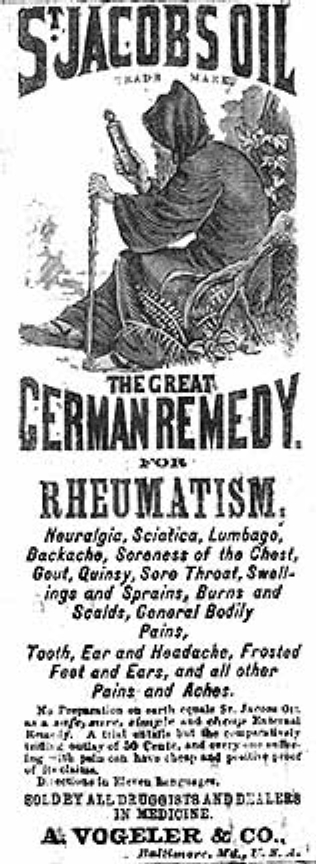
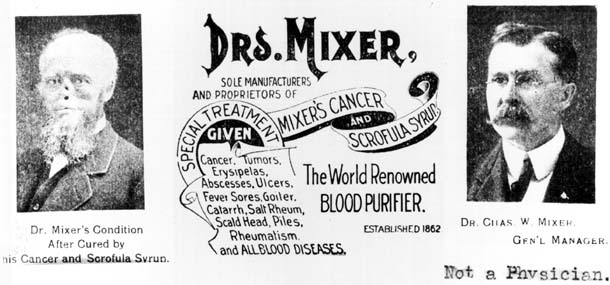
in a member's life — even medical ailments.
Sponsors in Alcoholics Anonymous, Narcotics Anonymous, and
Dual Recovery have a bad habit of telling new sponsees to stop
taking their pills — to
stop taking the medications that a
real doctor has prescribed — and just trust the Twelve Steps to
heal them.
Those sponsors actually do believe that "spiritual principles"
will fix all of your medical problems. The parallels with
faith healing and the Christian Science religion are immediate
and obvious, and so are the memories of what happened to some of those
other believers — how they had children dying for the lack of
proper medical treatment.
Well, the 12-Steppers have people dying that way, too.
And Ms. Ann Smith, whom we just discussed for treating grandchildren of
alcoholics, also warns us not to take medications. In a neat example of
double-talk, she first says that we may need medications, and then she says,
in bold-face type, that we shouldn't take them:
Some Adult Children and Grandchildren may discover that they are in
need of anti-depressants or other medications before they can fully recover.
Prior to a decision to accept medication, it is wise to have the opinions
of both a psychiatrist and a trusted therapist.
(A word of caution: The use of other mood-altering medications, like
tranquilizers, can be very dangerous to a recovering addict and only
a band-aid on the real problem for a non-addict.)
Grandchildren of Alcoholics; Another Generation of Co-dependency,
Ann W. Smith, page 110.
-
First off, she recommends that we get the opinion of both a psychiatrist and
a therapist before "accepting" medications. (As if
some radical doctor is trying to shove drugs on us, and we don't know if we
should take them...)
What if they disagree? Who has the final say?
What if the real doctor — the psychiatrist — says, "Take the pills"
and a fundamentalist anti-medications 12-Step-oriented
"therapist" says "Don't take any medications"? Who wins?
- If the Stepper gets to veto the psychiatrist, then the Stepper is practicing
medicine without a license, rewriting the prescriptions of a real doctor.
(And practicing medicine without any medical training, either.)
- If the psychiatrist gets to out-vote the 12-Step-oriented "therapist", then why
bother to ask the "therapist" in the first place? Why should the opinion of
a Stepper who has no medical training even be considered?
- The authoress says,
"tranquilizers can be ... only
a band-aid on the real problem for a non-addict"?
Oh really? Just when did the certified addictions counselor Ann Smith become
a medical doctor who is qualified and authorized to prescribe or proscribe
medications for non-addicts? (That is, for normal people.)
That isn't her field, and they aren't her patients. She isn't a doctor or a psychiatrist.
She has no business giving medical advice or treatment to non-addicts.
In fact, it is illegal for her to give medical advice or treatment to anyone,
addict or non-addict.
She isn't licensed to practice medicine. She isn't licensed to prescribe medications.
She isn't qualified to advise anyone to take or not take medications.
- How could she even know what an unnamed non-addict's
"real problem" might be? Anne Smith simply assumes that all "Adult Children
and Grandchildren" suffer from the imaginary disease of "codependency".
- That is a dangerous over-generalization.
- No real doctor who is even halfways competent would ever make such a broad sweeping
statement about a group of patients about whom he knows absolutely nothing,
and whom he has not even examined.
- The authoress cannot possibly know what medical or psychiatric problems some
unnamed non-addicted person might have,
and she cannot possibly know whether he needs to take medications.
- Nevertheless, Ms. Smith declares in bold-face type
that medications are
"only a band-aid on the real problem for a non-addict",
without having a clue about what the "real problem" might be,
or even who the real patient might be.
- Ms. Smith is arrogating the medical doctor's and the psychiatrist's
privileges again, and usurping their authority to prescribe or recommend against
medications.
- And Ms. Smith is simply parrotting the Steppers' prejudices against medications,
once again:
Also see the Cult Test
answer on Irrationality for more on the
"no medications" issue.
And see The Hazelden Coffee War
for the story of some fundamentalist Steppers so crazy and so extreme that they thought
that coffee was too strong of a drug to allow to people in recovery.
And see the list of A.A. "No Meds" horror stories that I have received:
A.A. "No Meds" Stories.
A lot of people have died because of the A.A., N.A., and Al-Anon opposition to medications.
Footnotes:
1) More Revealed Ken Ragge,
page 178.
Alert Publishing, Henderson, Nevada, 1992.
2) AA Horror Stories,
Rebecca Fransway
See Sharp Press, Tucson, AZ, 2000.
ISBN: 1-884365-24-8
Dewey: 362.2918 T971 2000
Blame-the-victim as the standard method of handling
rapes is described in many chapters. Start with pages 47, 49, 55, and 145.
3)
The Twelve Step groups should not really be called "self-help"
groups, because the first thing that they teach you is that you are
powerless over your problem and cannot heal yourself, and
only a Higher Power can "restore you to sanity." That's Steps One and Two.
So Alcoholics Anonymous is not a self-help group; it's an elf-help group.
4)
The term "Multiple Personality Disorder" is archaic.
The proper current term is "Dissociative Identity Disorder".
D.I.D. is a disorder caused by
severe psychological injury usually sustained without intervention in childhood.
With Dissociative Identity Disorder, someone's
ability to solidify their personality was severely interrupted, so the parts that
are normally not fused before age 8, continue to never fuse due to severe, life
threatening trauma. (Thanks to a reader for that.)
Bibliography:
Grandchildren of Alcoholics; Another Generation of Co-dependency
Ann W. Smith
Health Communications, Inc., Pompano Beach, Florida, 1988.
ISBN: 0932194-55-9
LC: HV5132.S65 1988
Dewey: 362.292
LCCN: 87-23594
Some pretty entertaining quack medicine — well, entertaining unless you are
a victim of it. See
quotes above.
Adult Children of Alcoholics Janet Geringer Woititz, Ed.D.
Health Communications, Inc., Deerfield Beach, Florida, 1983.
ISBN: 1-55874-112-7
Dewey: 362.292 W847a 1983
Simplistic, stupid, pseudo-intellectual bull passed off as some kind of psychology.
See quote here.
Hope for Today Al-Anon Family Groups
Al-Anon Family Group Headquarters, Inc., Virginia Beach, VA, 2002.
ISBN: 0-910034-39-7
LCCN: 2002100375
A book of daily meditations.
Some of the worst mind-bending drivel around. On average, even worse than
Alcoholics Anonymous propaganda.
This is the church that is dedicated to the insane proposition that you should
spend the rest of your life grovelling and wallowing in guilt and powerlessness because
Daddy drank too much alcohol.
Quotes:
here.
Click Fruit for Menu

Last updated 17 January 2015.
The most recent version of this file can be found at
http://www.orange-papers.org/orange-snake_oil.html
|