Alcoholics Anonymous as a Cult
Scorecard, Answers 1 to 10
by A. Orange
So how does A.A. score as a cult? On a scale of zero to ten,
where zero means that it isn't like
a cult at all, and ten means that A.A. is really like a cult, I
score A.A. like this: (Feel free to grab a
piece of paper, and make up your own scores. It isn't like I own
a monopoly on the truth, or anything...)
(To go back and forth between the questions and the answers for
Alcoholics Anonymous, click on the numbers of the questions and
answers.)
1.
The Guru is always right.
The Guru, his organization, and his teachings are all considered above criticism
and beyond reproach.
A.A. scores a 10 on this one.
One just does not criticize the
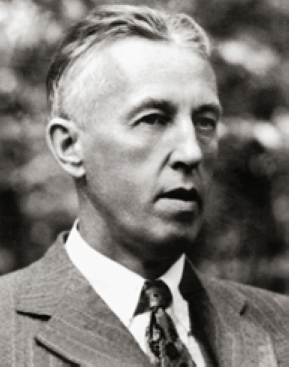
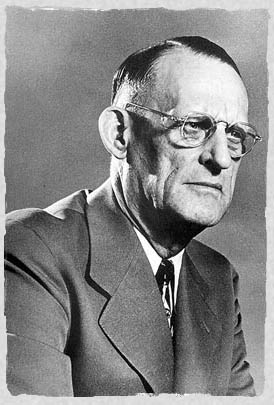
Founders, Bill Wilson and Doctor
Bob, or their wonderful program.
Bill Wilson's "Big Book" — really titled
"Alcoholics Anonymous" —
is cited as the ultimate answer for everything,
a new Bible for contemporary alcoholics. If Bill said something,
then it is automatically true. In the eyes of the A.A. faithful,
Bill Wilson never made a mistake after he started A.A.,
and never gave bad advice to any A.A. member.
Bill Wilson was a paragon of sanity, clarity, wisdom, and honesty.
Many of the true believers in Alcoholics Anonymous actually believe that
Bill Wilson's writings were inspired by God, just like the Bible.
They say that Wilson wrote the Twelve Steps while
receiving guidance
from God.
The faithful reverently pore over books like The Big Book,
Twelve Steps and Twelve Traditions, and As Bill Sees It
as if they were holy scriptures, rather than
the ravings of a lunatic.
Bill's writings in the Big Book
— "the first 164 pages" — are considered to be so sacred
that they cannot ever be updated, fixed, or changed.
The 4th edition of the Big Book was just released, and the first
164 pages are still unchanged. Not a single lie or error was corrected.
The faithful stubbornly ignore the fact that the Big Book and
Bill Wilson's other writings demonstrate all too clearly that he was
suffering from
Delusions of Grandeur,
specifically "Delusional (Paranoid) Disorder, Grandiose Type,
mental disorder number 297.10" as described in the Diagnostic
and Statistical Manual of Mental Disorders of the American Psychiatric
Association, on pages 200 to 203 in the third edition
(DSM-III-R),
and on pages 297 to 301 in the fourth edition
(DSM-IV).
Bill Wilson was also a textbook case of
"Narcissistic
Personality Disorder, mental disorder number 301.81"
— again, as described in the DSM-IV, on pages 658-661.
The faithful also pointedly ignore the overwhelming evidence that Bill Wilson was
- selfish, manipulative,
- superstitious,
- egotistical, arrogant,
- vicious,
- financially dishonest,
- a philandering sexual predator,
- a liar,
- a con artist,
and
- insane.
The faithful even ignore the fact that
Bill Wilson took sexual
advantage of sick women
who came to A.A. seeking help to avoid death from alcohol.
While women were still shaky, cloudy-headed, and confused from alcohol poisoning
and alcohol withdrawal, Bill Wilson was scheming to get into their pants.
That is an especially heartless kind of exploitation of vulnerable people.
Likewise, the true believers ignore the evidence that Dr.
Robert Smith, the other co-founder of A.A., had serious mental problems
of his own. The faithful proclaim was Dr. Bob was a wise saint, in spite
of the facts that:
-
Doctor Bob seems to have been a power-tripping neurotic dogmatic
religious fanatic who got his kicks by having people
surrender
to God on their knees before him. He was so narrow-minded that he
wrote in the Big Book that he feels sorry for you if you won't
accept the religious proclamations of the Bill and Bob team:
If you think you are an atheist, an agnostic, a skeptic, or have
any other form of intellectual pride which keeps you from accepting
what is in this book, I feel sorry for you.
The Big Book, 3rd & 4th Editions, Dr. Robert Holbrook Smith,
Doctor Bob's Story, Page 181.
-
Doctor Bob was such an insane autocratic tyrant
that he forced a 31-year-old alcoholic womanizer on his 17-year-old
step-daughter Sue Smith in order to break up her high-school romance with
her teenage boyfriend Ray Windows, whom Doctor Bob didn't like. The older alcoholic was
"A.A. Number Four" — the constantly-relapsing, philandering,
Ernie Galbraith —
the author of the Big Book first edition story
"The Seven-Month Slip".
The 'seven-month slip' was not a small slip after seven months of sobriety; it was a
full-blown seven-month-long hard-drinking relapse after a year of sobriety.
You would think that Doctor Bob should have learned something about Ernie from reading
his autobiographical story in the Big Book, but no, Doctor Bob didn't learn anything.
Then, after Ernie took Susan for himself,
Doctor Bob complained bitterly that Ernie Galbraith had "double-crossed him"
by seducing Sue Smith.2
-
Dr. Bob was so damaged by alcohol that he was apparently incapable
of supporting himself and his family while ostensibly still practicing
medicine. Dr. Bob had to be supported by an A.A. handout for the rest
of his life.
What kind of a doctor is so incapable of earning his own keep that he
has to be supported by charity?
See Item 38,
Disturbed Guru, for
more information on these two sterling examples of sanity and wisdom.
2.
You are always wrong.
The individual members of the cult are told that they
are inherently small, weak,
stupid, ignorant, and sinful, and are in no way qualified to
judge the Guru or his church.
A.A. scores a 10 on this one too.
According to Bill Wilson and A.A., you are just a brain-damaged alcoholic,
"powerless over alcohol", your thinking is "alcoholic",
and you aren't qualified to judge A.A. or the teachings of Bill Wilson.
If you disagree with any of the
insanity of A.A., it just proves that you are diseased and in denial.
Sober former drinkers who criticize A.A. are dismissed as "dry
drunks."
'When I expressed my feelings of resentment towards AA to a "friend" (who had introduced me to the program), he told me that "criticizing AA is a loser behavior".'
Applicable slogans include:
- "The program is perfect; it's just people who are imperfect."
- "Don't criticize the program."
- "The program never fails; people just fail the program."
- "You have a thinking problem, not a drinking problem."
- "Your best thinking got you here."
- "You need a checkup from the neck up."
- "Stop Your Stinkin' Thinkin'."
- "Stuff Your Feelings."
- "Feelings Aren't Facts."
- "Principles Before Personalities."
- "A person with one eye on yesterday and one eye on tomorrow is living cockeyed."
- "Be Part Of The Solution, Not The Problem."
- "N.U.T.S. — Not Using the Steps."
- "Have A Good Day Unless You've Made Other Plans."
- "Let Go Of Old Ideas."3
- "P.L.O.M. = Poor Little Old Me."
- "You're only as sick as your secrets."
- "We're All Here Because We're Not All There."
- "Some people are so successful in recovery, they turn out to be almost as good as they thought they were while drinking."
- "Take the cotton out of your ears and stick it in your mouth."
- "Sit Down, Shut Up, and Learn Something."
- "Alcoholics can't afford to have resentments."
- "Opinions are like ass-holes — everybody's got one, and most of them stink."
- "He suffers from terminal uniqueness."
- "Get humble."
- "There is a God and you are not Him."
Members are shamed and
made to feel small, weak, stupid and sinful
by constantly
making lists of all of their faults, wrongs, moral shortcomings, and
defects of character, and confessing them both privately and publicly.
Members are taught to beat up on themselves: the slogan is
"You
can't save your ass and your face at the same time."
And if they don't do a good enough job of it, their sponsors will fill in
the gaps in the "ego deflation," which is really destruction of
the new member's self-confidence, self-esteem, self-respect,
and ability to think and act independently.
And members are definitely taught to distrust their own minds and their own feelings:
"Stop your stinkin' thinking'."
"Your best thinking got you here."
"You have a thinking problem, not a drinking problem."
"Stuff Your Feelings."
"Feelings Aren't Facts."
— Popular A.A. slogans
"... no alcoholic ... can claim 'soundness of mind' for himself."
Twelve Steps and Twelve Traditions, William Wilson, page 33.
-
They will be told that
their mind is useless,
damaged by alcohol, and is a great liability. They will be told that
alcohol is cunning,
baffling, and powerful,
and that their minds are being controlled by their
addiction to alcohol, and that their addiction wants to kill them.
-
They will be told that their old bad habits don't want to let go
of them, so any deviation from the program is proof that they are
diseased.
-
Any disagreement with the standard dogma, or any attempt
to think and act independently, is interpreted as alcoholism dominating
the member's mind, and defeating his attempts at sobriety.
On top of all of that, Bill Wilson had a vicious hatred of alcoholics.
That may seem unlikely, since he supposedly
dedicated his life to unselfishly helping alcoholics and saving their lives, but it is true.
Bill Wilson actually denigrated alcoholics and put
them down at every opportunity.
Bill dedicated the second half of his life to being a cult leader and making
alcoholics into his slaves who supported him in comfort for the rest of his life,
so that he never had to work again.
Bill Wilson actually hated himself, and had a vicious contempt for
his own faults and character flaws, so he projected his own failings
onto everyone around him.
He created a very negative stereotype of "The Alcoholic",
and projected all of his faults onto that mythical character, and then he
said, "Look at how disgusting he is. We are all like that."
Bill Wilson declared that:
- Alcoholics' personalities are dominated by
"character defects" (meaning: sins),
particularly the
Seven Deadly Sins of
Pride, Greed, Sloth, Gluttony, Lust, Anger, and Envy.
- Alcoholics are very dishonest, and will
"wiggle
out of" the terms of a contract, if they can do it.
- Alcoholics are very selfish.
- Alcoholics are
full of resentments.
- Alcoholics are
an
argumentative lot.
- Alcoholics are all stupid,
superstitious, and cowardly.
- Alcoholics are
manipulative,
and will always try to get their own way in some underhanded fashion.
- Alcoholics are completely selfish and inconsiderate.
For some of them, recruiting another member for A.A. was
the first
time in their lives that they had ever committed an unselfish act.
- Alcoholics are all alike, and all alcoholics have immensely
inflated egos, and they are all
pompous, self-important,
strutting-peacock fools. They think they are "the center of the
Universe", and too big and
"too good to
need God."
- Alcoholics even imagine that they are God (which is why Ernest Kurtz
wrote a very pro-AA book named
"Not God").
- Alcoholics
don't
want to be moral.
- They don't want to be good.
- They don't want to do the right thing.
- They don't want to do what will help them to recover.
- They won't work the Twelve Steps until they "bottom out"
and "the lash of alcoholism" beats them into submission.
- The alcoholic doesn't like to live
any place but in
the past.
- See the file
The 'Us Stupid Drunks' Conspiracy
for much, much more of Bill's ravings about how bad alcoholics are.
All of which leaves us with one big question, "If alcoholics
are all so bad, how could the leading alcoholic, Bill Wilson, be so
'spiritual'?"
Also see these Cult Test items for more of the You Are Always Wrong
routine:
3.
No Exit.
A.A. scores a 10 again.
They say, "You can't leave, because if you do, you
will relapse and die drunk." They say that the world is a dangerous
place and you can't make it on your own.
Then they recite a list of
friends who didn't do the Twelve Steps, and
who went out and died. A.A. also tells people that they will turn
into bitterly unhappy "dry drunks"
if they leave A.A. and manage to stay abstinent.
The slogan is, "Don't leave five minutes before the miracle."
And, "A.A. is like the Mafia: If you leave it, you die."
A.A. also guilt-trips people into not leaving A.A. by declaring that "Now you must
keep coming back and teach the newcomers, and freely give what was freely given to you.
It would be selfish for you to leave and not give back to others."
The Big Book says, referring to this "spiritual
quit-drinking program":
We have indulged in spiritual intoxication.
Like a gaunt prospector, belt drawn in over the last ounce of food,
our pick has struck gold. Joy at our release from a lifetime of
frustration knew no bounds. Father feels he has struck something
better than gold. For a time he may try to hug the new treasure
to himself. He may not see at once that he has barely scratched a
limitless lode which will pay dividends only if he mines it for
the rest of his life and insists on giving away the entire product.
A.A. Big Book, 3rd & 4th Editions, Chapter 9,
The Family Afterward, pages 128-129.
"Giving away the entire product" is a euphemism for
recruiting and training new members for A.A.,
"freely giving that which was freely given to us".
So that paragraph really means that you can't ever
leave the group, and must spend the rest of your life "working a strong
program" and recruiting new members.
(And the line about, "For a time he may try
to hug the new treasure to himself" is ridiculous.
Bill Wilson did not have that problem at all. He became a
raving proselytizing missionary immediately after
his own religious conversion,
starting home churches
within days of his belladonna-induced "vision of God",
and driving the other alcoholics nuts and
scaring them and
driving them away with all of his preaching
and trying to convert everybody else to his newfound religious beliefs.
"He may try to hug the new treasure to himself."
No, that was not Bill's problem.)
The Northern Illinois Area A.A. Intergroup actually feels entitled to
tell recovering alcoholics
not to go back to college and
finish their degrees — to just stay with the A.A. group,
and stay ignorant and unemployable, and to spend their spare time recruiting for A.A.
at the local jail. No exit. You shouldn't ever leave A.A., not even to go to college.
Lastly, note that A.A. "treatment" of the so-called
"disease" of alcoholism is the antithesis of good medical
treatment. No attempt is made to actually cure the patient of the disease.
Rather than healing people and returning them to normal life in the mainstream of
society, like real doctors do, A.A. has the goal of keeping people coming back to A.A. meetings
for the rest of their lives. You never recover, so you have to Keep Coming Back
to more A.A. meetings.
The goal of 12-Step-based "treatment" is not to heal people
and end the treatment; it is
to addict the patient to the treatment,
to make him
psychologically dependent upon A.A.,
so that he will spend the rest of his life in a 12-Step group like
Alcoholics Anonymous or Narcotics Anonymous.
Bill Wilson wrote:
We are not cured of alcoholism. What we have is a daily reprieve
contingent on the maintenance of our spiritual condition. Every day
is a day when we must carry the vision of God's will into all of our
daily activities.
The Big Book, 3rd & 4th Editions,
William G. Wilson, page 85.
The philosophy of self-sufficiency is not paying off. Plainly enough,
it is a bone-crushing juggernaut whose final achievement is ruin.
Therefore, we who are alcoholics can consider
ourselves fortunate indeed.
Twelve Steps and Twelve Traditions,
William G. Wilson,
pages 36-37.
Therefore dependence, as A.A. practices it, is really a means of gaining
true independence of the spirit.
Twelve Steps and Twelve Traditions,
William G. Wilson, page 36.
Physical and mental slavery equals "spiritual freedom"???
That's another
False Equality propaganda trick.
See the Cult Test item "They
Make You Dependent On The Group" for more information on dependency.
4.
No Graduates.
A.A. scores another 10.
True believers love to brag about this — it's even made into
a bunch of standard slogans:
- Nobody ever graduates.
- There are no graduates.
- Nobody ever graduates from this program.
- A.A. is an education without graduation.
- You are in it for life.
- You will never finish your recovery.
- You will never stop going to meetings.
- You will never stop doing the Twelve Steps.
The Big Book says:
A.A. is not a plan for recovery that can be finished and done with. It is
a way of life, and the challenge contained in its principles is great
enough to keep any human being striving for as long as he lives.
We do not, cannot, out-grow this plan.
A.A. Big Book, 3rd Edition, Sylvia K.,
The Keys Of The Kingdom, page 311.
In conclusion, I can only say that whatever growth or understanding
has come to me,
I have no wish to graduate.
Very rarely do I miss the
meetings of my neighborhood A.A. group, and my average has never
been less than two meetings a week.
... our one desire is to stay in A.A. ...
A.A. Big Book, 3rd Edition, Jim Burwell,
The Vicious Cycle, pages 249-250.
The literature of Al-Anon reinforces this "no graduates"
teaching:
Another friend had attended Al-Anon a couple of years, and ended up
chairman of the group for six months.
As she went home the night new officers were chosen, she thought to
herself,
"I've attended Al-Anon for three years. I've learned all it
teaches and I think I've graduated. I'll go next week to turn over
the chairmanship and then I'll be free Wednesday nights."
But something happened that next Wednesday at her job and her
first thought was, "This is where Al-Anon can keep me straight
— I need it more than ever." That was a dozen years ago and
she is still attending an Al-Anon group!
Al-Anon's favorite forum editorials, page 141.
We are never told what crisis on the job prompted the woman not to
leave Al-Anon; it was just some vague "something happened."
Note the attitude of
"You are mentally incompetent.
You can't handle the stresses and pressures of real life by yourself,
but your 'support group' — a group of similarly-crippled mental
incompetents who aren't capable of running their own lives either
— will somehow 'keep you straight'."
Hence, you will never graduate, because "something"
will always happen,
so you will end up giving the group every Wednesday evening for the
rest of your life.
No graduates. You can't ever leave the cult.
5.
Cult-speak.
A.A. gets a 10 here.
A.A. has plenty of cultish terminology, lots of
loaded language
and bombastically redefined words, and a whole bunch of
mind-bending slogans
and thought-stopping clichés.
In his writings, William Wilson displayed a really bad case of the
Alice in Wonderland
"Words mean whatever I want them to mean" syndrome:
- This is a good redefinition: in Alcoholics Anonymous
terminology, the word "sobriety" doesn't
mean "no alcohol" or "not drinking" or "an unintoxicated
state"; it has this bombastic redefinition:
"A special state of Grace gained by working the Steps and
maintaining absolute abstinence. It is characterized by
feelings of Serenity and Gratitude. It is a state of living
according to God's will, not one's own. It is sanity."
(Even the word
"sanity"
here is redefined; it is
Frank Buchman's
"surrendered-to-God-control", or surrendered-to-Frank-control, state of living.)
Then A.A. members speak about "the quality of someone's sobriety"
as if evaluating levels or degrees of spirituality.
-
Another redefinition: "recovery" does not mean rebuilding
your health, mind, body, and life while not drinking; it means going to
A.A. meetings, doing The Twelve Steps, and
abstaining from alcohol. According to A.A. dogma, someone can't be
recovering from alcoholism if he isn't going
to A.A. meetings and doing The Twelve Steps;
he's "only abstaining", or
"only dry",
or "only a
dry drunk".
(And, strangely enough, someone,
like William G. Wilson, could be
actively killing himself
with tobacco, and dying of emphysema, and still somehow be
"in recovery" and living a spiritual life in
compliance with God's will. I guess God really wanted Bill to die of
lung problems early, and not be of service for any more years.)
-
A "dry drunk" is
someone who has quit drinking alcohol, but who won't do
Bill Wilson's Twelve Steps. Such an unfortunate fellow will supposedly
display all of the objectionable characteristics and behavior of an
obnoxious drunkard, even though he hasn't drunk any alcohol.
In addition, dry drunks are supposed to be angry and
resentful and bitterly unhappy,
because they aren't getting big doses of "Serenity and
Gratitude" from doing the Twelve Steps.
-
"Going out" means leaving Alcoholics Anonymous and resuming drinking.
(Those two actions are considered synonyms: They say that if you quit A.A.,
you will of course resume drinking
and almost certainly die drunk in a gutter.)
-
Another redefinition: Bill Wilson wrote that
an attitude of proper humility must include
"a desire to seek and do God's
will."1
So all of the innocent-sounding appeals for "humility" are not
requests for people to avoid egotism — they are really
veiled demands for people to practice Step Eleven
and spend every day of the rest of their lives
"Seeking and Doing the Will of God"
(as "God's will" is
defined by their sponsors and the group's other elders, of course).
- "Sanity is living according to God's Will, rather
than one's own."
Notice what that does to Step Two:
Came to believe that a Power
greater than ourselves could restore us to sanity.
It becomes:
"We came to believe that God could make us obey God's wishes."
That is an example of the "constant redefinition game",
where words have one definition for the newcomers, and a very different
definition for the old-timers who are "in the know."
(There are
different levels
of truth.)
- To a beginner, the "insanity" term in Step Two means that
someone was insanely drinking far too much alcohol, and killing himself.
- To the old-timer, the "insanity" was living a life not
spent "Seeking and Doing the Will of God."
- Likewise, even the "Power greater than ourselves"
and "God as we understood Him" will get
redefined to "The
God of Bill Wilson's understanding."
So, finally, Step Two will also come to mean that we should
practice Step Eleven and spend our time "Seeking and Doing the Will
of God"
(as defined by our sponsors, of course).
-
Then Bill redefined the word "ambition":
"True ambition is not what we thought it was. True ambition is the profound
desire to live usefully and walk humbly under the grace of God."
Twelve Steps and Twelve Traditions,
William G. Wilson, pages 123, 124-125.
- "Playing God" means managing your own life, taking care
of yourself, and living your life as you choose.
(A.A. Big Book, 3rd & 4th Editions, William G. Wilson,
Chapter 5, How It Works, page 62.)
-
In Bill Wilson's mind, being a slave of God equals "freedom":
First of all, we had to quit playing God. It didn't work. Next, we decided
that hereafter in this drama of life, God was going to be our Director.
He is the Principal; we are His agents. He is the Father, and we are His
children. Most good ideas are simple, and this concept was the keystone
of the new and triumphant arch through which we passed to freedom.
A.A. Big Book, 3rd & 4th Editions, William G. Wilson,
Chapter 5, How It Works, page 62.
- "Willing to clean house" really means "willing
to confess all of your sins, 'defects of character', and 'moral shortcomings' to someone else."
(Twelve Steps and Twelve Traditions,
William G. Wilson, page 63.)
- A "drastic housecleaning which requires discussion
with other people" means "a guilt-inducing confession
session where
you confess all of your sins to some Alcoholics Anonymous members."
(A.A. Big Book, 3rd & 4th Editions, William G. Wilson,
Chapter 7, Working With Others, page 94.)
Note that the Big Book hints that your
sponsor is not supposed to blab your most embarrassing personal secrets
all over town after you do your Fifth Step, but
they've been known to do it anyway. Some sponsors did it
to punish people who dared to leave A.A..
(See: A.A. Horror Stories, Rebecca Fransway, pages
116, 139, and 232.)
I've also heard stories of sponsors blackmailing people with what they learned from
5th-Step confessions.
- "Emotional security" means "getting our own
way."
(Twelve Steps and Twelve Traditions, William G. Wilson,
page 115.)
- "Helping others selflessly" means recruiting for
Alcoholics Anonymous.
(A.A. Big Book, 3rd & 4th Editions, William G. Wilson,
Chapter 7, Working With Others, page 97.)
- "Keeping spiritually active" means going recruiting
for Alcoholics Anonymous.
(A.A. Big Book, 3rd & 4th Editions, William G. Wilson,
Chapter 11, page 156.)
- "Helping other alcoholics" means recruiting for
Alcoholics Anonymous.
(A.A. Big Book, 3rd & 4th Editions, William G. Wilson,
Chapter 9, page 129.)
- "Self-sacrifice for others" means
recruiting for Alcoholics Anonymous.
(A.A. Big Book, 3rd & 4th Editions, William G. Wilson,
Chapter 1, Bill's Story, pages 14-15.)
- "Acting the Good Samaritan every day" means
recruiting for Alcoholics Anonymous.
(A.A. Big Book, 3rd & 4th Editions, William G. Wilson,
Chapter 7, Working With Others, page 97.)
- "Unselfish, constructive action" means recruiting
for Alcoholics Anonymous.
(A.A. Big Book, 3rd & 4th Editions, William G. Wilson,
Chapter 7, Working With Others, page 93.)
- "Placing the welfare of others ahead of your own"
means recruiting for Alcoholics Anonymous.
(A.A. Big Book, 3rd & 4th Editions, William G. Wilson,
Chapter 7, Working With Others, page 94.)
- "Carrying the message to other alcoholics" — Step Twelve —
means recruiting for Alcoholics Anonymous.
(A.A. Big Book, 3rd & 4th Editions, Chapter 5, page 60.)
- "The path of spiritual progress" means doing
Alcoholics Anonymous activities, including recruiting for Alcoholics Anonymous.
(A.A. Big Book, 3rd & 4th Editions, William G. Wilson,
Chapter 7, Working With Others, page 100.)
- "Transcendence of ego" means surrendering your
will and your mind to the Alcoholics Anonymous cult.
(Spirituality:
The key to recovery from alcoholism, Warfield, Robert D.
and Goldstein, Marc B.)
-
"Desires"
and "instincts" mean the same thing,
and the words can be used interchangeably.
(Twelve Steps and Twelve Traditions, William G. Wilson,
pages 48 and 49.)
- And now "traditional treatment
of alcoholism" is supposed to mean A.A. 12-Step treatment.
- One of the most pervasive redefinitions
is the meaning of the word
"spiritual." A.A. dogma says that
A.A. is a "spiritual" program,
not a religion.
(The State and Federal
Judges disagree, but A.A. ignores that.)
Eric Hoffer wrote of
cult doctrines:
There is thus an illiterate air about the most literate
true believer. He seems to use words as if he were ignorant of their true
meaning. Hence, too, his taste for quibbling, hairsplitting, and scholastic
tortuousness.
The True Believer, Eric Hoffer, pages 79 to 80.
Well, if you really want to see hairsplitting and scholastic tortuousness,
start up a debate with A.A. members about the difference between the words
"religious" and "spiritual".
"Spiritual" seems to mean different things at different times:
- Sometimes it means doing the Twelve Steps.
- Sometimes it means going to A.A. meetings.
- Sometimes it means believing in God, as "we"
understand Him, or
as
A.A. understands Him.
- Sometimes it means recruiting new members for A.A..
- Sometimes, it is some kind of technology, or magic:
"Quite as important was the discovery that spiritual principles
would solve all my problems."
(The Big Book, 3rd & 4th Editions, William G. Wilson,
Chapter 3, More About Alcoholism, page 42.)
- Sometimes, it is just part of a smug game of one-upmanship:
"Religion is for people who are afraid of going to Hell;
Spirituality is for people who have been there."
—Which implies
that A.A. people are superior to ordinary religious believers,
because A.A. members are more experienced, and they aren't afraid
of going to Hell any more.
- "Spiritual development" means going to A.A. meetings,
doing the Twelve Steps, and recruiting for Alcoholics Anonymous.
- Turning control of your life and your will over to Something Else or
Somebody Else, like A.A., is also called "spiritual development".
(Twelve Steps and Twelve Traditions,
William Wilson, page 36.)
- And sometimes "spiritual growth" or "spiritual development" means
becoming a religious maniac and obsessively devoting your whole life to A.A., while
neglecting your family and career:
Assume on the other hand that father has, at the outset,
a stirring spiritual experience. Overnight, as it were, he is a different
man. He becomes a religious enthusiast.
He is unable to focus on anything else.
As soon as his sobriety begins to be taken as a matter of course,
the family may look at their strange new dad with apprehension, then with
irritation.
There is talk about spiritual matters morning, noon and night.
...
Though the family does not fully agree with dad's
spiritual
activities, they should let him have his head.
Even if he
displays a certain amount of neglect and irresponsibility
towards the family,
it is well to let him go as far as he likes
in helping other alcoholics [recruiting for A.A.].
...
Though some of his manifestations are alarming and disagreeable,
we think dad will be on a firmer foundation than the man who
is placing business or professional success ahead of
spiritual development.
A.A. Big Book, 3rd & 4th Editions, William G. Wilson,
Chapter 9, The Family Afterward, pages 129-130.
Note that there seems to be no difference between being a
"religious enthusiast" and being obsessed with
"spiritual activities".
It's the same guy doing the same things.
At times, Bill Wilson actually used the words
"religious"
and
"spiritual"
interchangeably.
So much for the slogan,
"It's spiritual, not religious."
- And much of the A.A.-booster literature is even worse when it comes
to defining "spirituality". See the article
Spirituality: The key to recovery
from alcoholism for an entertaining example of someone constantly
flip-flopping around like a fish out of water, trying to figure out what it is.
- The word "suggested" has been tortured as well.
The Big Book says, in Chapter Five, that the Twelve Steps are "suggested"
as a program of recovery. (Page 59.)
Bill Wilson wanted the 12 steps to be a requirement, but the other early
A.A. members wouldn't buy it.
They objected strongly when Bill showed them his first draft of Chapter Five.
They knew that Bill's dogmatic religiosity would drive away many
of the very alcoholics whom the program was supposed to help.
In a loud and long screaming contest, they demanded that Bill label
the Twelve Steps as just "a suggested program".
But Bill got his revenge later — Really Soon "later" —
like
on the very first page of the next chapter that he wrote
(Chapter 6, page 72,) by declaring that you wouldn't overcome drinking, and would
relapse and die drunk, if you didn't do his Twelve Steps.
If we skip this vital step, we may not overcome drinking.
The Big Book, 3rd & 4th Editions, William G. Wilson,
page 72, the first page of Chapter 6.
And then Bill Wilson ratcheted up the pressure in his next book:
Unless each A.A. member follows to the best of his ability
our suggested Twelve Steps to recovery, he almost certainly
signs his own death warrant.
Twelve Steps and Twelve Traditions,
William G. Wilson, page 174.
That is quite a strong "suggestion".
Likewise, the relevant A.A. slogan is:
"It is suggested that you Work The Steps, just like how, if you jump out of an airplane with a parachute, it is "suggested" that you pull the ripcord to save your life."
6.
Group-think, Suppression of Dissent, and Enforced Conformity in Thinking
A.A. gets a 10.
It practices group-think to the max,
has standard answers for everything, and discourages independent thought
or criticism of the program.
"If you try to do things your own way, you will
make a mistake and relapse, and probably die drunk. Just do
things the tried and true way. Avoid
independent thinking; just stop thinking for yourself,"
they say,
"because 'Your best thinking got you here.'
Your thinking is alcoholic. Your brain is too messed up from alcohol for
you to be able to think for yourself."
The true-believer old-timers say that the answer to everything is,
"Do the Twelve Steps, get a sponsor, and read The Big Book."
And they also say,
" READ THE BOOK, get a SPONSOR, develop a HIGHER POWER UNDERSTANDING,
don't DRINK, go to MEETINGS, and call other ALCOHOLICS."
The true believers say that everything you need to know
— about everything in life — is contained
in the first 164 pages of the Big Book:
"The first 164 pages are the meat of the program. The following pages
are an added dose of strength, experience and hope."
In addition, William
Wilson and Dr. Robert Smith are considered the infallible wise men
with the answers to all questions;
if they said something, then it is automatically unquestionably true.
The web site
www.aaprimarypurpose.org
asks,
"Is the program heard in your meetings the same as the program described in the book?"
And it shows a graphic that says
"That Ain't in The Book!"
A.A. claims that groups are autonomous and free to formulate their own styles and
content, but that isn't true at all. Groups that do not parrot the Big Book dogma
with the correct degree of conformity get criticized with cries of
"That Ain't A.A.!", and they often get delisted.
Then, over and over again, you will be told to stop thinking,
and just do what everyone else does. You will be told that your
mind is useless, damaged by alcohol, and is a great liability.
You will be told that
your mind is controlled by your addiction, and that your addiction
wants to kill you. So just follow the standard program, and do
what your sponsor says, and...
"Quit your stinkin' thinkin'."
"Don't drink, don't think, and go to meetings.
"You have a thinking problem, not a drinking problem."
"Your best thinking got you here."
"The three most dangerous words for an alcoholic — 'I've been thinking'"
"Don't go into your mind alone; it's not a safe neighborhood."
"Don't go in your head alone. It's a dangerous neighborhood."
"Just do things the tried and true way."
"Look for the similarities, not the differences."
"People who think they know it all are very irritating to those of us who do."
"You can act yourself into thinking right easier than you can think yourself into acting right."
"I know I'm in trouble when I start thinking I can run my own life."
— A.A. slogans
"... no alcoholic ... can claim 'soundness of mind' for himself."
Twelve Steps and Twelve Traditions,
William Wilson, page 33.
Then some oldtimer will pontificate and tell the story of
how he tried to make a chocolate cake by using his aunt's recipe,
but he only used the parts of the recipe that he liked, and
he left out the rest. The result was a terrible cake. So the moral
of the story is that you must follow the 12-Step recipe exactly as it
is given to you.
People who dare to criticize any of this sacred Group-Think dogma
can be subjected to any of the punishing tactics mentioned in
item 10, Personal attacks on critics.
When it comes to "Group-Feel", A.A. has a bad case of that, too.
Good members are supposed to just "stuff their feelings", and maintain
a flat emotional state that features endless "Serenity and Gratitude."
Other emotions are considered bad, and a sign that someone is failing to "work
a strong program":
It is a spiritual axiom that every time we are disturbed, no
matter what the cause, there is something wrong with us.
If somebody hurts us and we are sore, we are in the wrong also.
Twelve Steps and Twelve Traditions,
William G. Wilson, page 90.
And the injunction against "resentments" is extremely strong:
'Resentment is the "number one" offender.
It destroys more alcoholics than anything else.
From it stem all forms of spiritual disease...'
The Big Book, 3rd & 4th Editions, William G. Wilson,
Chapter 5, How It Works, page 64.
The only exception to this rule is anger:
the old-timers are permitted to snap
and snarl at newcomers who don't conform to the program,
and put them down with caustic remarks that drip with
sarcasm and condescension.
And they pass that behavior off as "tough love."
And of course the oldtimers can attack critics of A.A. with anger, and that does not seem to
violate those principles of "spirituality".
7.
Irrationality.
A.A. gets a 10 on this one (and deserves about a hundred),
for everything from expecting God to micro-manage their lives, and solve
all of their problems, to their claims that God delivers miracles on
demand, to Bill Wilson's demands that we all stop thinking,
give up "Reason"
and human intelligence, and just "have faith."
Robert Thomsen and Ernest Kurtz described in their books
how Ebby Thacher and his friend Shep Cornell worked to convert Bill
Wilson to Buchmanism:
Ebby and Shep C. were now asking him to give up the one attribute
of which he was the most proud, the one quality that set a man above
the animals — his inquiring, rational mind. And they wanted him to
give this up for an illusion.
... what they were asking him to do represented weakness to him.
How could a man so demean himself as to surrender the one thing
in which he should have faith, his innate, inquiring mind? ...
It might be the last arrogant gasp of alcoholic pride but,
miserable and terrified as he was, he would not humble himself
here. On this point he would go out swinging.
Not-God, Ernest Kurtz, page 18, and
Bill W., Robert Thomsen, pages 213-214.
Bill vowed to fight to the end, but within two weeks, under the influence
of delirium tremens, alcohol withdrawal, and
hallucinogenic drugs,
Bill Wilson had flipped out and given up his rational mind,
and "surrendered",
and been "changed" into a true-believer Oxford Group cult member
who then went on to
exhort all other alcoholics
to also abandon Reason, logic, and human intelligence, and just "have faith."
By the way, Bill Wilson never had a problem with giving up his "his inquiring, rational mind".
Bill's whole story about being an icy intellectual and an atheist who believed in science and
evolution until he was converted into a believer by a miraculous spiritual experience was an act, a lie.
Bill Wilson was a superstitious flunk-out, not an
intellectual. Bill didn't even get "a gentleman's C's" in school.
He didn't even graduate.
Bill Wilson excelled at baseball in school, not in math, science, philosophy,
or theology.
And then Bill exhorted his followers to give up their intelligence and their
rational, thinking minds, and just believe in what he said.
Bill Wilson stated over and over again that he wanted people to
abandon logic, scientific thinking, and reason, and use superstition
and faith as the answer to all of their problems:
Instead of regarding ourselves as intelligent agents, spearheads of
God's ever advancing Creation, we agnostics and atheists chose to believe
that our human intelligence was the last word... Rather vain of us,
wasn't it?
The Big Book, 3rd & 4th Editions, William G. Wilson, Chapter 4,
We Agnostics, page 49.
(Notice how Bill Wilson often used the word "we"
the way a preacher does.
A preacher will say "We are sinners, may God have mercy on
us," when he really
means "YOU are sinners. May God have mercy on YOUR miserable
worthless asses.")
Reason isn't everything. Neither is reason, as most of us use it,
entirely dependable, though it emanate from our best minds.
The Big Book, 3rd & 4th Editions, William G. Wilson, Chapter 4,
We Agnostics, pages 54-55.
Imagine life without faith!
Were nothing left but pure reason, it wouldn't be life.
The Big Book, 3rd & 4th Editions, William G. Wilson, Chapter 4,
We Agnostics, Page 54.
It wouldn't be life? Really? What would it be? Spock and the other Vulcans
might have something to say about this...
And what about our hormones and libido — our horniness?
The Urge To Merge is the very essence of life, and it doesn't
require faith in any religion, Bill's or otherwise...
But we believed in life of course we did. We could not prove life
in the sense that you can prove a straight line is the shortest
distance between two points, yet, there it was. Could we still say
the whole thing was nothing but a mass of electrons, created out of
nothing, meaning nothing, whirling on to a destiny of nothingness?
Of course we couldn't. The electrons themselves seemed more intelligent
than that. At least, so the chemist said.
The Big Book, 3rd & 4th Editions, William G. Wilson, Chapter 4,
We Agnostics, Page 54.
What nonsense. Of course we can prove life.
I see that I am alive. I sit here, and type this, and I have hands that
I can see, which hit the keys, and I inhale, I watch myself breathe,
and I can see very clearly that I am alive.
Likewise, you can see that you are alive. There is no doubt
about it.
And who said that the electrons were created out of nothing,
meaning nothing? Only Bill Wilson... The atheists sure don't say that,
because if the electrons were created out of nothing, then a Supernatural
Being had to be around to do the creating.
Bill was trying to imply that since we don't know anything for sure, we should just quit thinking
because we can't possibly get it right. That is a bunch of bull. That is the propaganda
tricks called
"Escape Via Relativism"
and Appeal to Antirationalism.
And Bill insisted that we must give up "Reason", because it
was getting in the way of faith:
Some of us had already walked far over the Bridge
of Reason toward the desired shore of faith. The outlines and the
promise of the New Land had brought lustre to tired eyes and fresh
courage to flagging spirits.
Friendly hands had stretched out in welcome.
We were grateful that Reason had brought us so far.
But somehow, we couldn't quite step ashore.
Perhaps we had been leaning too heavily on Reason that last mile
and did not like to lose our support.
The Big Book, 3rd & 4th Editions, William G. Wilson, Chapter 4,
We Agnostics, page 53.
-
Uh, what "Bridge" to what "New Land"?!
La-La-Land, you say? And we can't step ashore until we dump our logical
thinking minds into the trash can and embrace blind faith in somebody else's
grandiose fantasies?
-
And exactly why am I supposed to bet my life on believing in Bill Wilson's
obviously delusional proclamations?
-
Why would I even want to reach Bill Wilson's "desired shore of faith"?
-
Why is flipping out and becoming an insane unthinking true believer in
a cult religion — a religious maniac — a
religiomaniac —
the only answer to the bad habit of drinking too much alcohol?
In the next sentence, Bill Wilson then declared that we have been
worshipping a false god — "the God of Reason" — so we should
be happy to give up that "god" and accept Bill's irrational
"god":
Perhaps we had been leaning too heavily on Reason that last mile and
did not like to lose our support.
That was natural, but let us think a little more closely.
Without knowing it, had we not been brought to where we stood
by a certain kind of faith? For did we not believe in our own
reasoning? Did we not have confidence in our ability to think?
What was that but a sort of faith? Yes, we had been faithful,
abjectly faithful to the God of Reason. So, in one way or another,
we discovered that faith had been involved all the time!
We found, too, that we had been worshippers. ... In one form or
another we had been living by faith and little else.
The Big Book, 3rd & 4th Editions,
William G. Wilson, Page 54.
In his next book, Bill Wilson continued to demand that people stop thinking:
"... all you really need is a truly open mind.
Just resign from the debating society and quit bothering yourself with
such deep questions as whether it was the hen or the egg that came first.
Again I say, all you need is the open mind."
The sponsor continues, "Take, for example, my own case. I had a scientific schooling.
Naturally I respected, venerated, even worshiped science. As a matter of fact,
I still do — all except the worship part. Time after time, my instructors held
up to me the basic principle of all scientific progress: search and research, again
and again, always with the open mind. When I first looked at A.A. my reaction
was just like yours. This A.A. business, I thought, is totally unscientific.
This I can't swallow. I simply won't consider such nonsense.
"Then I woke up. I had to admit that A.A. showed results, prodigious results. I
saw that my attitude regarding these had been anything but scientific.
It wasn't A.A. that had the closed mind, it was me. The minute I stopped
arguing, I could begin to see and feel. Right there, Step Two gently and
very gradually began to infiltrate my life. I can't say upon what occasion
or upon what day I came to believe in a Power greater than myself, but I certainly
have that belief now. To acquire it, I had only to stop fighting
and practice the rest of A.A.'s program as enthusiastically as I could."
Twelve Steps and Twelve Traditions,
William G. Wilson, pages 26-27.
That story obviously reeks of
mental surrender to the cult.
Just stop thinking, just stop questioning, and wonderful things will happen, Bill says.
And the "sponsor" supposedly didn't find happiness until he
underwent a religious conversion and "came to believe" in
the Alcoholics Anonymous deity.
So much for the often-repeated A.A. statements that
you don't have to believe
anything.
And Bill's whole story about being educated in the sciences was a fraud.
Bill was never educated in the sciences; he flunked out of school. Bill Wilson just
pretended to have been an
atheistic scientist
who was converted into a true believer by a wonderful spiritual experience.
That's why Bill Wilson's
"basic principle of all scientific progress: search and research"
is wrong.
The basic principle of science is "Observe reality, and learn from what you see."
Learn things like,
"Hmmm... You know, Jupiter really does have moons orbiting it, in spite of the fact
that the Bible fails to mention the moons of Jupiter. I can see them
with this telescope."
(That was Galileo, of course.)
And:
"Hmmm... You know, this Twelve-Step program isn't really working. It has a
terrible failure rate.
You can see that
if you look."
The Twelve Steps themselves, as an alcohol treatment
program, are flat-out insane.
- The Twelve Steps do not even mention quitting drinking, or sobriety, or
health, or helping anyone else to quit drinking. They are all about
admitting that you are powerless and insane, and surrendering to the will of God
and listing and confessing your sins, and then recruiting more cult members.
- Declaring yourself to be powerless over alcohol, and insane, as you
do in Steps One and Two, and then begging God to give you just one
day of sobriety, really is insane.
- In the Twelve Steps, we are not supposed to fix ourselves or heal ourselves —
we just beg God to remove all of our "defects of character"
and "moral shortcomings"
in Step Seven. And if the Lord won't do it for us, then we are in big trouble.
- We are never given anything like a reasonable logical explanation of how
the 12 steps are supposed to actually work to make someone quit drinking.
As mentioned in the quote above, you aren't supposed to ask for
"the reason for everything". You are supposed to "just have faith."
The true believers are not bothered by this. They believe that
the steps work in some magical non-logical "spiritual" way to
cause one to abstain from drinking alcohol.
Declaring that you are done with self-seeking and selfishness,
as the Big Book demands,
is crazy: What could be more self-seeking than trying to save your
own life?
It is impossible to seek sobriety, "Gratitude",
and "Serenity" for yourself without being at least a little
selfish and self-seeking.
Such demands for elimination of self and selfishness are suitable for
brainwashing a candidate, in preparation for surrendering to the cult,
but not for building up his ability to resist cravings for alcohol —
and certainly not appropriate for building him up so he can live the
rest of his life as a competent, functioning adult, healthy and free.
It is insane to declare,
"I'm insane. But that's okay, because I have come to believe
that the ghosts and spirits and demons that hide in the walls are going
to fix my brain and restore me to sanity."
If you hear someone talking like that, you have to ask,
"Have you been remembering to take your medications?"
But if someone says,
"I'm insane. But that's okay, because I have come to believe
that my Higher Power is going
to fix my brain and restore me to sanity",
then you are supposed to accept that as a sane religious belief.
In A.A., there is a popular saying:
"It is insane to keep on doing the same old things you've always
been doing, and expect to get different results."
Yes, and it is insane to keep on doing the Twelve Steps and expecting them
to suddenly start working for you
when they never did before.
And it is insane to expect the Twelve Steps to work for newcomers when
the Steps fail more
than 99% of all of the people who try them.
It is insane to go around babbling lines out of the
Big Book like:
"Quite as important was the discovery that spiritual
principles would solve all my problems."
(The Big Book, Chapter 3, page 42.)
Does that mean that spiritual principles will pay the
rent and utilities, and go to work when I don't feel like it?
Will spiritual principles keep me from getting old? Cure cancer?
Cure male pattern baldness?
Replace my teeth?
Get rid of cellulite and varicose veins?
Dump 30 or 40 pounds of ugly fat? Get me laid? How?
Inquiring minds want to know.
It is irrational to imagine that you can cure all of your drug and alcohol
problems by hanging out with a bunch of group
members who brag that they can't quit drinking or drugging by themselves
because they are "powerless over alcohol".
(And who often really don't quit — they relapse.)
Remember the popular slogan,
"Quitting isn't an option for addicts like us"?
Well then, the logical, healthy, sane thing to do is go find some
people for whom quitting definitely IS an option.
(Hint: try SMART. That is,
Self Management And Recovery Training.
They use common sense and simple logic to quit and stay quit.
For them, quitting definitely IS an option. I also hear good things
about
SOS, and
WFS, and
Lifering.)
Above all, A.A. gets a 10 for insisting on curing a medical
and psychological problem, the
habitual excessive consumption of alcohol, with a "spiritual" cure.
The only other well-known groups
that insist on curing medical problems with spiritual cures are
the Christian Scientists, who won't take
their children to a doctor even if their kids are dying
("Let God heal the children, and if they die, then
it is God's will"), and some aboriginal witch doctors and
medicine men. Please note that, in fairness
to them, I say "some" witch doctors and medicine men,
because even most of them are happy to mix
Western medicine with native herbal cures and then throw in some
spiritual stuff, chanting and rattle shaking, for flavoring.
And I can't help but wonder, would the Twelve-Step
fanatics accept criminal liability if they talked someone into not
taking his medications, and then the poor guy flipped out and killed
somebody? Or committed suicide?
Alas, I just learned that the question has essentially been
answered:
In one group, an elder with 35 years of sobriety told a newcomer,
a young man, that his sobriety was no good because he was taking
medication for high blood pressure.
The newcomer, on the advice of the elder, quit his medication, had
a stroke, and is now crippled for life. Was the elder held accountable
to anyone? No.
That just seems to be another standard cult characteristic:
The cult leaders are not
held accountable for their actions.
As Gary Persip points out in
Recovery From Addiction Without God?:
I have even heard sponsors advising those they sponsor to
refrain from using medications that were prescribed by
professionals and, presumably, deemed necessary for the
treatment of other medical or psychological problems of
the individuals.
Occasionally, sponsees will admit that they
haven't informed their sponsors of medically prescribed drugs they
are taking for fear of a critical response.
...
Medications of any kind are disparaged, and any diagnosis
of disorder other than the Big Book's disease concept of
alcoholism meets with strong opposition. The parallel with
"faith healing"
should be obvious and the same pitfalls are present. To
such individuals, there is no such thing as clinical
depression.
...
The many deaths that have been attributed to failure to obtain
adequate medical treatment observed among family members of
a number of "natural" religious groups comes to mind as a
parallel case. How many disasters, including death, has this
misguided practice of A.A. members contributed to?
On what
basis do so many A.A. members assume that they are qualified
to advise on matters for which they have no training? The
practice, as has been noted, is in sharp contradiction to those
Traditions that state that we share only our experiences,
strength and hopes with one another, not our opinions.
— from Recovery From Addiction Without God? by
Gary Lee Persip.
Available at:
http://www.unhooked.com/sep/persip1.htm
The "many deaths" phrase above is unfortunately turning
out to be just too true. I recently talked with yet another ex-member
old-timer who quit in anger, and hates A.A., because other old-timer
sponsors kept telling mental cases to quit taking their medications,
and then those sad cases committed suicide.
His parting words to those A.A. members, after another funeral, were:
"Well, before you guys got ahold of him, at least he
could say his own name.
But when you were done with him, he couldn't even do that."
Were the old-timers who talked the patient into quitting his medications
disciplined or held responsible for their actions? No. Were they forced to
quit sponsoring in such a manner? No.
Also see
this list of stories of suicides
in Alcoholics Anonymous
that readers have sent in.
And the true believers just won't accept any responsibility for their
actions, or admit that they did anything wrong, or quit doing it.
(This is exactly the same thing as Rebecca Fransway has
reported in her book,
AA Horror Stories.)
Of course not. It is in the nature of true believers to never question
their own beliefs.
They want to hold all of
their beliefs with absolute certainty.
(See Eric Hoffer's book,
The True Believer.)
So,
"The Twelve Steps are such powerful magic that they can
heal all such problems, and people should just quit taking those medications.
There is no question about it; there is nothing to discuss. Everybody knows
you are better off if you aren't popping pills."
One of the favorite A.A. slogans is
"We are the experts on addiction."
Obviously, they are not.
They are often some of the worst drug and alcohol counselors in the
world,
counselors who stupidly kill their patients, counselors who are so
incompetent that they won't even learn from their own mistakes.
A.A. sponsors,
unlike real doctors, never do post-mortems to study which treatments
worked and which failed.
In A.A. there is only one treatment program — the Twelve Steps — and
"of course 'our simple program' never fails if you give yourself
to it completely" and
"RARELY HAVE we seen a person fail who has thoroughly followed
our path", etc., etc..
Recently, I ran into
an article by Carolyn See,
the step-daughter of Wynn (Corum) See,
who was the authoress of the Big Book story "Freedom From Bondage",
and another one of Bill Wilson's paramours.
Carolyn reported that during her childhood she heard the early A.A. members arguing about
whether taking aspirin for a headache constituted a slip from sobriety.
They were nuts.
Another irrational facet of A.A. is belief in the old
Buchmanism—Oxford Group Movement's tenet
that all of the problems of the world are due to sin. Nothing
else is relevant, not poverty, politics, the environment,
education or lack thereof,
medical issues like physical or mental illness,
or social issues like racism, sexism, or child abuse.
The cure to everything, they say, is to
get people on their knees, confessing their sins and defects of
character, and begging God to fix them.
Thus A.A. will not do anything to fix the problems of society. A.A.
won't do anything about the causes
of alcoholism — A.A. just says that the causes of alcoholism are that
it's a hereditary "spiritual" disease and
that people are sinful, and that the cure is abstinence and prayer,
and doing the Twelve Steps, and going to meetings,
and surrendering your will and your life to God.
Basically, the A.A. members don't do anything except sit on their asses
in meetings and talk about drinking, the Twelve Steps, A.A., and God (and then
go try to recruit more A.A. members).
A.A. claims that alcoholism is a
"spiritual disease, which requires a
spiritual cure." Neither the American Medical Association,
nor the American Psychiatric Association
(in DSM-III-R or
DSM-IV),
recognize the existence of any such thing as a
"spiritual disease." And neither does the
Roman Catholic Church. Nor does any Protestant church that I
know of, other than the
Buchmanism / Oxford Group Movement / Moral Re-Armament gang. But A.A.
is convinced that
alcoholism is a spiritual disease, often caused by bad genetics,
where the disease is passed from father
to son. How is a genetic defect a "spiritual disease"?
This is crazy.
I would like to study this new field of medicine further, these
"spiritual diseases." Unfortunately, Bill Wilson
didn't ever bother to define just what a spiritual disease was, or
even bother to list them all. But Bill did give us a hint about
the etiology of the diseases:
'Resentment is the "number one" offender.
It destroys more alcoholics than anything else.
From it stem all forms of spiritual disease...'
The Big Book, 3rd & 4th Editions, William G. Wilson,
Chapter 5, How It Works, page 64.
I'd really like to know what all of those forms
of spiritual disease
are, so I can save my life from them, but Bill Wilson never
bothered to elaborate. Nowhere else in the Big Book
did Bill give us any more details about spiritual diseases, not a word.
In Bill's second book, Twelve Steps and Twelve Traditions, on page 49, Bill said that
fear is "a soul-sickness in its own right."
Maybe a "soul-sickness" is a "spiritual disease,"
and maybe not.
And maybe "dry drunk" is a spiritual disease,
and maybe it isn't. Unfortunately, Bill just tossed that very
important concept, "spiritual disease" out there, without
any definition, or explanation or elaboration at all.
We indirectly get a few more shreds of information about spiritual
diseases from the recruiting literature of other 12-step groups.
To wit, sometimes spiritual diseases are contagious, like cooties:
-
The wife of an alcoholic can allegedly contract the spiritual disease of
"co-dependency"
just from being married to the guy.
The poor wife must spend the rest of her life in Al-Anon meetings,
doing the Twelve Steps, confessing her sins and recruiting others,
without hope of recovery, just because her husband drank alcohol.
-
Likewise, the children of the marriage either inherit the gene for
alcoholism or get infected with something like co-dependency, so that
they too must attend Al-Anon or Alateen or ACOA
(Adult Children of Alcoholics)
meetings and do the Twelve Steps for the rest of their lives.
-
We don't know how much danger of infection the friends and co-workers
of alcoholics are in.
We know little more about
spiritual diseases than that they are a very strange breed of
disease that can only be treated by meeting in basements,
drinking bad coffee, smoking cigarettes, and talking to the wall
about how unhappy you are.
And yet, I hear the self-appointed gurus telling the newcomers that
alcoholism is a spiritual disease that requires a spiritual cure.
Bill's references to spiritual diseases
or illnesses reveal that he really couldn't
distinguish between emotional problems and
spiritual diseases. Resentment, anger, fear, and frustration
are emotional problems, not "spiritual diseases."
The habitual consumption of excessive amounts of alcohol is
certainly an emotional illness — a psychological problem, and
it causes physical medical problems. It is much more than just a bad habit
when the drinker continues to drink in spite of all of the harm
that it is causing him: health problems, job loss, poverty, marital
problems, and sometimes even death.
It's an emotional problem when he believes that he must drink alcohol
in order to be happy.
And it becomes a psychiatric
disease when enough brain damage accumulates and he gets something like
Wernicke-Korsakoff Syndrome. But when does it
become a "spiritual disease"?
Does the alcoholic drink too much because he has the
"spiritual disease", or does he have the
"spiritual disease" because he drinks too much?
Does he crave alcohol because he is evil, or is he
evil because he craves alcohol?
Inquiring minds want to know.
- Why don't badly
addicted, dying, cigarette smokers have the spiritual disease
"nicotinism" or "tobaccoism"?
- Why don't compulsive coffee guzzlers have the spiritual
disease "caffeinism" or "Starbuckism"?
- Why aren't those people
labeled "coffeeholics" and "tobaccoholics",
and forced to get Twelve-Step treatment?
- Why don't junkies have the spiritual disease "heroinism"?
- Why don't speed freaks have "crankism,"
"speedism," or "amphetaminism"?
- Why don't coke heads have "cocainism"?
- And why don't glue sniffers get stuck with the label
"glueaholics" — unfortunate people who suffer from the
deadly, incurable, progressive spiritual disease of "glueism"?
Why not? Inquiring minds want to know.
Why does Alcoholics Anonymous say that
cigarette and tobacco addictions
are perfectly okay,
and even openly encourage them at meetings,
- ... in spite of the fact that one of the founders of A.A., Bill
Wilson, died from cigarette smoking? (Specifically, Bill W.
died of emphysema and pneumonia, desperately, futilely gasping for
another breath, after having lived off of an oxygen tank
for his last few years.)
- ... in spite of the fact that today, 61 million Americans are hooked
on tobacco, 15 to 20 million are alcoholics, and 5 or 6 million are
on illegal drugs?
(Note that there is considerable overlap between the three groups).
(Addiction Nemesis,
Robert R. Selle, 2001.)
- ... and in spite of the fact that tobacco kills three or four times
as many Americans each year as does alcohol? (Tobacco kills 420,000
Americans per year. Alcohol kills 100,000, and fatal auto accidents
involving alcohol kill roughly another 13 thousand Americans per year.)
- ... and in spite of the fact that more alcoholics die from
tobacco than from alcohol? — That is, eighty or ninety percent of all
alcoholics also smoke, and more than half of the time, the tobacco
kills them before the alcohol does.
So why isn't "tobaccoism" a "spiritual disease"?
How can such a horribly
destructive drug be an integral part of a "spiritual" life?
How can dying of emphysema and lung cancer be a program of "recovery"?
Why do the A.A. smokers hang around the 12-step clubhouse,
puffing on cigarettes between and after meetings,
while bragging about how great their "recovery" is going?
What is so damn wonderful about
dying of emphysema and lung cancer sober?
Inquiring minds want to know.
Oh, by the way, there really is a Nicotine Anonymous 12-step
group, whose First Step says that
they are powerless over nicotine. In their twelfth step, they
only call themselves "nicotine users",
not "nicotinaholics", or "tobaccoholics."
But in their Fifth Tradition, they say that their mission is to
"carry the message" to other "nicotine addicts."
This leaves us with a really funny situation at a lot of
Twelve-Step clubhouses, where all of the Alcoholics Anonymous and
Narcotics Anonymous people
are compulsively sucking on cigarettes during smoke breaks, and
rationalizing it by saying that it isn't as bad as drinking, and
it's okay because Bill Wilson and Doctor Bob did it,
while in another room other people are grovelling before God,
and confessing that they are weak and sinful and powerless over
nicotine, and their lives have become
unmanageable, and they are such stupid sinful worthless addicted
jerks because they smoke cigarettes.
Go figure.
Oh, and as if that weren't enough, there is also a Caffeine
Anonymous twelve-step group meeting in the next room...
8.
Suspension of disbelief.
A.A. scores a 10.
They tell you to "Keep An Open Mind", which really means,
"Be gullible, and believe whatever ridiculous things we tell you.
Stop your skeptical thinking — just believe without question."
A.A. founder Bill Wilson wrote:
...
all you really need is a truly open mind. Just resign from the debating society
and quit bothering yourself with such deep questions as whether it was the hen
or the egg that came first. Again I say, all you need is the open mind."
Twelve Steps and Twelve Traditions,
William G. Wilson, page 26.
The Big Book specifically says:
I was beginning to see that I would require implicit faith, like
a small child, if I was going to get anywhere.
The Big Book, 3rd Edition, Page 259.
And while you are as gullible as an innocent child, they will
tell you to 'just believe' all kinds of screwy things,
like that the Twelve Steps actually work. We are never told
quite how they work; they are just supposed to work because
Bill Wilson says so.
To hear the faithful tell it, God performs miracles like
removing moral shortcomings from A.A.
members, and making them quit drinking,
and giving them spiritual experiences,
every day, and God doesn't seem to have much else to do with His time
besides granting Twelve-Stepper's
wishes, and managing their lives, and taking care of their wills for them,
and making everything else turn out
okay too. And God has to do it,
because the A.A. members turned their wills and their lives over to
the care of God back in Step Three,
and they don't expect to do it for themselves.
"Let Go and Let God"
is their official motto, and narcissistic passive dependency
is their official approach to life.
(That means: being as helpless, as "powerless",
as a baby, and passively laying on their backsides and just waiting for
Big Mommy or Big Daddy to take care of them and solve all of their
problems for them.)
Both the Big Book and members sharing in meetings say things like:
I have no other explanation for the many good things that have
happened to me since I have been in A.A. — they came to me
from a Greater Power.
The Big Book,
Alcoholics Anonymous, page 367.
Isn't it funny that A.A. members get
miracles on demand,
and have God working for them every day, as their reward for
having drunk too much alcohol for too many years, while
all of the ordinary people in the world still have to take care of
themselves and solve their own problems?
Well, if you can believe all of that, then you get
10 Brownie Points for suspension of disbelief.
(Oh, and I also have a wonderful old bridge in Brooklyn that
I'll sell you, real cheap.)
That point also begs the question: "What about AIDS and Africa?"
There are twenty million people in Africa who are doomed,
condemned to a really slow, horrendous death, being slowly eaten alive
by opportunistic diseases, without any medicines to treat
the AIDS because the drugs are too expensive and those people
are just too poor. Their whole country is just too poor.
God isn't giving them any miracles on demand, and they sure
are praying for some. But some white alcohol drinkers in the USA who hold
an A.A. meeting have God waiting on them hand and foot,
removing their moral shortcomings and defects of character, and sparing them from
a horrible alcoholic death just because the nice
white Americans asked for a favor? As Bubba's Momma asked in the movie Forest Gump,
"Are you crazy, or just plain stupid?"
9.
Denigration of competing sects, cults, religions,
groups, or organizations.
A.A. scores a 10.
A.A. viciously denounces Rational Recovery, S.O.S., SMART,
Moderation Management, and all other competing non-twelve-step
recovery groups, and accuses those groups of killing alcoholics.
But, as is typical of cults, A.A. has no great hatred of non-competing
groups, no matter whether they are the Republican Party,
Scientology, or the KKK. There, A.A. just says that it doesn't want to
get involved with "outside issues" or "public controversy."
The Hazelden Foundation propaganda even goes so far as to teach A.A.
members that other religions are bad
and A.A. is good, and that members should
dump their current religion
— "set it aside for a while" —
if it doesn't give them A.A.-style "spirituality".
A.A. members flip-flop between declaring that they are completely open-minded
and without prejudice, and then criticizing mainstream churches for not
supplying "the answer" to alcoholism:
And The Hazelden Foundation, which acts as a front group for Alcoholics Anonymous,
brazenly advises people to
discard competing religions:
"... Alcoholics Anonymous is a spiritual program, not a religious one.
It is important to note the difference." ...
...
"Religion is more structured and external. Spirituality is freer, more
personal, broader. Ideally," Jerry added, "religion helps you
achieve spirituality, but if it doesn't, then set it aside for a
while."
The Way Home, A Collective Memoir of the Hazelden Experience,
Hazelden, 1997, page 109.
So if your own religion isn't exactly like Alcoholics Anonymous, then
"set it aside" and just do the A.A. practices.
"For a while" will end up being forever.
It's quite a show to watch the hard-core A.A. true believers go
nonlinear when you mention Rational Recovery or Secular Organizations
for Sobriety... And again, A.A. insists that it has the
only working answer to alcoholism, and those other
groups are killing all of the people who go to them.
For example, my A.A.-faithful alcoholism treatment counselor
(the one who turned out to be
an Internet child pornographer and pedophile)
went non-linear at just the mention of Jack Trimpey's
"The Small Book".
"What?! Isn't that the one without the Higher Power?!"
Then he told us
that Rational Recovery's AVRT technique (Addictive Voice
Recognition Therapy) is just so complex
and difficult that you will die before you figure it out, so
don't mess with it.
Not! AVRT is actually just a process of recognizing the thoughts
that are the voice of
the
Addiction Monster, aka the Beast (the base brain, really), as it
tempts you to take a drink. It is pathetically easy, once you get
the hang of it. It is just like those Walt Disney cartoons with
Donald Duck having a little devil on one shoulder, and a little
angel on the other, and the little devil is whispering into Donald's
ear,
"Smoke! Drink! It will be fun!"
Children can understand that cartoon, but my
A.A.-indoctrinated counselor says that recognizing that situation
as it is happening is much too difficult for you or I (or him) to do,
so Rational Recovery is confusing people into drinking themselves to
death.
10.
Personal attacks on critics.
A.A. scores a 10.
- The A.A. true believers accuse critics of killing alcoholics
by confusing them, and misleading them into drinking,
and by discouraging them from going to the only program
that could save them from death.
The A.A. true believers say that critics are
"doing a great
disservice to those who are seeking sobriety."
(This of course assumes that the
A.A. program actually works,
which it doesn't.)
- A.A. accuses critics of only being in it for the money, and of
having other ulterior motives.
- They accuse critics of being bitter, unhappy, angry, or insane.
- They resort to name-calling, saying that critics are
"AA-bashers", who are on "an anti-AA pogrom."
- The A.A. true believers assume smug patronizing attitudes and
make condescending remarks about how the critic doesn't know what
he is talking about, because he isn't an alcoholic.
- Or, A.A. members will accuse a critic of being drunk, or a "practicing alcoholic".
- But if the critic is a recovered alcoholic, they call him a
"dry drunk," and say that he is "in denial"
or crazy, or say that he wasn't a member long enough to know,
or hasn't done The Steps long enough to
"find out what it
is all about."
- The tone of their attacks is usually angry, hateful, sarcastic,
and condescending —
"Enjoy your next DUI, pusswad!"
(Which is how the
"dry drunks"
are supposed to feel about
everything, because they don't do the Twelve Steps. The
True Believers are supposed to feel "Serene and Grateful"
from doing the Twelve Steps. They don't.)
- The attitude of the true believers is completely hypocritical.
They say that they offer unconditional love and complete acceptance,
but their attitude is, "Don't fuck with us, or else!"
Typically, one of the
very first critical emails
that I received for this web site was,
"Thanks for the good laughs, now why don't you get a copy of the
big book and study it and find out what AA is really about?"
I replied that I owned two copies of the Big Book, and that one of
them was heavily highlighted with all of the quotes that I put in
my web pages. Then I asked him which quote out of the Big Book
or 12X12 (Twelve Steps and Twelve Traditions) was incorrect.
He never answered back...
A.A. members mount smear campaigns against critics, often using their
front groups like ASAM (the American Society of Addiction Medicine),
NCADD (the National Council on Alcoholism and Drug Dependence), and
the NAADAC (the National Association of Alcoholism and Drug Abuse
Counselors), and their network of addiction treatment professionals
who hide their A.A. membership while attacking the critic.
What A.A. will not do is calmly, politely, logically, debate the
facts with critics, and participate in fair, unbiased testing and
experimentation to prove whether the program really works. Above
all, they seem to fear being put to the test, because they have
little to gain and a lot to lose, because all of the valid randomized
tests that have been done indicate that
A.A. "treatment"
is worse than no treatment at all.
It is also funny that A.A. readily accuses critics or
competing treatment programs of killing
patients, but A.A. will never even consider the possibility that A.A.
might kill patients. A.A. is always
claiming that they save lives, and they will quickly, at the drop
of a hat, trot out a short chorus line
of old-timers who all swear that A.A. saved their lives, but A.A.
does not even seem to consider it possible for
A.A. to kill a patient. That is illogical.
If meeting-style treatment or Twelve-Step treatment is so
powerful that it can save lives, then it must also be powerful
enough to destroy lives, if it is misapplied or misused.
But A.A. just arrogantly claims that the 98% or 99% of the
newcomers for whom the program doesn't work are all just
"constitutionally incapable of being honest with
themselves,"
and
"naturally incapable of grasping and developing a
manner of life which demands rigorous honesty."
(The Big Book, page 58.)

Continue
to answers 11 to 20.
Footnotes:
1)
Humility:
Twelve Steps and Twelve Traditions, page 72, says:
"That basic ingredient of all humility, a desire to
seek and do God's will, was missing."
So all of the appeals for humility are really appeals for
obedience to God's will, as William Wilson saw it.
2)
See: Children Of The Healer: The Story of Dr. Bob's Kids
Bob Smith and Sue Smith Windows, pages 46 and 47.
3)
The A.A. slogan is "Let Go Of Old Ideas."
Oh really? What about these old ideas?
- Do unto others as you would have them do unto you.
- Blessed are the peacemakers, for they shall be known as the children of God.
- Thou shalt not kill.
- Thou shalt not lie.
- Thou shalt not steal.
- Thou shalt not covet thy neighbor's wife...
- etc....
- 1. The Guru is always right.
- 2. You are always wrong.
- 3. No Exit.
- 4. No Graduates.
- 5. Cult-speak.
- 6. Group-think, Suppression of Dissent, and Enforced Conformity in Thinking
- 7. Irrationality.
- 8. Suspension of disbelief.
- 9. Denigration of competing sects, cults, religions, groups, or organizations.
- 10. Personal attacks on critics.
- 11. Insistence that the group is THE ONLY WAY.
- 12. The group and its members are special.
- 13. Induction of guilt, and the use of guilt to manipulate group members.
- 14. Unquestionable Dogma, Sacred Science, and Infallible Ideology.
- 15. Indoctrination of members.
- 16. Appeals to "holy" or "wise" authorities.
- 17. Instant Community.
- 18. Instant Intimacy.
- 19. Surrender To The Group.
- 20. Giggly wonderfulness and starry-eyed faith.
- 21. Personal testimonies of earlier converts.
- 22. The group is self-absorbed.
- 23. Dual Purposes, Hidden Agendas, and Ulterior Motives.
- 24. Aggressive Recruiting.
- 25. Deceptive Recruiting.
- 26. No Humor.
- 27. You Can't Tell The Truth.
- 28. Cloning — You become a clone of the group leader or other elder group members.
- 29. You must change your beliefs to conform to the group's beliefs.
- 30. The End Justifies The Means.
- 31. Dishonesty, Deceit, Denial, Falsification, and Rewriting History.
- 32. Different Levels of Truth.
- 33. Newcomers can't think right.
- 34. The Group Implants Phobias.
- 35. The Group is Money-Grubbing.
- 36. Confession Sessions.
- 37. A System of Punishments and Rewards.
- 38. An Impossible Superhuman Model of Perfection.
- 39. Mentoring.
- 40. Intrusiveness.
- 41. Disturbed Guru, Mentally Ill Leader.
- 42. Disturbed Members, Mentally Ill Followers.
- 43. Create a sense of powerlessness, covert fear, guilt, and dependency.
- 44. Dispensed existence
- 45. Ideology Over Experience, Observation, and Logic
- 46. Keep them unaware that there is an agenda to change them
- 47. Thought-Stopping Language. Thought-terminating clichés and slogans.
- 48. Mystical Manipulation
- 49. The guru or the group demands ultra-loyalty and total commitment.
- 50. Demands for Total Faith and Total Trust
- 51. Members Get No Respect. They Get Abused.
- 52. Inconsistency. Contradictory Messages
- 53. Hierarchical, Authoritarian Power Structure, and Social Castes
- 54. Front groups, masquerading recruiters, hidden promoters, and disguised propagandists
- 55. Belief equals truth
- 56. Use of double-binds
- 57. The group leader is not held accountable for his actions.
- 58. Everybody else needs the guru to boss him around, but nobody bosses the guru around.
- 59. The guru criticizes everybody else, but nobody criticizes the guru.
- 60. Dispensed truth and social definition of reality
- 61. The Guru Is Extra-Special.
- 62. Flexible, shifting morality
- 63. Separatism
- 64. Inability to tolerate criticism
- 65. A Charismatic Leader
- 66. Calls to Obliterate Self
- 67. Don't Trust Your Own Mind.
- 68. Don't Feel Your Own Feelings.
- 69. The group takes over the individual's decision-making process.
- 70. You Owe The Group
- 71. We Have The Panacea.
- 72. Progressive Indoctrination and Progressive Commitments
- 73. Magical, Mystical, Unexplainable Workings
- 74. Trance-Inducing Practices
- 75. New Identity — Redefinition of Self — Revision of Personal History
- 76. Membership Rivalry
- 77. True Believers
- 78. Scapegoating and Excommunication
- 79. Promised Powers or Knowledge
- 80. It's a con. You don't get the promised goodies.
- 81. Hypocrisy
- 82. Lying. Denial of the truth. Reversal of reality. Rationalization and Denial.
- 83. Seeing Through Tinted Lenses
- 84. You can't make it without the group.
- 85. Enemy-making and Devaluing the Outsider
- 86. The group wants to own you.
- 87. Channelling or other occult, unchallengeable, sources of information.
- 88. They Make You Dependent On The Group.
- 89. Demands For Compliance With The Group
- 90. Newcomers Need Fixing.
- 91. Use of the Cognitive Dissonance Technique.
- 92. Grandiose existence. Bombastic, Grandiose Claims.
- 93. Black And White Thinking
- 94. The use of heavy-duty mind control and rapid conversion techniques.
- 95. Threats of bodily harm or death to someone who leaves the group.
- 96. Threats of bodily harm or death to someone who criticizes the group.
- 97. Appropriation of all of the members' worldly wealth.
- 98. Making cult members work long hours for free.
- 99. Total immersion and total isolation.
- 100. Mass suicide.
- Bibliography
Click Fruit for Menu

Last updated 20 January 2015.
The most recent version of this file can be found at
http://www.orange-papers.org/orange-cult_a0.html
|