The Religious Roots of Alcoholics Anonymous
and the Twelve Steps
by A. Orange
Chapter 13:
Pearl Harbor, The USA Is In It Now;
and
You (Not Me) Can Defend America
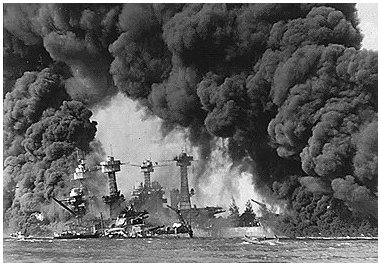
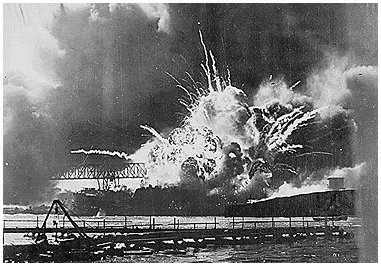
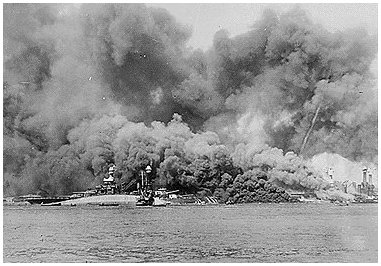
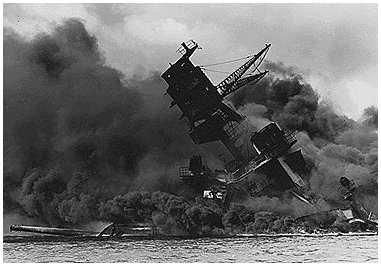
Once America got into the war, after Pearl Harbor,
Frank Buchman and Moral Re-Armament were not opposed to the war.
Quite the contrary, they were
very "patriotic", and all for it, just as long as
somebody else served in the military services.
Many of the Moral Re-Armament leaders, the inner circle of disciples
in both Great Britain and the USA, tried to dodge the draft, claiming
that they were "lay evangelists" who were essential on
the home
front for such patriotic tasks as managing Moral Re-Armament and
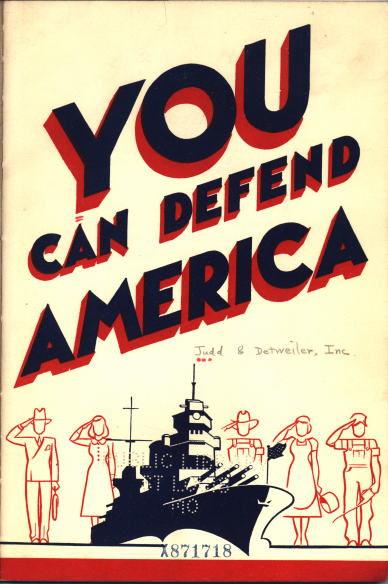
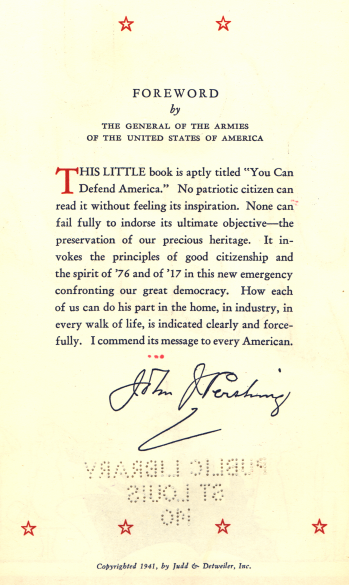
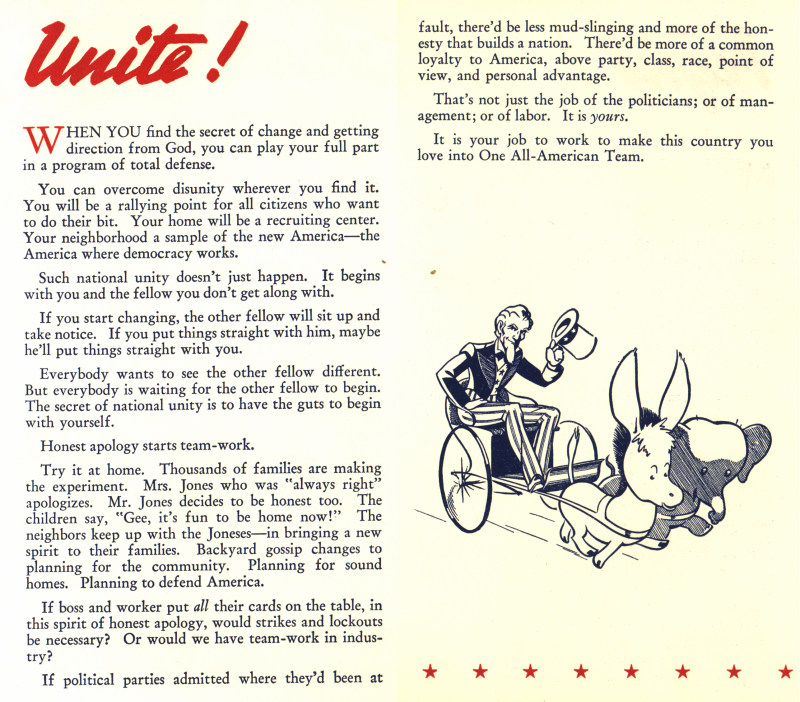
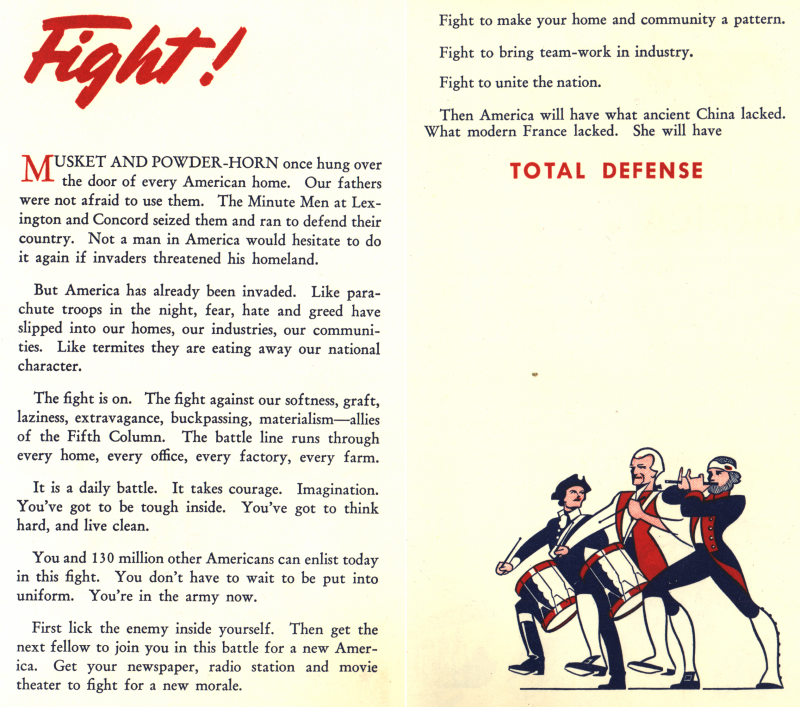
producing morality plays like "You Can Defend America."
[I love that — not "We Can Defend America", but
"You Can Defend America." —
"You do the
slogging through the mud, and the fighting and the bleeding and the dying, and we
will wave the flag and cheer you on. We are real patriots."]
Frank Buchman quickly, opportunistically, switched from praising Heinrich Himmler
and Adolf Hitler to waving the American flag and declaring that Moral Re-Armament
was "the highest patriotism":
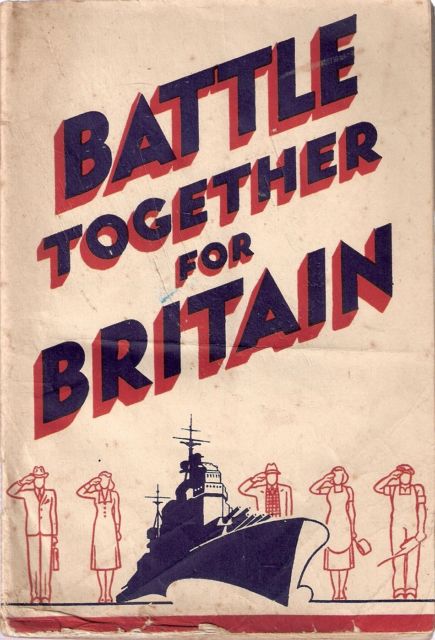
At the same time, MRA was publishing this jingoistic pamphlet in Great Britain.
Notice the similarity to the USA version:
Frank Buchman's gang even managed to get their cult-religion propaganda
printed up as Civil Defense posters:
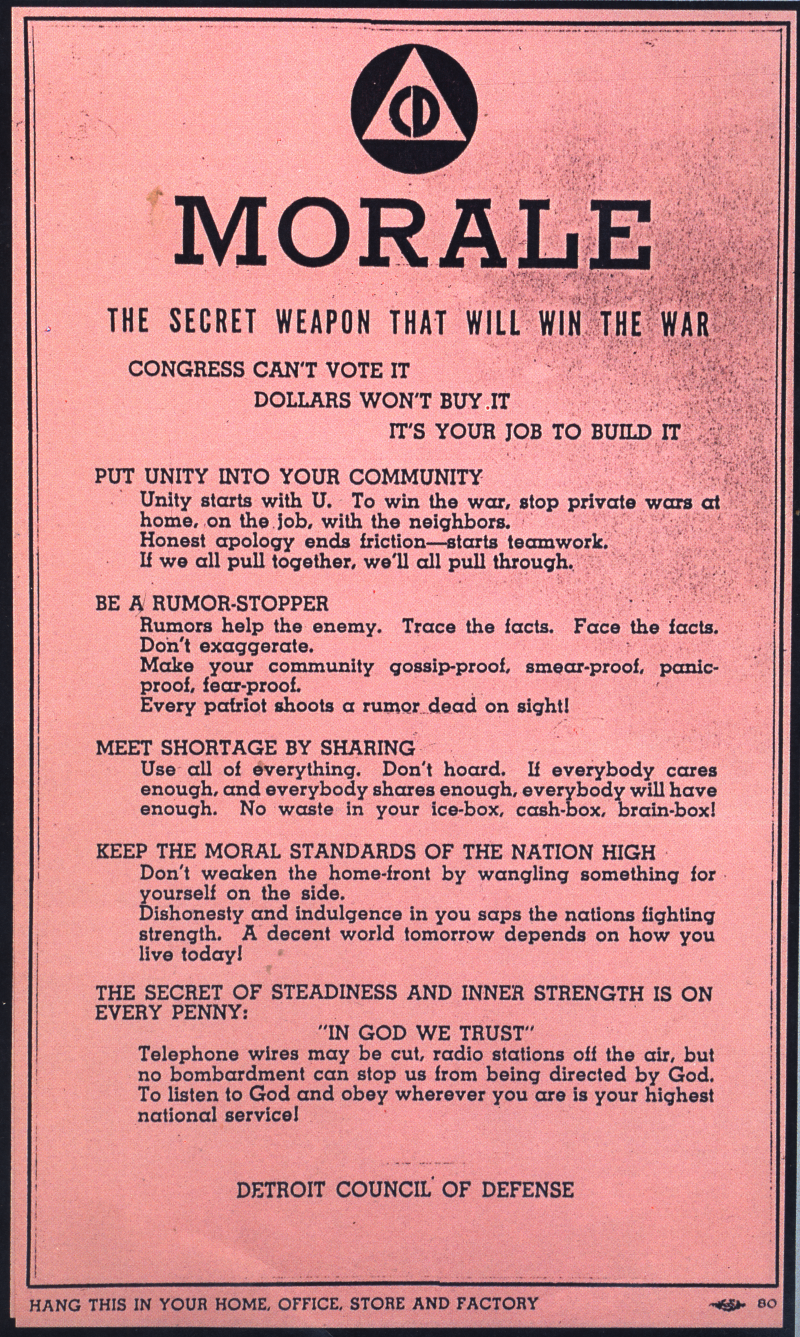
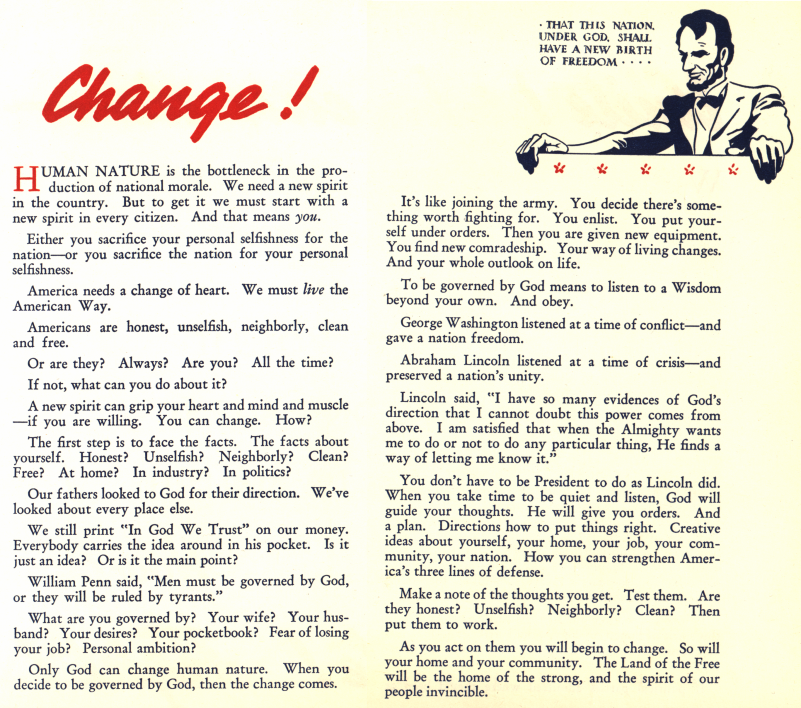
"Be directed by God" through spiritual wires that can't be cut...
"Listen to God and obey...."
Yes, that's Buchmanism, all right.
And as usual, there wasn't a word of criticism of the Nazis or
Adolf Hitler in any of that.
Also, the lines,
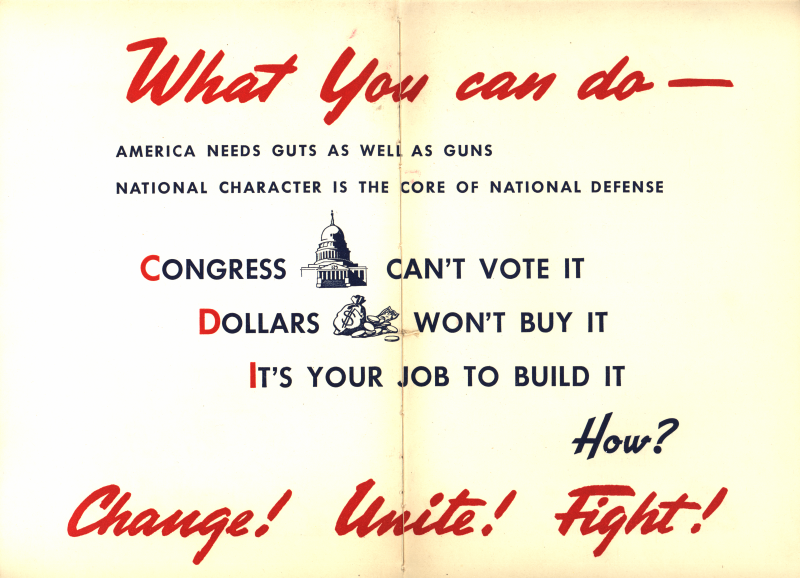
"KEEP THE MORAL STANDARDS OF THE NATION HIGH.
Don't weaken the home front by wangling something for yourself."
actually mean that unions should not demand higher wages for the workers. Frank Buchman was always a
"spiritual strike-breaker",
who used religious arguments to declare that the workers demanding good wages was "selfishness".
Oddly, Frank Buchman never denounced the ultra-rich industrialists for raking in millions of
dollars and living first-class lifestyles in glittering palaces.

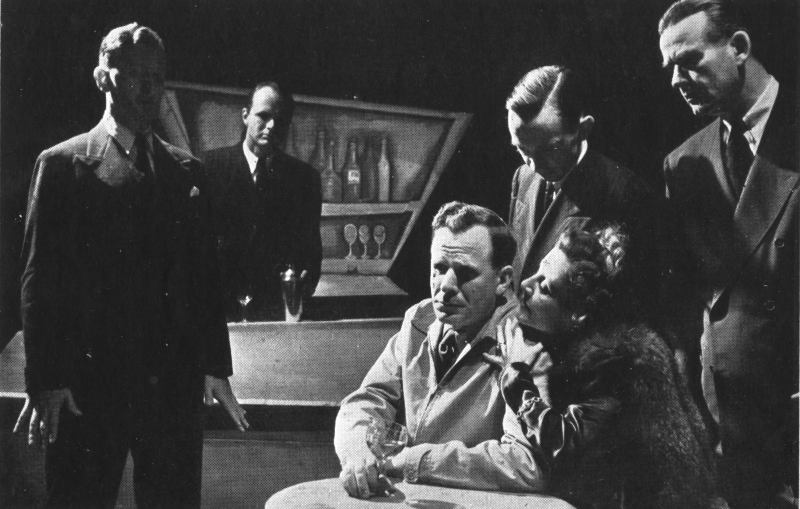
During the war, troupes of Buchman's followers toured the country,
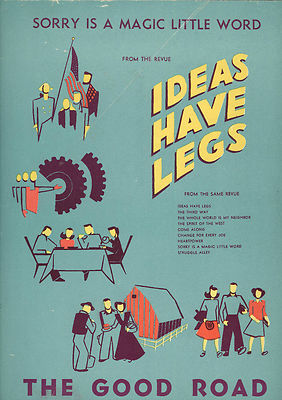
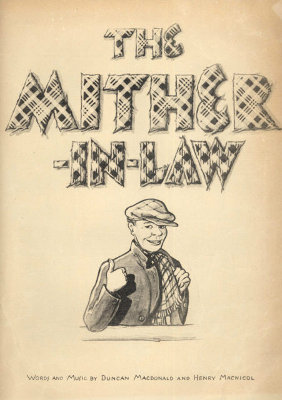
performing melodramatic morality plays like You Can Defend America,
The Good Road, and The Forgotten Factor.
They encouraged workers not to strike, claiming
that it would be "unpatriotic". The Buchmanites denounced
"Divisive Materialism, Our Unseen Enemy", and equated demanding
fair wages with giving aid to the
enemy.38
A few years after the war,
Geoffrey Williamson visited the MRA center in Caux, Switzerland, and
saw The Good Road being made into a film:
A western farmyard setting, reminiscent in style of Oklahoma,
served to introduce an incredible story of a feud between a farmer, Zeke,
a crusty old bachelor, and his young neighbour, Rufe.
Rufe's cattle have broken Zeke's fences, so Zeke gets his gun and announces
his determination to shoot Rufe immediately he shows up. But Rufe appears
with his young wife hanging on his arm and bearing a spice cake she has baked
specially to placate their rough neighbor! When Rufe says, "Sorry,"
and his wife holds out the spice cake, Zeke lays aside his gun, which is the
cue for everyone to start singing:
The whole world is my neighbor
When you and I get together...
If this is a sample of the film that is going to change the world, I thought,
the Buchmanites must be crazy. I couldn't believe that anyone could
seriously advance such a preposterous story as offering a solution to world
problems. By the same token the second world war could have been avoided
if Chamberlain had taken a spice cake in his luggage when he went to meet
Hitler.
Inside Buchmanism; an independent inquiry into the
Oxford Group Movement and Moral Re-Armament,
Geoffrey Williamson, Philosophical Library, New York, c1954, page 56.
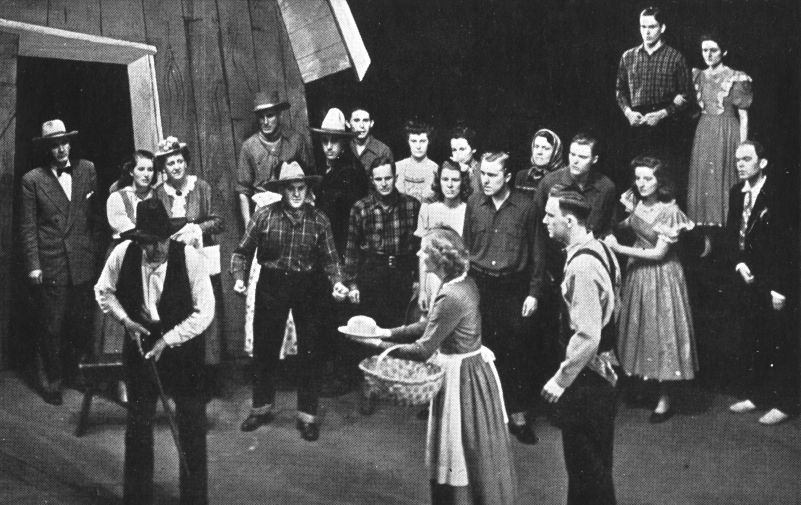
The frontier wife mollifies Zeke with a spice cake
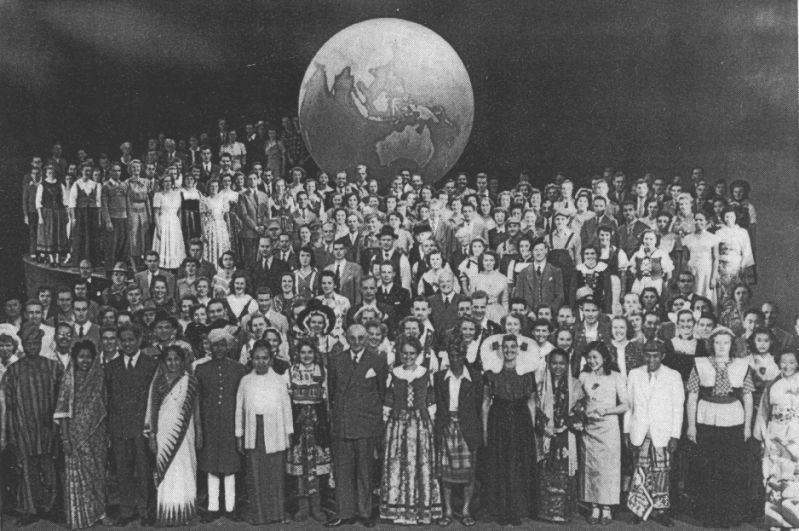
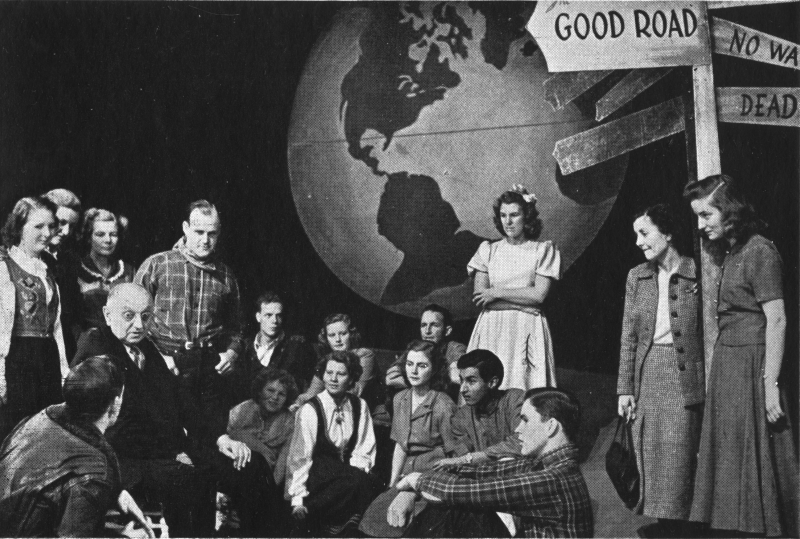
Frank Buchman with the cast of The Good Road
Geoffrey Williamson also saw the show live:
In strict fairness I must set down the fact that the live show made a
more favourable impression than the film "rushes" had done.
It was brightly dressed, well staged, and played with such tremendous zest
by a youthful cast, that it would have been churlish not to have shown
appreciation. It certainly "got across" with the audience,
whose applause for every item was almost prodigal.
But many of the songs, though tuneful enough, were naïve attempts to
put over uplift in the vein of Ella Wheeler Wilcox. I don't know what visiting
statesmen and politicians made of them all, but the Buchmanites, at any rate,
seemed to be whipped into ecstasy by such items as Sorry is a Magic Little Word
or If You Harnessed All the Heart-power in the World.
I found it impossible to revise my estimate of the film. Much of it was sorry
stuff, strung together in a haphazard sort of way, with the MRA propaganda
laid on crudely. This puzzled me considerably, for I had studied enough examples
of Buchmanite propaganda to know that they can be subtle enough when they choose.
Once more I yawned over the incredible sob-story of the tough feudist whose
thoughts were diverted from neighborcide by the gift of a spice cake; but there
were other sketches just as callow. There was an American family scene, for
instance, which opened with glimpses of father, mother, sister, brother, and
grandma all preoccupied with their own selfish pursuits, constantly bickering.
The curtain fell, to rise again on a "changed" family, though
how they had all become transformed we were not told. Now, of course,
everyone was polite and kindly and the family was united.
So united that they insisted on singing two songs together — Families
Can Be Fun and Sorry is a Magic Little Word.
The last song was supposed, apparently, to provide a key to the whole
sketch and a message of world importance. Learn to say "sorry,"
and harmony flies into the home! And if that works in families, why not
in the great family of nations?
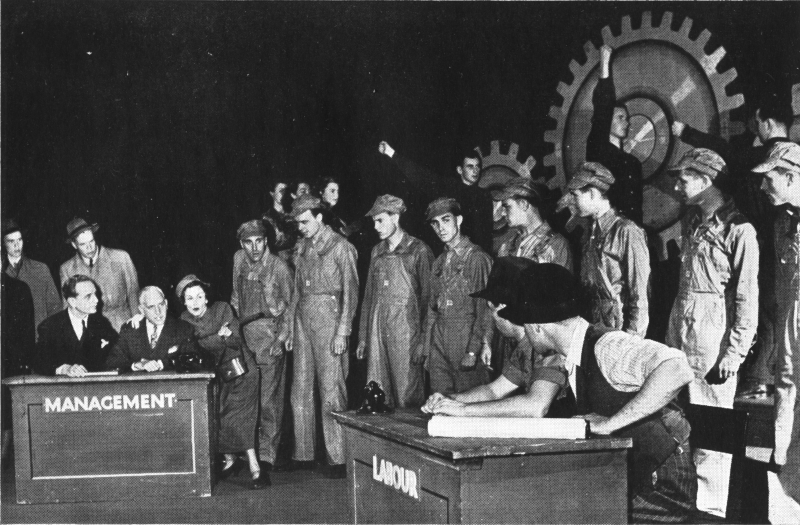
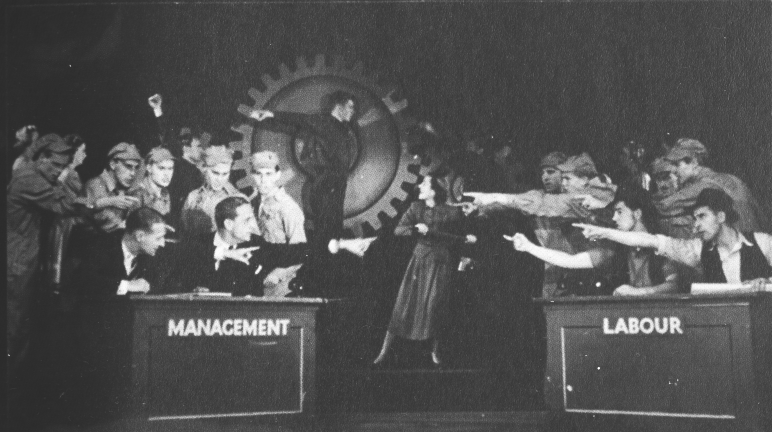
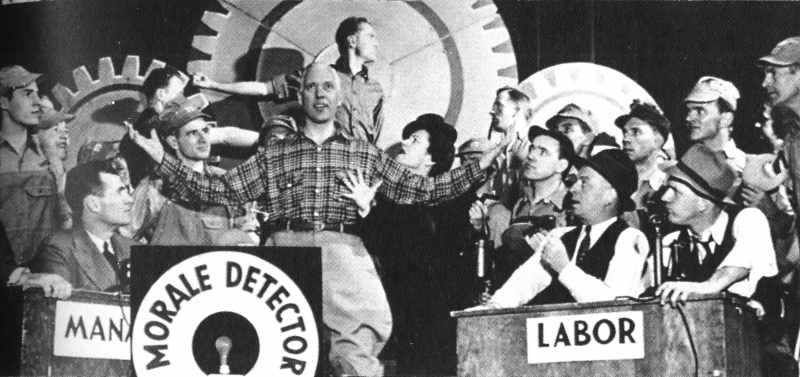
Then came an industrial scene devised to show Moral Re-Armament as a bridge
between Management and Labour. A stylized setting of giant cog-wheels,
reminiscent of Chaplin's Modern Times, formed the background
against which Management and Labour faced each other from opposite
sides of the stage.
As the curtains rose on this scene the wheels of industry were turning
smoothly, with groups of workers in American style overalls swaying in
the background to simulate the rhythmic beat of pistons. Production
was booming and both Management and Labour announced to the press their
intention of playing their full part in saving Democracy.
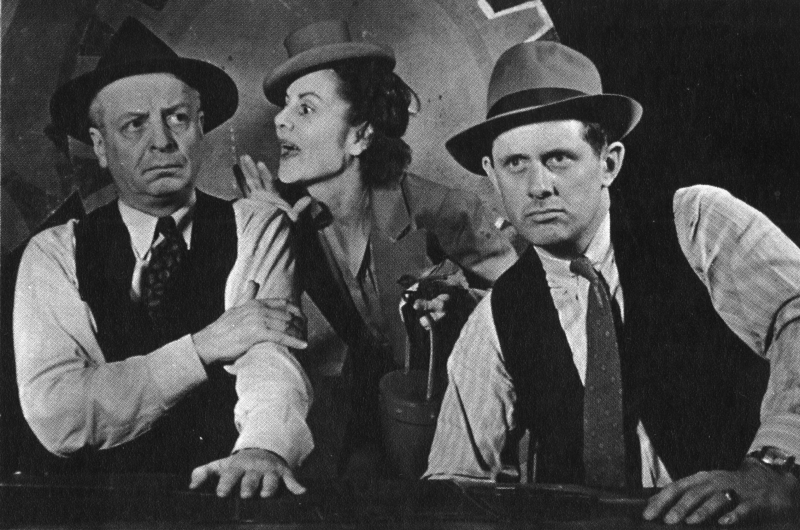
Then, for no apparent reason, a young minx named "Miss Trust"
tripped in and gaily distributed little packets all around. She was
sowing seeds of dissension between Management and Labour! At this point
my erstwhile strike-leader friend nudged me in the ribs and whispered:
"Do you suppose it's a coincidence that she's dressed like that?"
For Miss Trust, "essense of subversion," was dressed wholly in red —
a red hat, a red costume, and she carried a red handbag and a red umbrella.
Slowly the wheels of industry came to a stop, but just as Miss Trust began
to wave her umbrella aloft and to laugh in triumph, a stranger strode onto
the stage. A fine, upright fellow known, apparently as "Change."
Holding the centre of the stage, he proceeded to give both Management and
Labour a verbal injection of Moral Re-Armament ideology. So they united to
throw "Miss Trust" out (having found her seed packets to be empty!),
and the curtain fell on the wheels of industry turning once more. Oh! I
had almost forgotten it! Everybody singing: "There's enough in the world
for everybody's need; but not for everyone's greed."
Inside Buchmanism; an independent inquiry into the
Oxford Group Movement and Moral Re-Armament,
Geoffrey Williamson, Philosophical Library, New York, c1954, page 62-65.
Finally, Garth Lean gave us this very revealing description of Frank Buchman's
treatment of his acting ensemble:
[Frank Buchman] ended [the day] with a scolding to his team, busy
performing You Can Defend America, for 'selling a show instead
of the philosophy' and consequently not speaking convincingly
from the platform or selling books to the audience afterwards.
Garth Lean, On the Tail of a Comet: The Life of Frank Buchman, page 309.
The actors didn't sell enough books to the audience after the show?
This is sounding just like the cults that nag you in the airports,
always trying to sell you a book. They all have to make their quotas or
else the cult leader really comes down on them.
Next: Dodging the Draft
Previous: A Slogan A Day Keeps The Thinking Away
Click Fruit for Menu

Last updated 12 October 2013.
The most recent version of this file can be found at
http://www.orange-papers.org/orange-rroot390.html
|