Partying with the Nazi Party
|
and the Twelve Steps by A. Orange
Chapter 8:
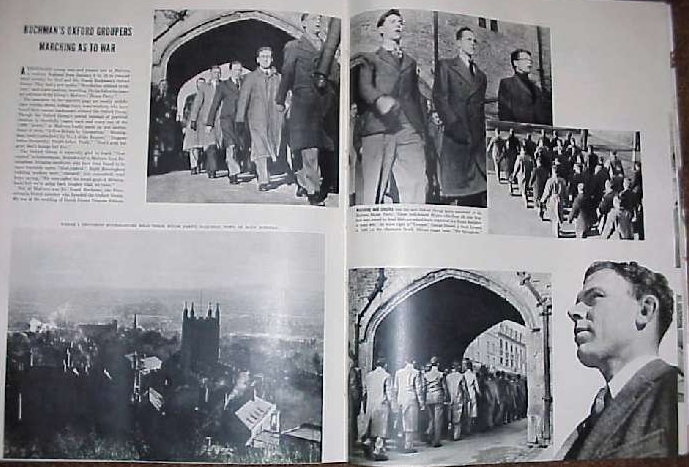
Frank Buchman and his followers were not bothered by Nazism or Fascism. They insisted that politics didn't really matter, because they planned to "change" everyone in the world, regardless of their politics:
"Systems," they say, "don't matter, whether of Capitalism, Fascism, Communism. The best system will not work if the people are lost in selfishness and sin. The worst system will work if God guides it." To hear the Buchmanites tell it, they had already established world peace and universal love. Buchman had erased racism and racial hatred in South Africa, and "started a major and continuing influence for racial reconciliation throughout the whole country, white and black, Dutch and British."8 The Groups' archivist Arthur James Russell bragged about the success of the Oxford Groups this way:
In the pressing problem of black and white antagonism it was significant that one of the best negro minds in South Africa, Max Yergan, once told Frank that South Africa had sufficient personal religion, and needed no more. Two years later he spoke enthusiastically to Sam Shoemaker of the astonishing racial results. Curiously, the South Africans themselves could not see any improvement in their country. They were rather surprised to read in the London newspapers that the Buchmanites had saved their country and solved the race problem, when they still saw it every time they looked out the window.9
And unfortunately, the wonderful friendly relations between the French and Germans, or Danes and Germans, that Buchman had supposedly created didn't last very long, either...
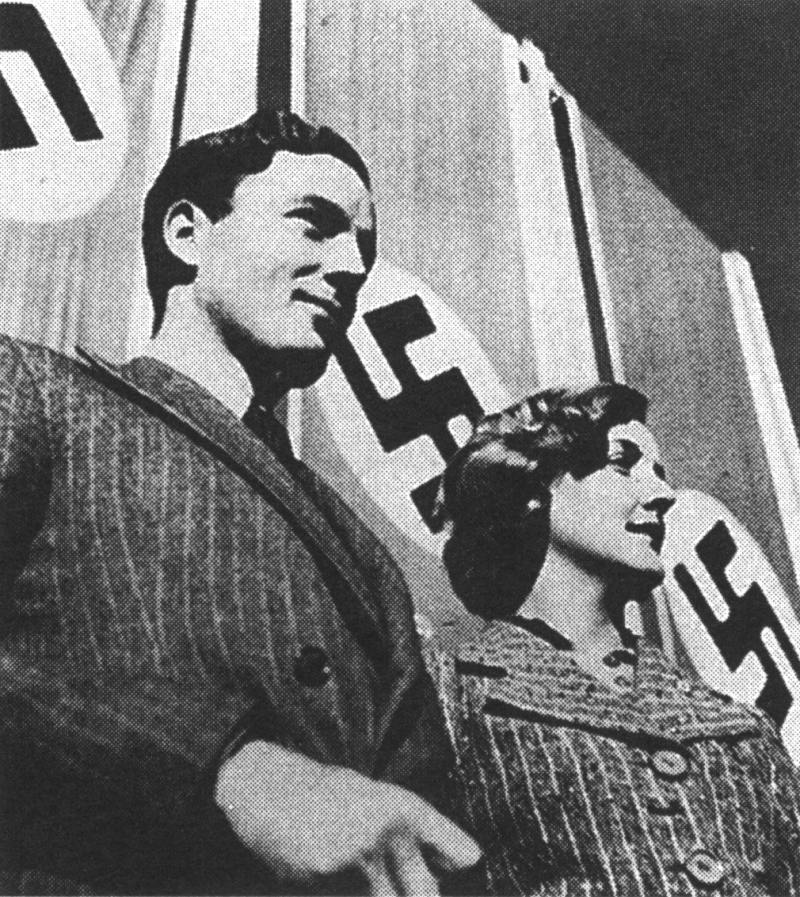
And while Buchman declared that systems don't matter, no matter whether Fascism or Communism, Buchman showed a decided bias towards Fascism. In a parade at an international MRA gathering in Stockholm, Sweden, the flags of 18 nations were on display. The Swastika was among them, but the Hammer and Sickle was not.40
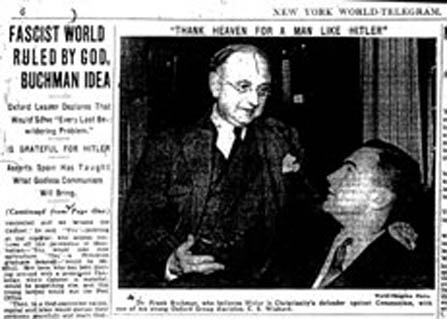
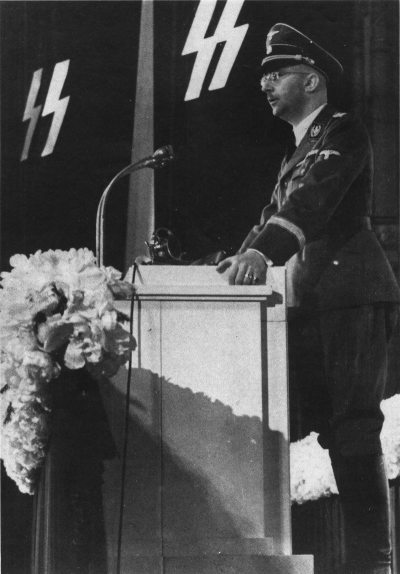
And it seems that Buchman changed his opinion of Communism within days of that interview — suddenly it did matter, a lot. That article quoting Buchman's remarks about systems was published in the November 1936 issue of American Magazine, but undoubtedly, the interview was given and the article was written some months earlier, due to the lead time in magazine publishing. Then, in late August, Buchman declared that he was strongly opposed to Communism. In an interview published August 26, 1936 in the New York World Telegram newspaper, Frank Buchman said, "I thank Heaven for a man like Adolf Hitler, who built a front line of defense against the anti-Christ of Communism..." The day after Buchman got off of an ocean-liner from Europe, returning from the 1936 Berlin Olympics where he had been the personal guest of the Gestapo chief Heinrich Himmler, he sat in his study at Sam Shoemaker's church in New York, surrounded by eight or nine of his followers, some of whom sat on the floor, and gave the following interview:
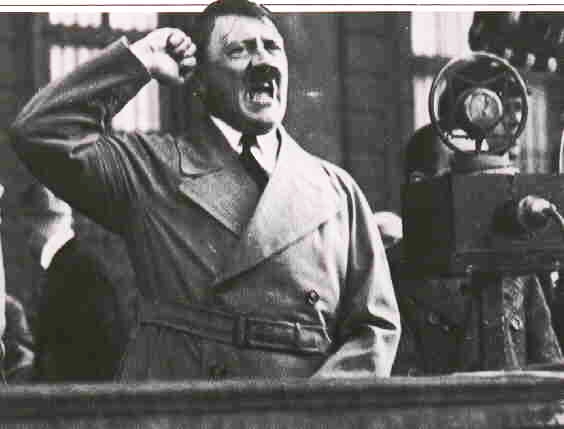
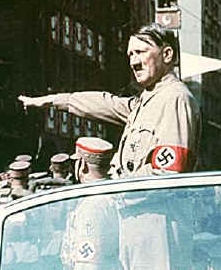
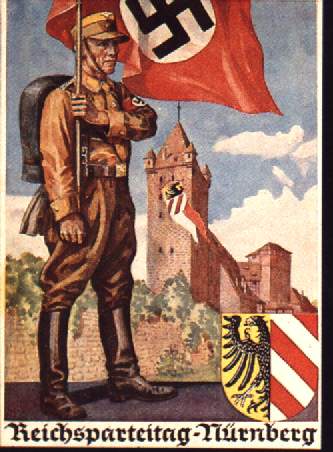
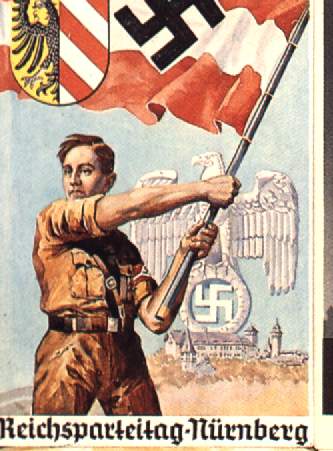
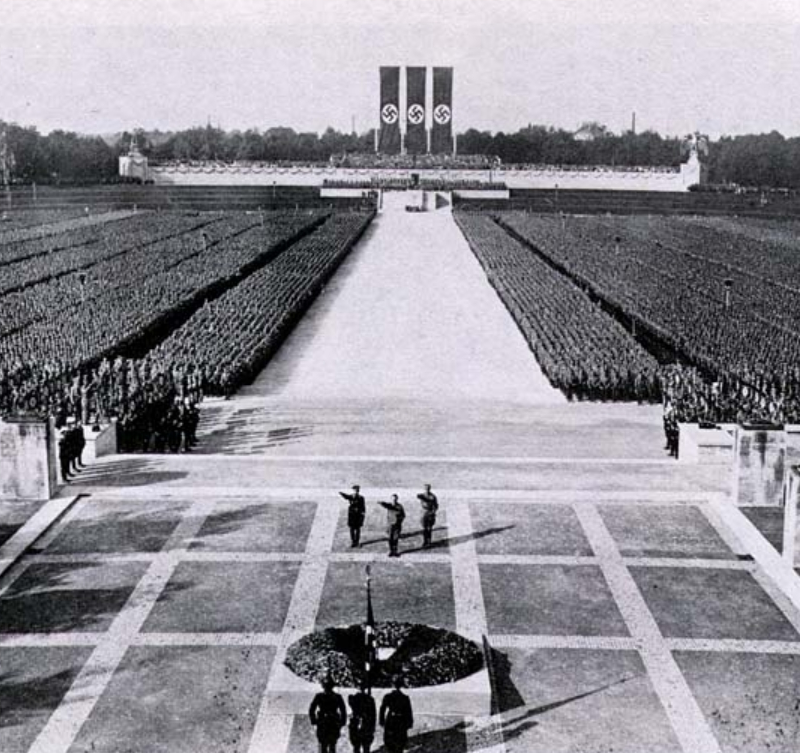
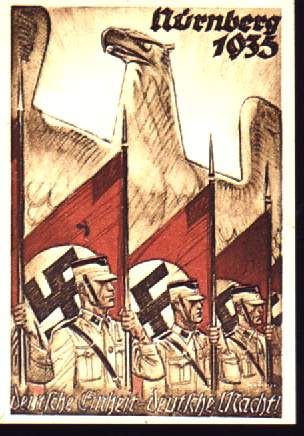
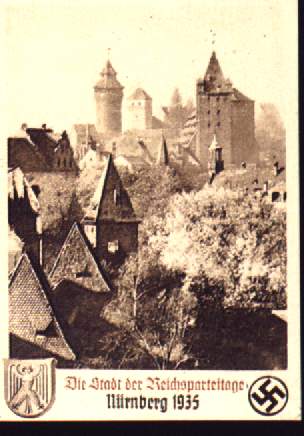
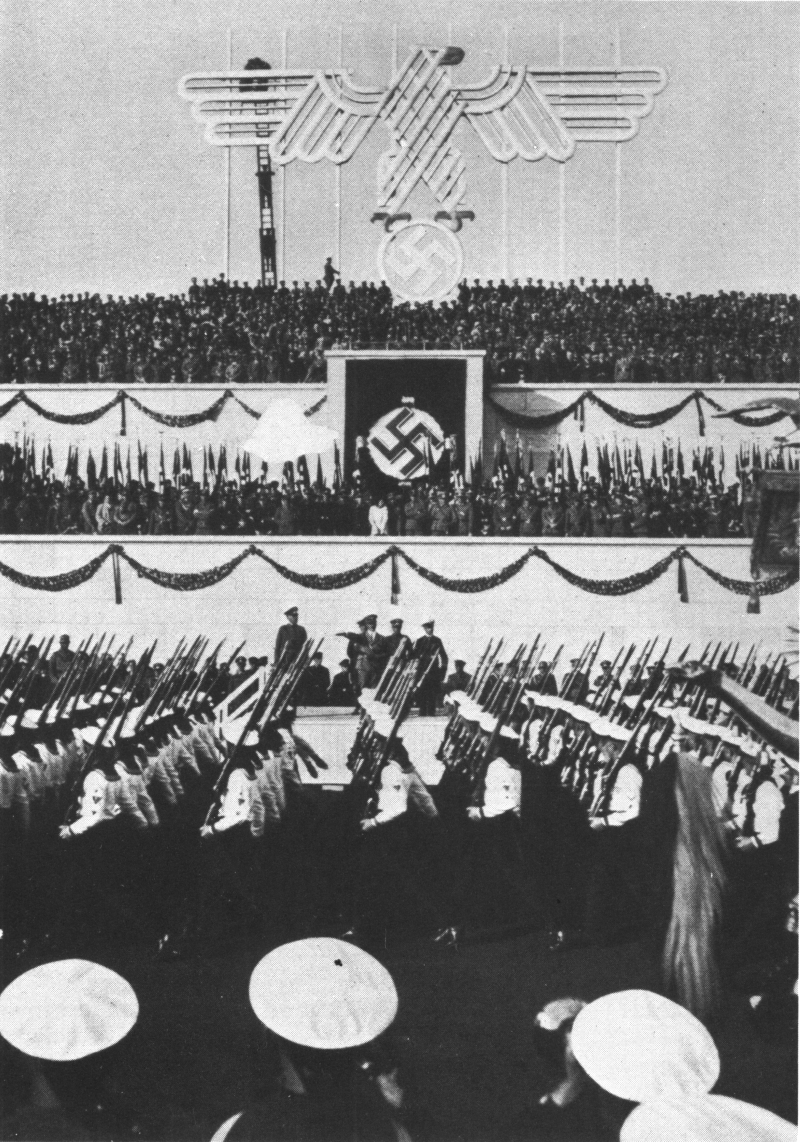
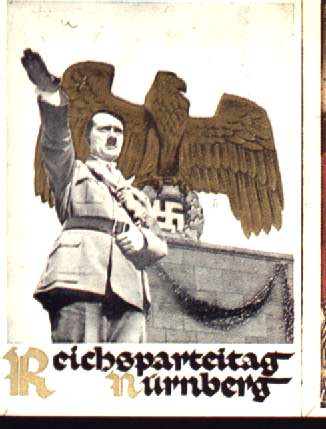
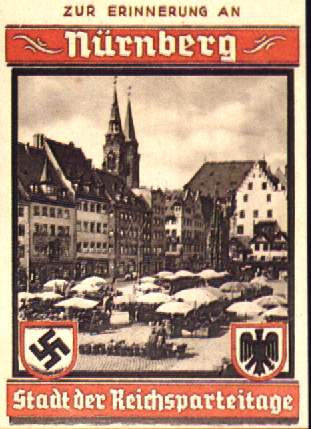
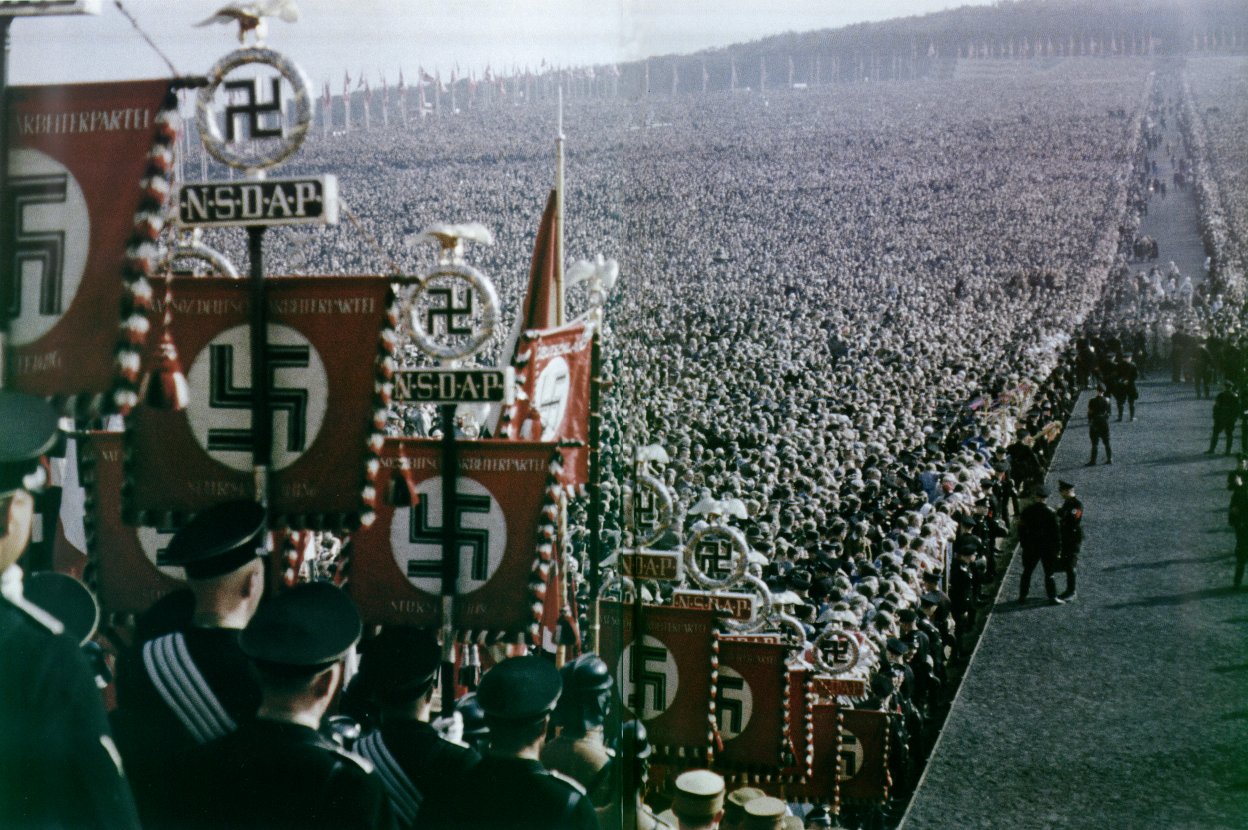
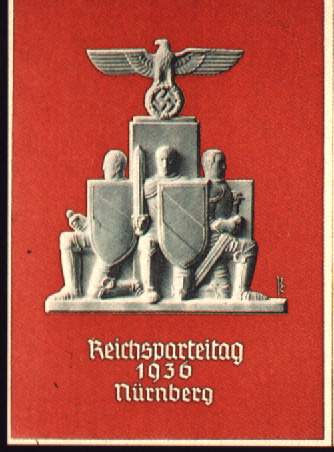
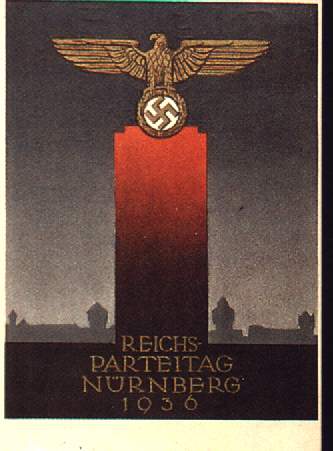
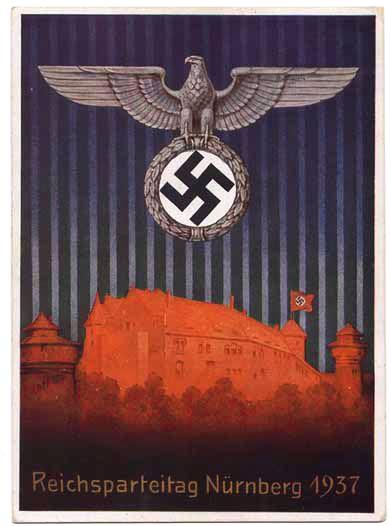
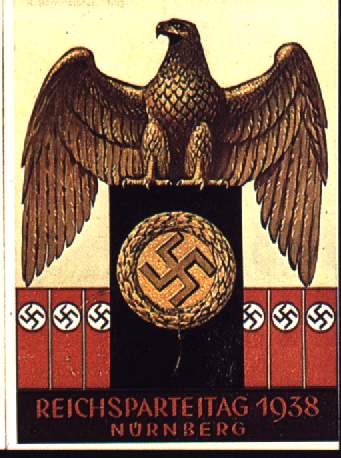
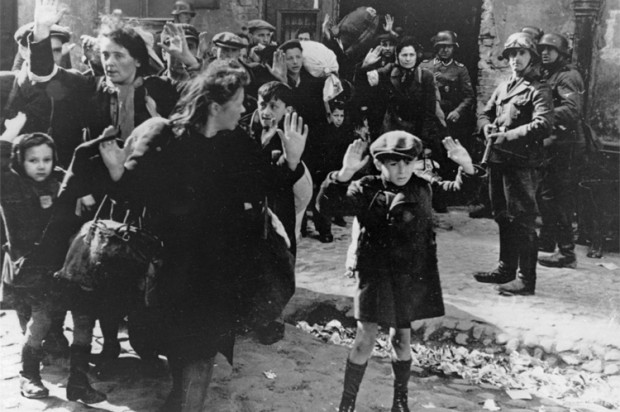
In August 1935, Frank Buchman and Moni von Cramon were again invited to the Nuremberg Nazi Party rally by Heinrich Himmler, and again they discussed religion and politics with Himmler.63 At that 1935 Nazi Party Rally in Nuremberg, Adolf Hitler officially proclaimed the antisemitic "Nuremberg Laws." Those repressive laws were designed to isolate the Jewish people legally, politically, socially and biologically.
In a biography of the ardent fascist Unity Mitford (the sister of Lady Diana Mosley), we find this information: The newspaper reporter Michael Burn, who wrote for The Times (of London) and the Gloucester Citizen, went to the 1935 Nurember Nazi Party Day rally for a story, and met Unity Mitford there, and...
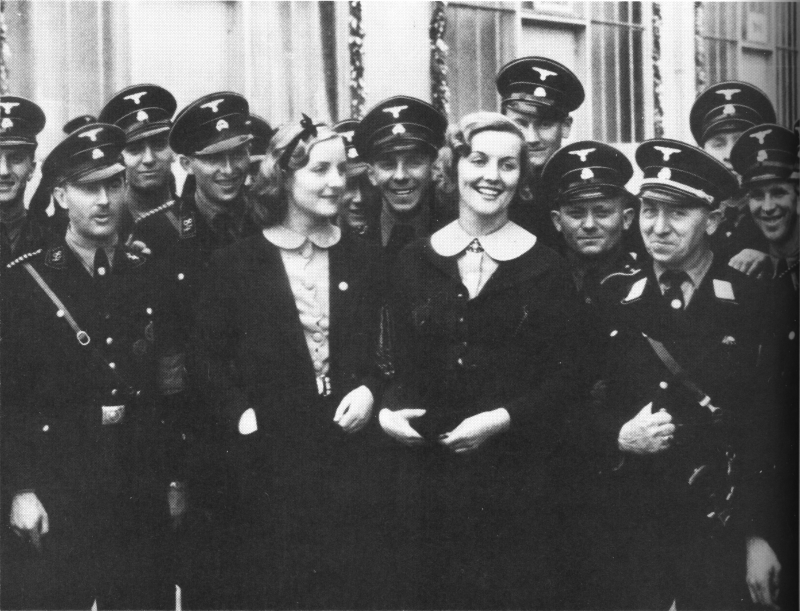
Two other English Ehrengäste [honored guests] travelling together with facilities from the Ministry of Propaganda to this Parteitag [party day] were Henry Williamson, the nature writer, and Mosleyite, and John Heygate, who had married Evelyn Waugh's first wife and was then working at UFA Films in Berlin. Both published accounts, the former in Goodbye West Country (1937), the later in These Germans (1940). The SA ranks struck Williamson as having 'the spirit of English gentlemen who had transcended class-consciousness', which brought him to the exclamation, 'Heil Hitler! God Save the King!' Unity could not have summed up her world-outlook more neatly. John Heygate did not empty out his mind. 'At last we are in our places! Right gangway, top tier on the right, rather high up, but with a clear view in front of us, and almost immediately behind the platform on which the Führer will appear and speak ... guests arriving among whom I note the leader of another kind of party, a religious party, Dr Buchman. I note blonde Nordic prototype, Unity Mitford, admirer of the Führer, with her sister Diana, looking to my mind even more beautiful and Nordic ... to see Hitler and his show as it might be the Lord Mayor's.' In a letter to me, Sir John Heygate, as he now is, adds, 'Unity, Diana and Dr Buchman were seated on a bench immediately in front of Williamson and myself. I put my hat on their bench when we stood up for Hitler, and Buchman sat down on it.' These seating arrangements were all quite unplanned. So, Unity Mitford, her sister Lady Diana Mosley, and Dr. Frank Buchman sat together on the same bench at the 1935 Nuremberg Nazi Party Day rally? That certainly answers the question of whether they ever met, or knew each other. What a small fascist world it is, after all.
Henry Williamson gave the most amusing and revealing account of that 1935 rally. On another of the four days of that rally, Williamson reported:
We had a good place at the end of a gangway. People arrived all of the time. I sat at the edge, sleeves rolled up, sun-bathing. I'd been there about 1/2-hour when a tall young man with vaguely good-natured face came up and stood beside me, anxiously looking towards our entrance. I wondered why he didn't find himself a seat. I didn't wonder a few minutes later when a grey-faced, sharp-nosed, bespectacled man approached him, and the young man deferentially moved aside without hesitation. A bulky rump thrust itself against my lean one, and I was squeezed up, out of my end-seat. I turned and looked at this fleshy cuckoo. He looked straight ahead; I had a feeling he could see with his entire left side, through his grey suit, with its (I noticed) meticulously hand-stitched label. I looked at John [Heygate]. "Of all the blasted nerve," I muttered. The stranger consolidated his weight on the seat; I was going to be squeezed right out. Turning to regard him, with rising fury, I saw he had, in his pale podgy hands, a large envelope, the address of which was OXFORD UNIVERSITY. These words had been obliterated by a scrawl of blue pencil, an angry sort of squiggle, as though done with irritability. One hand covered the surname; the words The Rev. Frank alone were visible. As my fury changed to amazed curiosity, the hand, as though sensitive to my change of mood, uncovered the surname, and with a mild triumph (for I had guessed the identity of this thruster) I read The Rev. Frank Buchman. Resisting a temptation to ask him if he thought his movement would last as long as Hitler's, I gave a glance at John. He too had seen.
Henry Williamson noted that, a few days later,
...even the Rev. Frank Buchman, after the first hour, was heiling Hitler, and shooting out right hand.
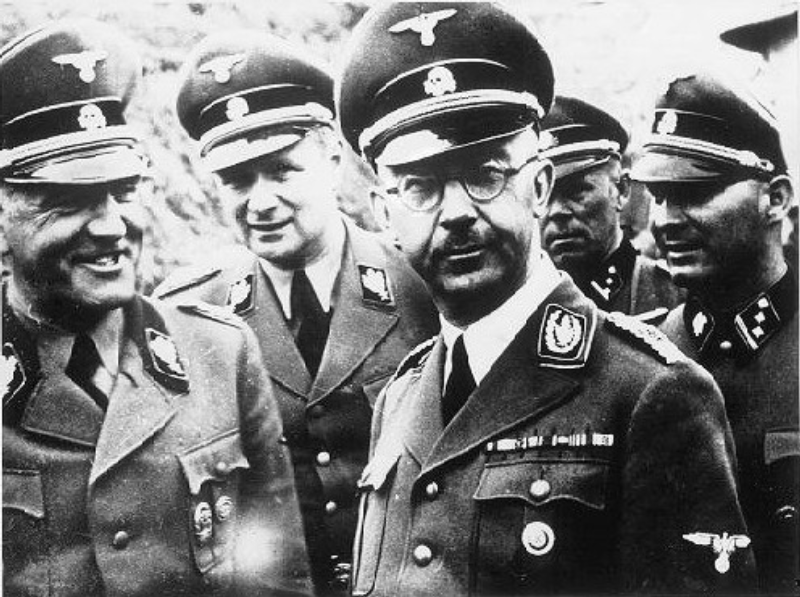
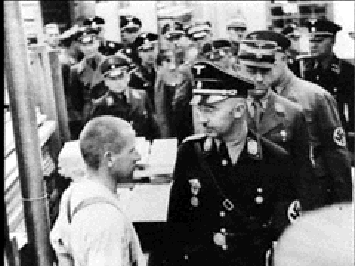
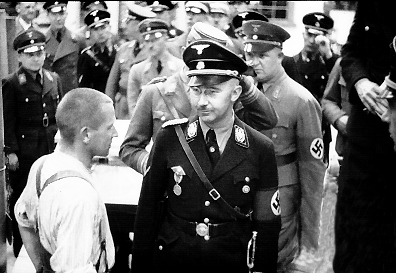
One of the British visitors to Berlin was Mr Kenneth Lindsay, MP for Kilmarnock Burghs and, as Civil Lord of the Admiralty, a member of the British Government. He had seen something of the Oxford Groupers in their early days, and in the Hotel Adlon Buchman recognised him and greeted him cordially — asking if there were anyone he wanted to meet: did he know all the people there he ought to know? Lindsay said he thought so. That "great lad" Heinrich Himmler was the head of the SS and the Gestapo, and he was a thoroughly nasty fellow who got his jollies by terrorizing and killing people.
In his biography of Heinrich Himmler, Peter Padfield wrote this about Himmler, Unity Mitford ("Bobo" — Lady Diana Mosley's sister), and the Oxford Group:
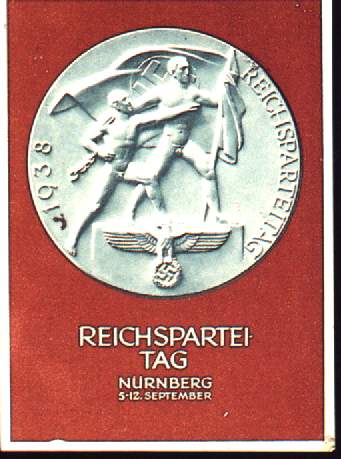
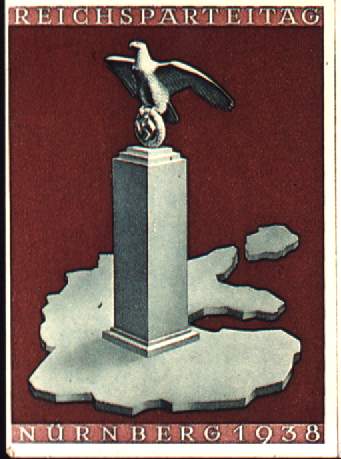
The sense of massed power and participation in great events heralding a heroic future was particularly tangible after the Anschluss at the September 1938 rally. Only a few foreign observers formed a different impression. One was the travel-writer and journalist Robert Byron, who had persuaded Hitler's English admirer Unity (Bobo) Mitford, to include him in her party. He himself was strongly anti-Nazi. He kept a diary: 'I expected to get the impression of a vigorous evil which must be destroyed at all costs — and perhaps I do. But that is subordinated to the negativeness and vacuity of it all. It is not so much intellectual poison as intellectual and spiritual death — a greater death than physical death....'64 Two days later he attended the Party congress, sitting (thanks to Bobo's influence) in the front row immediately facing the party leaders on the dais so that every time he raised his eyes he met those of Goebbels or Himmler or Hitler. That evening he recorded his impression of the leaders who had been so close to him: 'Himmler is terrifying, he sucks his teeth and keeps them bared. The Führer is peculiar for the pink and white podginess of his face.... eyes like peas, but a good-humoured face obviously very moved by music.'65 So Heinrich Himmler played "Dear Abby", and wrote letters of advice to English Oxford Group members? Those are some letters that I would love to see.
In 1944, Himmler would show off a special set of furniture that he had — a table and chairs made from human (Jewish) skin and bones:
Martin Bormann's fourteen-year-old son was a passionate young Nazi going into that day in 1944. He was staying up at the Nazi leaders' compound on Obersalzberg, whilst on holiday from his boarding school in Bavaria, when he saw something that brought the horrors of the National Socialist regime shockingly home to him. He, with his mother and younger sister, were invited by Himmler's mistress, Hedwig Potthast, to see the Reichsführer's special collection in the attic of his new house there. Martin Bormann Jr told this horrific story to a therapy group of the children of former high-ranking Nazis in 1990: Yes, that Heinrich Himmler was quite a "great lad", a real "decent fellow", just the kind of nice man you would want to carry out the Will of God in your neighborhood — just the kind of loving spirit with whom you would like to sit and watch the Olympics. 
Likewise, Theophil Spoerri echoed the Buchmanite party line in his dishonest fawning biography of Frank Buchman:
In 1932 some of Buchman's German friends tried to arrange a meeting with Hitler. One of the Kaiser's sons, who was working with Joseph Goebbels to build up a position of power for himself, was afraid, however, that Buchman's influence might turn the Nazi movement away from its objectives: 'On no account is Buchman to see the Führer.'
Certainly, some people did not like the pushyness of the Oxford Groupers, and
their attempts to "change" Adolf Hitler into a Buchmanite.
Robert Byron
and Unity Mitford both wrote that the Oxford Group members
telephoned both Diana Mosley and Unity Mitford, dunning them for an
invitation and introduction to Adolf Hitler, with the goal of "changing"
him, and Diana and Unity refused to help the Oxford
Group.112
But it's a bit much to claim that Frank Buchman and Adolf Hitler never
met or talked, because...
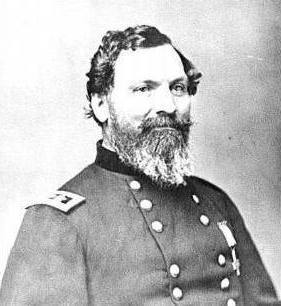
... in the archives of the Franklin D. Roosevelt Library at Hyde Park, New York, there is a letter to President Roosevelt from Mr Harry W. Blair, then Assistant Attorney General, telling him of Buchman's forthcoming visit to Germany and asking him to see Buchman before his departure — with the following remarkable explanation:Herr Hitler has requested a meeting with Dr Buchman. It is a matter of embarrassment to Dr Buchman when speaking to the leaders in these foreign countries not to have been received by his own President.The Mystery of Moral Re-Armament; A Study of Frank Buchman and His Movement, Tom Driberg, 1965, page 66. In any case, it is likely that Hitler was just checking out Frank Buchman, to see what kind of a nut he was, and to see whether Buchman could be of any use to him. Buchman's influence on Hitler seems to have been nil. It is also possible that Frank Buchman met Adolf Hitler through the Hanfstaengl family. Buchman knew Frau Katherine von Hanfstaengl, who was actually born an American citizen in the prominent Sedgwick-Heine family (two of her ancestors were generals in George Washington's Revolutionary War army). She was the niece of the General John Sedgwick who fell at Spotsylvania Court House in the Civil War and whose statue stands at West Point. Her father was another Civil War general, William Heine. In the funeral cortege of Abraham Lincoln he was one of the Generals who carried the coffin. She said that she could remember Lincoln's funeral clearly.147
Katherine Heine married the German aristocrat Edgar von Hanfstaengl, who was an international art dealer. Katherine von Hanfstaengl had been attending Frank Buchman's "house parties" for years. Her son Ernst Franz Sedgwick Hanfstaengl, a.k.a. "Putzi", was one of Adolf Hitler's best friends and supporters back in the earliest days of the Nazi Party in the nineteen-twenties, and Hitler was a regular houseguest at the Hanfstaengl household.120 And Paul Diener reports that Frank Buchman was also a regular houseguest of the Hanfstaengls in the 'twenties, too. Frank Buchman and Adolf Hitler could have met there.
Frank Buchman had no luck in "changing" any of the high-ranking Nazis.20 Why didn't Buchman "change" that "great lad" Heinrich Himmler into a moral Christian? And speaking of the world leaders and "key people" whom Frank Buchman did not change for the better, Buchman never went to Moscow and tried to "change" Stalin or Khrushchev or any of their Communist followers, either.94 Buchman routinely called Communists and Communism the enemy, the Beast, the anti-Christ, and such things, and yet Buchman never felt "Guided by God" to visit Russia and change the Communists into pious Christians.
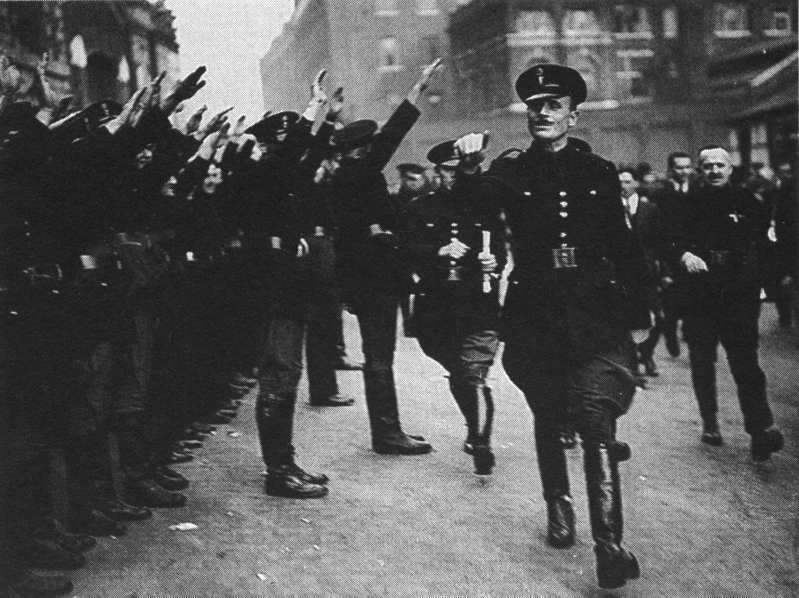
Robert Skidelsky described how Peter Howard was recruited for Mosley's organization, and how Peter Howard then organized a goon squad to protect Mosley:
Of the recruits Mosley was able to secure, the most prestigious was the Hon. Harold Nicolson.... The third son of the diplomat Sir Arthur Nicolson (later Lord Carnock) Harold Nicolson was then forty-five. ... There is also something terribly ironic about Peter Howard being such a brutal thug that the more moderate, intellectual, fascists feared that Peter Howard would give them a bad name. (And it's also strange that Howard should have close homosexual friends in college, and then turn into such a rabid, hateful, homophobe later on.)
Another leading figure in the New Party was Peter Howard, captain of the England Rugby Football team. ... Harold Nicolson wrote to Cimmie [Sir Mosley's first wife] 'Peter Howard I have a feeling is bowled over by your charms — but so are we all'. Peter Howard had organised a group of young men from Oxford to protect New Party meetings: these were referred to in the press as 'Mosley's Biff Boys' or 'strapping young men in plus fours'. The emphasis of the New Party was on youth.... In bragging about his street fighting for Sir Oswald Mosley and the New Party, Peter Howard wrote:
I was mobbed at Reading, knocked down and kicked in South Wales, had my head cut wide open with a blow from a chair in the Birmingham rag market, and was slashed with a razor in Glasgow.
(Peter Howard didn't say what he did to the other guys.) Sir Oswald Mosley chose Peter Howard to lead the New Youth Movement:
From this moment [September 1931] onwards the New Party started to have the dual character associated with its successor, the British Union of Fascists. On the one hand it was a political party organised to seek power in elections; on the other hand it was a para-military force organised to fight communism in a revolutionary situation.
The election was a disaster for the New Party. They failed to win a single seat, and even lost their deposit in most of the races.
Following its electoral débâcle the New Party virtually ceased to exist as a political party. The central office in Great George Street was closed down; the regional organisations were disbanded and their officers retired. Of the paid staff Mosley kept only Box, Forgan, and Peter Howard. All that was left of the Party was the embryonic NUPA (Nu-Party), or Youth Club, organisation which had been started in September. Peter Howard did later (by 1940) denounce Sir Oswald Mosley and his organization. Mosley's response was funny. His in-house newpaper declared:
Unwhipped youths at Oxford are left languidly picking their noses over Russian novels... It is not suprising that these sensation hunters, after trying every novelty from Communism to cocaine, will ultimately switch back to religion, if it is served up to their taste. Peter Howard was basically just a true believer in search of an extreme cause to believe in, any cause, no matter whether it was radical fascist politics or radical cult religion. Peter Howard started investigating the Oxford Groups while working as a Fleet Street newspaper reporter who intended to write an exposé of Buchmanism, but he was soon converted into an enthusiastic true believer who wrote a whole book of praise of Frank Buchman and his followers — "Innocent Men" — while attempting to defend Buchman from his critics. What happened was, the Groupers asked Howard to try "listening to God" in a Quiet Time. He did, and thought he heard the voice of God, and immediately became a convinced true believer. Peter Howard was so eager to believe in something that he actually wrote a book that emphatically declared that Frank Buchman was not a fraud or a charlatan, before Howard had ever met Frank Buchman: I have never met Frank Buchman. So I start equal with the scores and hundreds of people who have abused the man to me.
Do I believe Dr. Frank Buchman is a fraud, a knave and a charlatan? Though I have never yet met him, I answer with absolute confidence: "No. I do not."
That's a real non sequitur. Peter Howard had enjoyed socializing with the Oxford Group for a few months, and that, in his mind, was proof enough that the enterprise was good and that Frank Buchman was a genuine prophet. But earlier, Peter Howard had enjoyed street fighting for Sir Oswald Mosley — a lot of it. Did that prove that Mosley and his fascists were likewise a bunch of "active, kindly, effective, loyal, and self-sacrificing" fellows? On the other hand, when Geoffrey Williamson pondered the question, he asked:
Was he a charlatan? I did not think so. Peter Howard had posed precisely the same question in one of his books and had answered with an emphatic "No!" though at that time he and Dr Buchman had never met. I had studied Dr Buchman fairly closely, and I did not find it so easy to make up my mind.
Note that Geoffrey Williamson was speaking in the past tense. By the time he finished investigating Frank Buchman and writing his book, Williamson did believe that Buchman was a fraud.
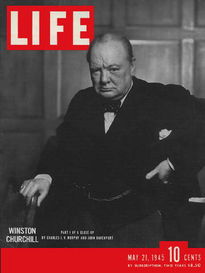
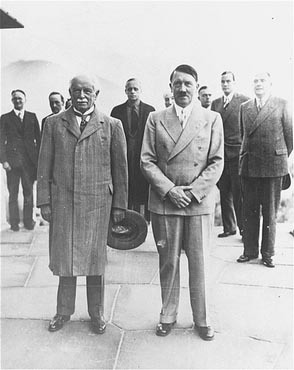
And lastly, I really have to wonder about this quote from Churchill,
— Sir Winston Churchill (1874-1965) |
Next: The Oxford Group Morphs Into MRA
Previous: My God How the Money Rolls In

|
Click Fruit for Menu

Last updated 20 November 2015.
The most recent version of this file can be found at
http://www.orange-papers.org/orange-rroot240.html
Copyright © 2016, A. Orange